
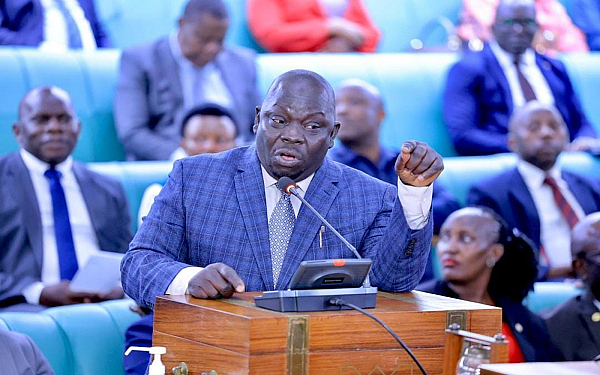

Ugandan MPs have urged the government to lift wage and recruitment ceilings for primary school teachers to ease the Uganda teacher shortage, in a motion tabled on 18 November, as a minister said the gap stands at 103,453 teachers.
The debate over the Uganda teacher shortage matters because public primary schools average about 60 pupils per teacher and some districts exceed 100, according to Ministry of Education figures cited in the motion. A minister told MPs that the 2026/27 budget framework earmarks no specific amount for recruiting primary teachers.
What are MPs asking for on the Uganda teacher shortage?
Khemis Muzaid, the representative for Arua Central Division, moved the motion asking the Ministry of Education and Sports to review and substantially increase the wage and recruitment ceilings for primary teachers in local governments, according to Parliament. He called for funding to fill existing vacant posts.
“Inadequate wage allocations and restrictive recruitment ceilings imposed by the Ministries of Public Service and Finance continue to constrain local governments from filling vacant primary teaching positions, despite the availability of qualified teachers,” Mr Muzaid said.
He cited a 2024 Ministry of Education report that put the pupil-teacher ratio in public primary schools at about 60 to one, with 37 local governments at 80 to one or more. The Uganda teacher shortage has overcrowded classes and forced some schools to rely on untrained volunteers, he said.
Mr Muzaid also proposed a transitional framework to let teachers holding Grade III certificates and Grade V diplomas join government service while they upgrade their qualifications.
Why has the Uganda teacher shortage worsened?
Under the National Teacher Policy, Uganda is phasing out the Grade III certificate and Grade V diploma and requiring a bachelor’s degree, awarded through the Uganda National Institute for Teacher Education (UNITE). Mr Muzaid said the change and the closure of primary teachers’ colleges had sharply reduced the number of new teachers each year.
Andrew Kaluya, the National Unity Platform MP for Kigulu County South, pointed to attrition. “The National Planning Authority revealed that 690 teachers took early retirement in the year 2022/2023,” he said, saying the Uganda teacher shortage called for better pay and retention, particularly in hard-to-reach districts.
Sarah Wekomba, the woman representative for Bulambuli District, said teachers posted to remote areas without roads, electricity, staff housing or classrooms often fail to take up their posts because there is no allowance to help them move. Enid Origumisiriza, the woman MP for Kabale District, urged the government to let districts recruit according to need, “with an adequate budget to pay them”.
What did the government say about the Uganda teacher shortage?
Peter Ogwang, the state minister for sports, responded for the ministry. He said the ministry’s request for Shs69bn ($19mn) to recruit staff needed for the competence-based curriculum between 2023 and 2025 had not been funded, leaving the Uganda teacher shortage at 103,453.
“The National Budget Framework Paper for 2026/27 identifies the recruitment of teachers as a human capital intervention with a bearing on the wage bill. It does not specify the number of primary teachers to be recruited nor earmark an amount for the purpose of this motion,” he said.
The minister defended the degree requirement, saying the National Teachers Act, 2026 and the National Teacher Policy, 2026 require bachelor’s degrees so that teachers can deliver the competence-based curriculum. The 23 existing primary teachers’ colleges will work with UNITE to keep training teachers, he said.
What happens next?
Parliament is due to debate and vote on the motion. A resolution would ask the government to act but would not itself allocate money, which would have to come through the national budget. DNE Africa has covered other recent business in Uganda’s Parliament, including ID verification for banks and the Lake Bunyonyi ferries.
FAQ
How big is the Uganda teacher shortage?
State minister Peter Ogwang told Parliament the gap stands at 103,453 teachers after a Shs69bn recruitment request for 2023-2025 went unfunded.
What is the pupil-teacher ratio in Uganda?
About 60 to one in public primary schools, according to a 2024 Ministry of Education report cited by MPs, with 37 local governments at 80 to one or more.
Why are MPs criticising the National Teacher Policy?
MPs say phasing out Grade III and Grade V qualifications and closing colleges has cut the supply of new teachers. The government says degrees are needed for the competence-based curriculum.
Will the motion add teachers?
Not directly. It asks the government to raise recruitment and wage ceilings; funding would have to come through the budget.


