

Uganda’s Public Accounts Committee has given the finance ministry three months to account for Shs270bn ($73mn) linked to the loan for the Umeme buyout, in a report presented to Parliament on 18 November.
The finding matters because taxpayers are paying interest on the loan, the committee said, and because it questions how the government handled one of Uganda’s largest recent state takeovers. The ministry has previously said the government borrowed less than Parliament authorised, not that money was left unspent.
What did the committee say about the Umeme buyout loan?
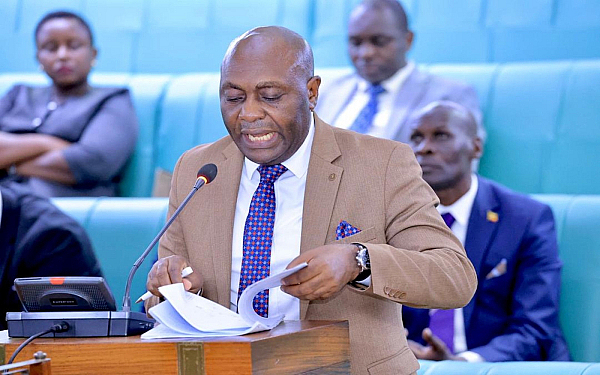
Presenting the report of the Public Accounts Committee (Central Government), Ferigo Kambale, the MP for Kasese Municipality, said the accounting officer “could not account for the balance of Shs270 billion that was borrowed but not paid out”, according to Parliament. “Taxpayers continue to bear the cost of the full money borrowed,” he said. The sitting was chaired by Deputy Speaker Thomas Tayebwa.
The committee criticised the government for pushing a foreseeable expense through a supplementary budget. Because disputes over the Umeme buyout remain before courts in the United Kingdom, it recommended that the Auditor General carry out a forensic audit of the transaction once those proceedings end.
How much did Uganda borrow for the Umeme buyout?
Umeme ran Uganda’s main electricity distribution network under a 20-year concession that ended in March 2025, after which the state-owned Uganda Electricity Distribution Company Limited took over. In March 2025 Parliament approved a loan of about $190mn from Stanbic Bank to compensate the company, as DNE Africa reported at the time. The government later revised the Umeme buyout figure to $118mn after an Auditor General review.
In August the finance ministry gave a different account of the Shs270bn. A report signed by finance minister Henry Musasizi said the government had borrowed about Shs440bn rather than the Shs711bn approved, avoiding roughly Shs270bn in extra debt, AllAfrica reported. The committee’s report, as described by Parliament, says the balance was borrowed but not paid out. The ministry’s response to the committee was not included in Parliament’s account, and the gap between the two versions is what the minister has been asked to explain.
What other spending did the committee flag?
Beyond the Umeme buyout, the committee found that accounting officers in four audited ministries had reallocated Shs68.84bn without approval from Parliament or the finance minister, in breach of section 21 of the Public Finance Management Act. Mr Kambale said the permanent secretary of the finance ministry should hold those officers personally liable.
Of that sum, Shs46.83bn went to long-standing compensation claims by ranchers at the Ministry of Lands, Housing and Urban Development, Shs20.16bn to domestic arrears and capital assets at the Ministry of Energy and Mineral Development, and Shs1.85bn to unbudgeted salaries, training and pension arrears at the Ministry of Education and Sports, the committee said.
The MPs also recommended amending the Public Finance Management Act so that domestic arrears unpaid after one financial year are treated as domestic debt payable within a set period. Arrears that build up without a binding schedule partly explain why money was diverted, they said.
What happens next?
Parliament is expected to debate and adopt the committee’s report, after which the finance ministry has three months to account for the money. The forensic audit of the Umeme buyout would follow the end of the UK court proceedings. DNE Africa has also covered other Ugandan spending decisions, including a Shs198bn tea revival package.
FAQ
What is the Shs270bn Umeme buyout question?
Parliament’s Public Accounts Committee says Shs270bn of the money borrowed for the Umeme buyout was not paid out and has not been accounted for. In August the finance ministry said the government had borrowed Shs270bn less than authorised.
How long does the finance ministry have to respond?
The committee gave the finance minister three months to account for the money, according to its report presented on 18 November 2026.
Why is there a court case over the Umeme buyout?
Disputes over the buyout are before courts in the United Kingdom, the committee said. It recommended a forensic audit by the Auditor General once those proceedings end.
What other spending did the committee question?
Shs68.84bn reallocated without approval in audited ministries, including lands, energy and education, in breach of the Public Finance Management Act, the committee said.


