
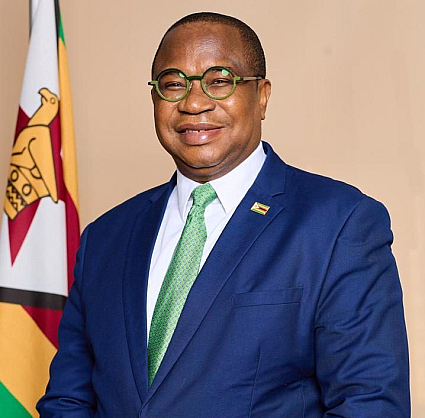

Zimbabwe arrears of about $3bn owed to the World Bank, the African Development Bank and the European Investment Bank should be cleared by March 2027, finance minister Mthuli Ncube said on 19 November.
Clearing the arrears matters because they have shut Zimbabwe out of new concessional lending from the international financial institutions for more than two decades, and a settlement of the Zimbabwe arrears would be the first step towards a wider restructuring of the country’s external debt. The government has asked the three lenders for grants and concessional money to do it.
How much are the Zimbabwe arrears and who is owed?
In a statement from the Ministry of Finance, Mr Ncube said Zimbabwe owed $1.7bn to the World Bank Group, $835mn to the African Development Bank Group and $433mn to the European Investment Bank, a total of about $2.97bn. He said Zimbabwe had reaffirmed its March 2027 target at the IMF and World Bank annual meetings in Bangkok in October.
The minister said reforms alone could not close the financing gap and that the government had formally asked the three institutions for resources to clear the Zimbabwe arrears. Grants and long-term concessional financing were “the most sustainable option”, he said. Clearing the Zimbabwe arrears also depended on financing and institutional approvals by the lenders, he added.
The process for the Zimbabwe arrears and wider debt resolution has run since December 2022 through a Structured Dialogue Platform that brings together creditors, development partners and the government to discuss economic, governance and land tenure reforms.
Is Zimbabwe meeting its IMF targets?
Progress under the IMF programme is meant to support talks on the Zimbabwe arrears. Mr Ncube said all five quantitative targets and the structural benchmarks for the end-March and end-June 2026 test dates under Zimbabwe’s 10-month staff-monitored programme with the IMF had been met. An IMF mission for the third and final review is expected from 2 to 11 December, he said.
The IMF’s own account supports the first part of that claim. When IMF management approved the first review on 27 July, the fund said all quantitative targets and structural benchmarks to the end of March had been achieved. The state-owned Herald later reported a staff-level agreement on the second review. A staff-monitored programme carries no IMF financing; it is a way for a government to build a track record.
The minister acknowledged that the programme’s social spending target had been missed, which he blamed on an ongoing audit and disbursement delays. The government has responded with programme-based financing, closer spending monitoring and a new social registry manual, he said.
What does the government say about growth and inflation?
According to the finance ministry, GDP grew 8.3 per cent in 2025 and is projected to grow 5 per cent in 2026 and 3.5 per cent in 2027, with the slowdown reflecting expected El Nino effects. Inflation in the ZiG currency fell from 32.7 per cent in October 2025 to 4.3 per cent in October 2026, the ministry said, citing fiscal discipline, tight monetary policy and exchange rate stability. These figures are the government’s and were not independently confirmed for this article.
Mr Ncube also cited governance indicators: Zimbabwe’s score on the World Justice Project Rule of Law Index rose from 0.39 to 0.40, its Ibrahim Index score from 48.1 to 48.4, and its Corruption Perceptions Index score from 21 to 22 out of 100. Cabinet has approved a second national anti-corruption strategy for 2026 to 2030, he said.
What about compensation for former farm owners?
Compensation for farmers whose land was taken under land reform is one of the issues creditors have linked to the Zimbabwe arrears process. Mr Ncube said the government had paid at least 800 former farm owners $820mn under the Global Compensation Deed, in cash and in dollar-denominated Treasury bonds with a 2 per cent coupon, and had allocated a 12.5 per cent stake in Kuvimba Mining House as part of the package.
For farms protected by bilateral investment agreements, the government has paid $20mn a year since 2024, a total of $60mn out of $130.5mn, the minister said. The remaining $70.5mn is due in equal payments in 2027 and 2028. Claimants are from Denmark, Germany, the Netherlands, Switzerland and the former Yugoslavia.
The statement comes a week after a presidential order left Mr Ncube in charge of 58 laws, including those on tax, borrowing and banking, while the new economic development ministry under Kudakwashe Tagwirei received two (see our earlier report). Sierra Leone and Egypt are also moving through IMF reviews this month.
FAQ
How large are the Zimbabwe arrears to multilateral lenders?
About $2.97bn, the finance ministry said: $1.7bn to the World Bank Group, $835mn to the African Development Bank Group and $433mn to the European Investment Bank.
When does Zimbabwe want to clear its arrears?
By March 2027, according to finance minister Mthuli Ncube, provided the lenders approve financing.
Does the IMF lend to Zimbabwe under the current programme?
No. The staff-monitored programme has no IMF financing; it monitors reforms. The third and final review mission is expected in December.
Why do the Zimbabwe arrears matter?
Unpaid arrears bar Zimbabwe from new concessional loans from the World Bank and the African Development Bank, limiting finance for public services and infrastructure.


