
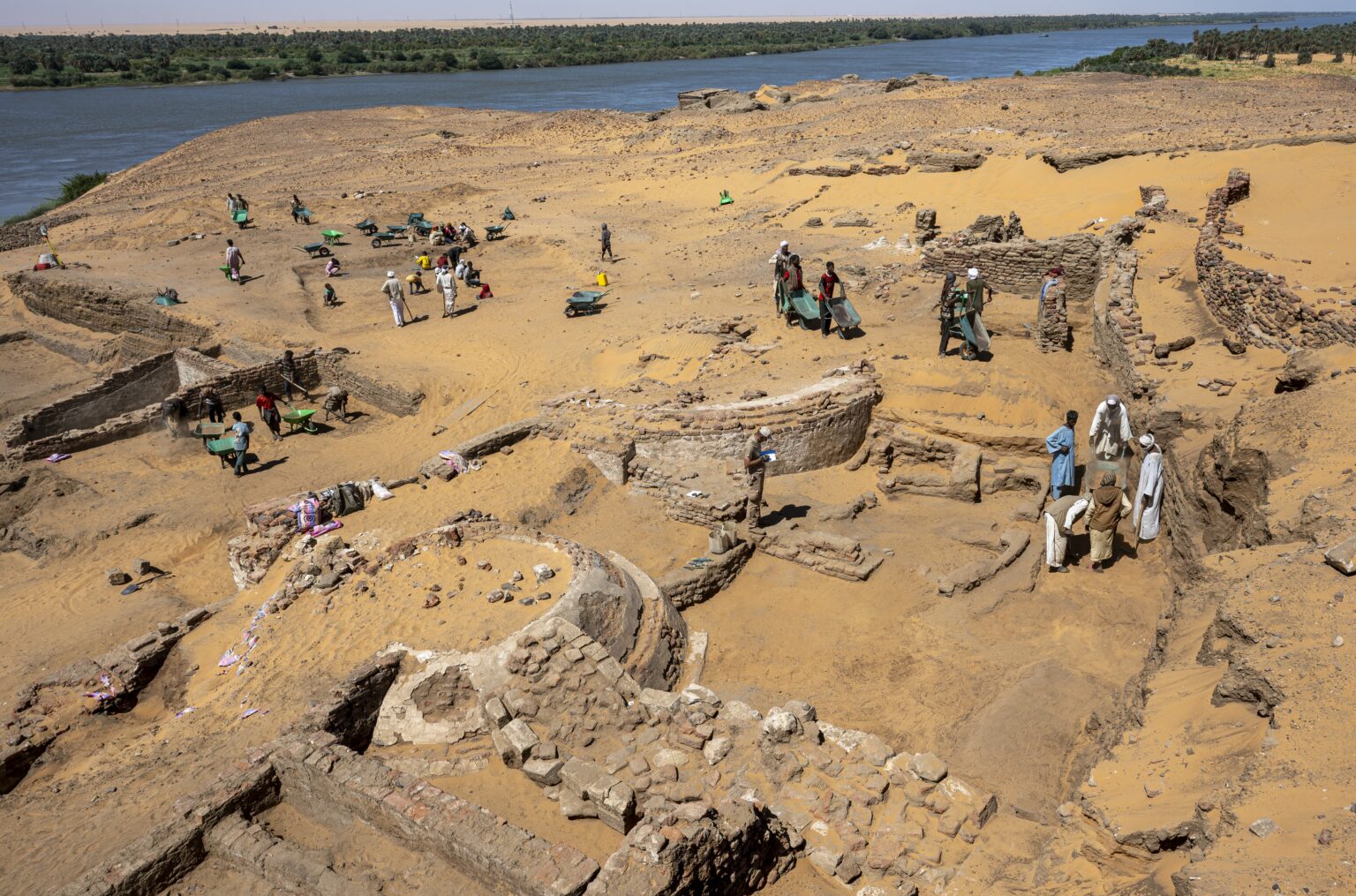

The Great Church of Jesus at Old Dongola in northern Sudan shows that medieval Makuria was a powerful African kingdom rather than a peripheral one, the Polish archaeologist leading its excavation told DNE Africa in an exclusive interview.
Artur Obłuski, director of the Polish Centre of Mediterranean Archaeology (PCMA) at the University of Warsaw, said the cathedral, often called the “Hagia Sophia of Africa”, challenges long-held assumptions about what medieval African states could build. He spoke weeks after the Sudanese-Polish mission reached the Great Church of Jesus’s original floor for the first time.
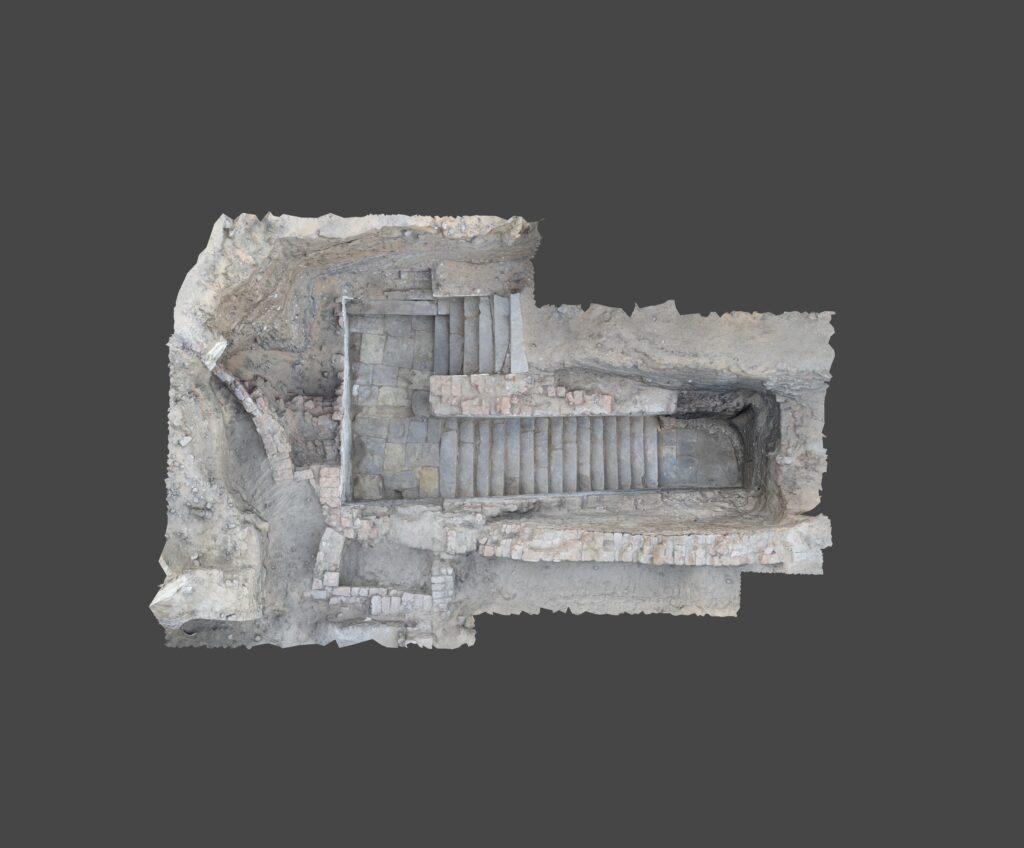
The team got down to the floor through a monumental staircase, so far the only point where excavators have reached the original level, with walls beside it standing about 11 metres high, the Associated Press reported. Obłuski has put the Great Church of Jesus at about 47 metres wide and 57 metres long, according to the same report, and only a small part of it has been excavated.
Old Dongola was the capital of Makuria, a Christian kingdom on the Nile in what is now northern Sudan that lasted from around the sixth century to the 14th. The mission works with Sudan’s National Corporation for Antiquities and Museums, and has kept going despite the war in Sudan, which broke out in April 2023.
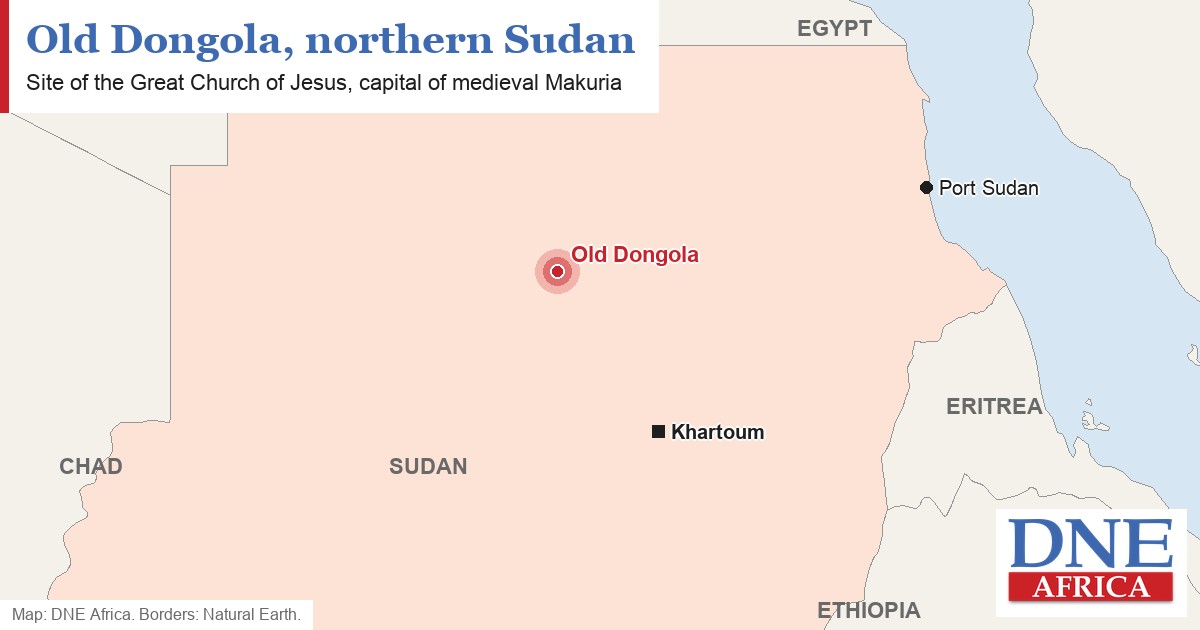
In the interview, Obłuski discussed the latest discoveries at the Great Church of Jesus, including Greek inscriptions and biblical texts, Nubia’s ties with the wider Christian world, and the war’s impact on research and heritage protection. He also called for sustained international support, a central role for local communities and, once peace returns, sustainable cultural tourism. The interview has been lightly edited; questions have been shortened.
Table of Contents
In this interview
What does reaching the original floor of the Great Church of Jesus change?
Until now, much of our understanding of this extraordinary building was based on the remains of its upper structures and the architectural elements visible above the accumulated archaeological deposits. We could reconstruct its general layout, but important aspects of its internal organisation remained uncertain.
We are now in a much better position to investigate the cathedral because we finally know the preserved height of the structure.
What does the Great Church of Jesus reveal about the power of Makuria?
The dimensions of the Great Church of Jesus are extraordinary. With a footprint of approximately 47 by 57 metres, it ranks among the most monumental buildings constructed in medieval Nubia. Its scale is particularly impressive when we consider the technological, organisational and logistical challenges involved in constructing such a building.
The cathedral is a powerful testimony to the resources available to the rulers and religious institutions of the Kingdom of Makuria. Its construction required skilled architects, builders, craftsmen, substantial quantities of building materials, and an effective system for organising labour and supplying resources.
Such a project would have been impossible without a sophisticated political and economic organisation. It demonstrates that medieval Makuria was not a peripheral or isolated society but a powerful African kingdom capable of undertaking monumental architectural projects on a scale comparable with major centres of the contemporary Christian world.
How does the cathedral compare with Hagia Sophia in Constantinople?
The comparison with Hagia Sophia is intended to illustrate the extraordinary scale and ambition of the Great Church of Jesus, rather than to suggest that the two buildings were architecturally identical or of the same size.
Hagia Sophia in Constantinople was one of the most remarkable achievements of late antique architecture and a powerful symbol of Christian imperial authority. The Great Church of Jesus fulfilled a similarly monumental role in the capital of Makuria, although on a smaller scale and within a different architectural tradition.
The comparison also helps challenge the widespread misconception that medieval African kingdoms lacked the resources or technological knowledge to construct sophisticated monumental buildings.
The churches of medieval Nubia developed their own distinctive architectural traditions, incorporating elements from the wider Christian world while adapting them to local building materials, environmental conditions and religious practices.
Whether the Great Church of Jesus served as a direct architectural model for other churches remains an open research question. Establishing such relationships requires detailed comparative studies of construction techniques, architectural forms and chronology.
What do the Greek inscriptions found at the Great Church of Jesus reveal?
The discovery of Greek inscriptions and fragments of biblical odes is extremely important because it provides direct evidence of the intellectual and liturgical culture of medieval Nubia. However, the pieces you are referring to were found in a small church attached to the Great Church.
Greek occupied a special position in Nubian Christianity. It was one of the principal languages of religious writing, alongside Old Nubian and Coptic, and remained an important medium for expressing Christian religious traditions long after the political landscape of the eastern Mediterranean had changed.
These discoveries remind us that medieval Nubian Christianity possessed a sophisticated written culture. Nubian clergy and scribes were not simply copying foreign traditions. They participated actively in a shared Christian intellectual world, selecting, transmitting and adapting texts to their own religious environment.
How connected was Old Dongola with the Byzantine and Eastern Christian worlds?
Old Dongola was one of the great capitals of medieval Africa. Its connections with the Byzantine and Eastern Christian worlds are visible in many aspects of its material culture, religious practices, architecture, painting and written sources.
The use of Greek, the adoption of certain ecclesiastical and administrative titles, and the iconography of Nubian religious paintings all demonstrate that Makuria participated in a much wider Christian cultural sphere.
However, I believe it is important to move beyond the traditional approach that treats Nubian civilisation primarily as a recipient of Byzantine influence. Nubian society was not a passive imitator of Constantinople or Egypt. Its rulers, clergy, artists and communities made deliberate choices about which elements of the wider Christian tradition they wished to adopt and how to transform them.
This process produced a distinctive Nubian Christian civilisation, recognisable through its architecture, artistic conventions, languages and institutions.
The Great Church of Jesus offers an excellent opportunity to study these processes.
How has the war in Sudan affected work at the Great Church of Jesus?
The war in Sudan has profoundly affected archaeological research and heritage protection throughout the country. For our mission, the most immediate consequences have been restrictions on travel, major logistical difficulties, increased costs and the need to reassess security conditions continuously.
Regular archaeological fieldwork was interrupted after the outbreak of the conflict in 2023. Resuming our activities required considerable preparation, close cooperation with Sudanese partners and local communities, and careful assessment of the risks.
Transporting people, equipment and supplies has become much more complicated. Routes that were previously relatively straightforward now require considerably more time and planning.
The conflict has also affected conservation activities. Archaeological monuments do not stop deteriorating during wars. Buildings continue to suffer from rainfall, erosion, structural instability and other environmental pressures, even when specialists cannot reach them.
Despite these challenges, we have worked to maintain our presence at Old Dongola and continue essential archaeological and conservation activities whenever conditions permit. Our Sudanese colleagues and local partners have played an indispensable role in making this possible.
For us, continuing this work is not only a scientific responsibility. It is also a commitment to Sudan and its cultural heritage during an exceptionally difficult period.
What are the biggest threats to Old Dongola’s heritage?
The greatest challenge is the combination of several threats occurring simultaneously.
Old Dongola contains numerous buildings constructed largely from mud brick. These structures are especially vulnerable to intense rainfall, water penetration, erosion and changes in environmental conditions. The exceptionally heavy rains experienced in Sudan in recent years have demonstrated how serious these threats can be.
Archaeological excavation itself also creates responsibilities. Once ancient structures are exposed, they require regular monitoring, maintenance and, in many cases, protective conservation measures.
What we need most is sustained international support for conservation programmes, emergency interventions, training and the employment of local heritage professionals. Short-term emergency funding is valuable, but long-term protection requires continuity.
It is equally important to support Sudanese institutions responsible for cultural heritage. International cooperation should strengthen local capacities rather than replace them. The ultimate objective must be a sustainable system in which Sudanese specialists and communities have the resources to protect their own heritage.
Could the Great Church of Jesus draw cultural tourism to Sudan?
Absolutely. I believe Old Dongola has enormous potential to become one of the most important cultural heritage destinations in northeastern Africa.
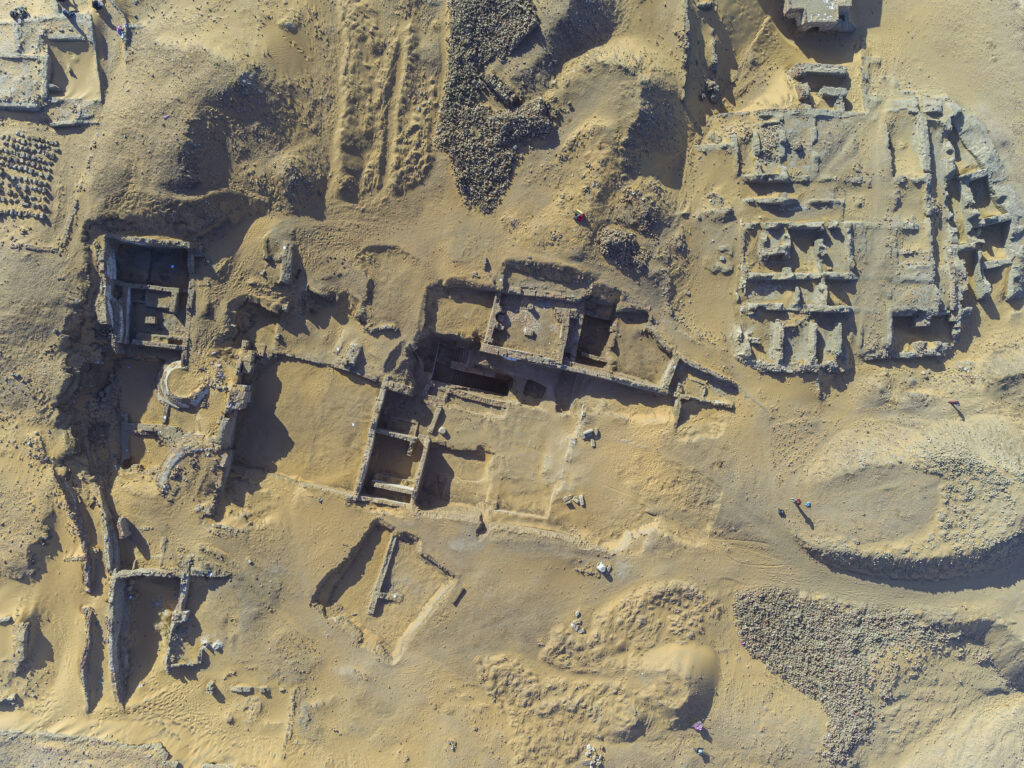
The Great Church of Jesus is an exceptional monument, but it is only one part of a much larger archaeological landscape. Old Dongola preserves the remains of a medieval capital with monumental churches, fortifications, monasteries, residential quarters and evidence of a long and fascinating history extending beyond the Christian period.
Together, these monuments offer visitors an opportunity to discover a chapter of African history that remains insufficiently known internationally.
However, archaeological discovery alone does not create sustainable tourism. We also need conservation, visitor infrastructure, interpretation, trained local guides and effective heritage management.
Most importantly, tourism development must benefit the communities living around the archaeological site. Local employment, small businesses, educational initiatives and community participation should be integral parts of any future strategy.
Of course, the present conflict makes large-scale tourism development impossible for the time being. Nevertheless, this is precisely the moment to think about the future. Protecting and studying the site today can create opportunities for economic recovery and sustainable development when peace returns to Sudan.
What role do local communities play in protecting the site?
Cooperation with local communities is fundamental to our work at Old Dongola. I strongly believe that archaeological heritage cannot be protected sustainably without the active participation of the people who live around it.
For too long, archaeology in many parts of the world was conducted primarily for the benefit of researchers and academic institutions. We are trying to develop a different approach, in which archaeological research and conservation also create tangible benefits for local communities.
At Old Dongola, our activities include employing local residents, supporting educational initiatives, and involving community representatives in discussions about the future management and presentation of the site.
Residents possess valuable knowledge of the local environment, the history of the area and the challenges affecting its monuments. Their involvement is particularly important during periods when international specialists cannot be present.
Our conservation and community programme reflects this philosophy.
I believe that the most effective protection of archaeological heritage comes when local communities regard the monuments not as something belonging exclusively to archaeologists or government institutions, but as a meaningful part of their own heritage and a resource for future generations.
What are the priorities for the next season at the Great Church of Jesus?
Our immediate priority is to continue the systematic investigation of the Great Church of Jesus and develop a more complete understanding of its architectural organisation, chronology and functions.
We are particularly interested in reconstructing the building’s original appearance, identifying the successive phases of its use, and understanding its relationship with the surrounding structures and the wider urban landscape of Old Dongola.
The newly discovered architectural features and inscriptions open several important lines of research. Further excavation may reveal additional evidence of the cathedral’s decoration, liturgical arrangements and construction history.
At the same time, we intend to continue our conservation activities and work with local communities to protect the monuments already exposed.
I should emphasise that archaeology is not simply about discovering spectacular objects or monumental buildings. Our objective is to understand the people who created, used and transformed these spaces over centuries.
The Great Church of Jesus has the potential to transform our understanding of medieval Nubian architecture, religious life and political authority. But perhaps its greatest significance is that it reminds us how much remains to be discovered about the history of Africa and the extraordinary achievements of its medieval societies.
FAQ
What is the Great Church of Jesus?
The Great Church of Jesus is a medieval cathedral at Old Dongola in northern Sudan, the capital of the Christian Kingdom of Makuria. It is among the largest buildings of medieval Nubia and is often called the “Hagia Sophia of Africa”.
Who is excavating the Great Church of Jesus?
A Sudanese-Polish mission led by Artur Obłuski of the Polish Centre of Mediterranean Archaeology at the University of Warsaw, working with Sudan’s National Corporation for Antiquities and Museums.
How big is the cathedral at Old Dongola?
Obłuski has estimated the Great Church of Jesus at about 47 metres wide and 57 metres long, the Associated Press reported. Only a small part of the building has been excavated so far.
Has the war in Sudan stopped the excavation?
Fieldwork was interrupted after the conflict broke out in 2023, Obłuski said. The mission has since resumed work at Old Dongola whenever conditions allow, with Sudanese colleagues and local partners.


