
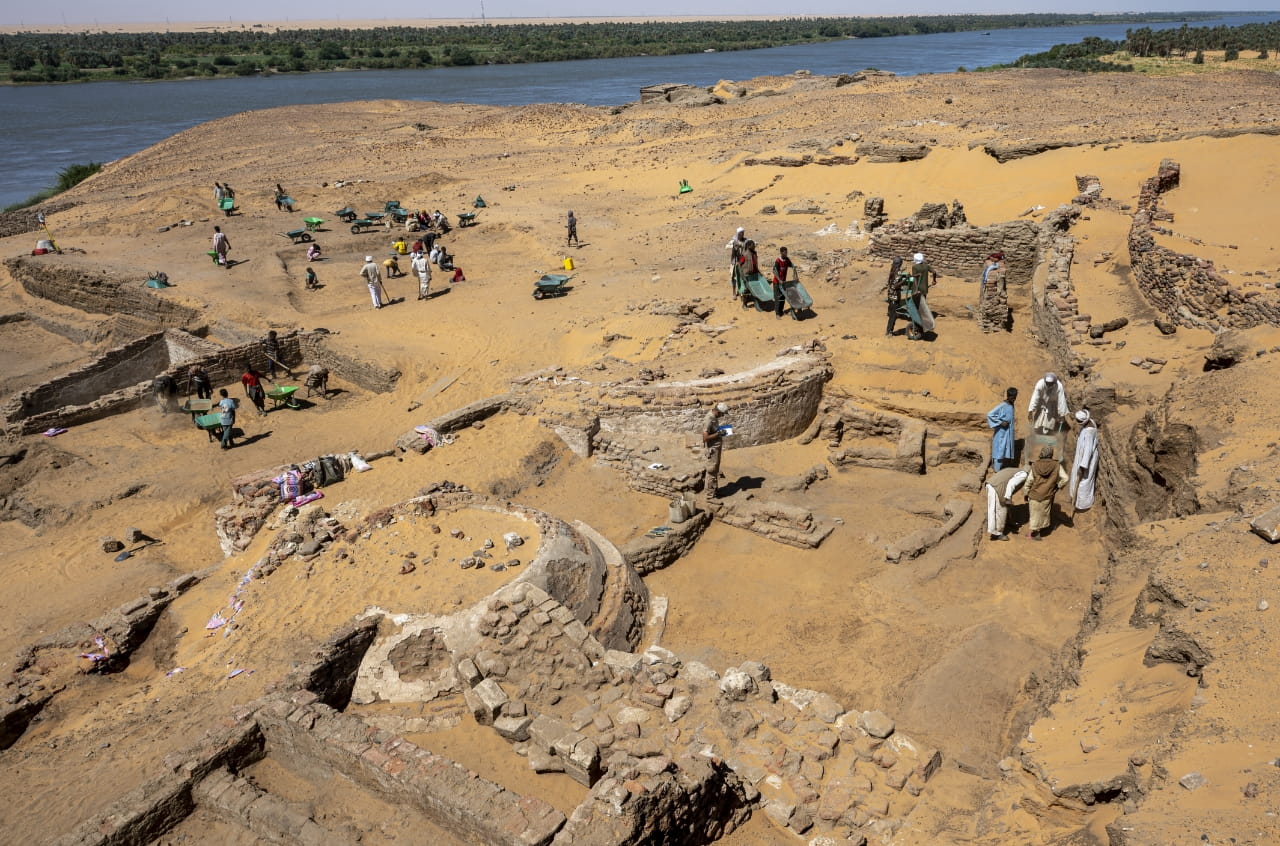

A Sudanese-Polish archaeological mission has uncovered new details of medieval Nubia’s largest cathedral, shedding light on the region’s architectural achievements, religious traditions and cultural influence.
Archaeologists working at Old Dongola in northern Sudan have reached the original floor of the Great Church of Jesus for the first time, marking a major milestone in the excavation of what is considered the largest and richest church in medieval Nubia.
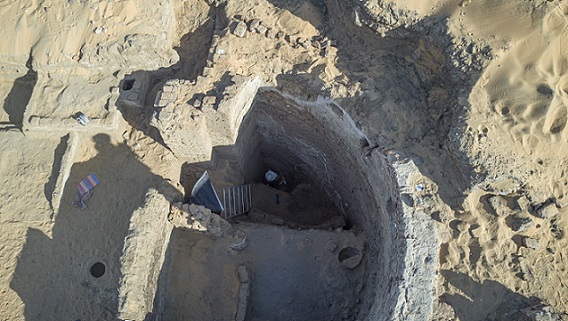
The Sudanese-Polish team uncovered a monumental staircase leading into the structure during the latest excavation season, alongside additional architectural features that are helping researchers reconstruct the cathedral’s original design and scale.
The discovery was reported by Archaeology Magazine on November 4, citing the archaeological mission led by Professor Artur Obłuski of the Polish Centre of Mediterranean Archaeology (PCMA) at the University of Warsaw, in cooperation with Sudan’s National Corporation for Antiquities and Museums.
The Great Church of Jesus measures approximately 47 metres wide and 57 metres long, while its height is estimated at around 21 metres. Archaeologists have also identified buttresses designed to support the apse, offering further evidence of the building’s considerable architectural ambition.
Despite its scale, only a relatively small section of the cathedral has been excavated. The staircase is currently the only point where the team has reached the original floor, while walls beside it remain approximately 11 metres high. The depth and size of the structure require specialised excavation methods, additional resources and long-term conservation planning.
Obłuski has compared the cathedral’s architectural significance to that of Hagia Sophia in Constantinople, suggesting that the Great Church of Jesus may have played an influential role in shaping religious architecture in Nubia and potentially other parts of Africa.
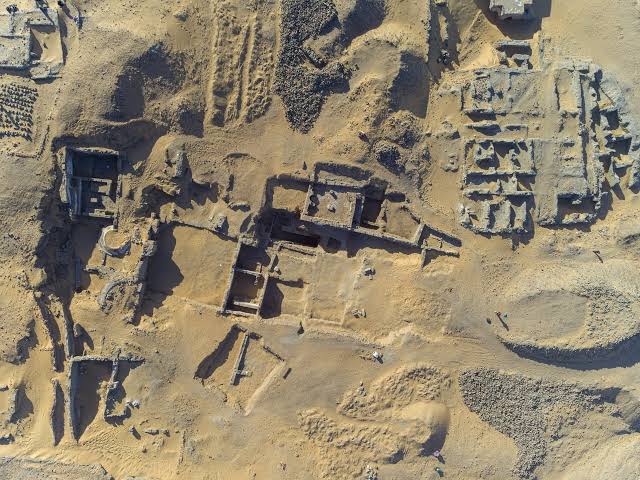
The discovery could also prompt historians to reassess the religious geography of Old Dongola, once the capital of the Christian Kingdom of Makuria. Scholars had traditionally identified another church outside the city’s walls as the cathedral, but the newly excavated structure raises questions about that interpretation.
Biblical inscriptions offer new insights into Nubian Christianity
Beyond the cathedral’s architecture, the mission has uncovered important evidence of medieval religious life.
A smaller church was identified on an upper floor of a structure added to the cathedral. Although its walls survive to a height of only around one metre, archaeologists recovered numerous fragments of painted plaster from the surrounding debris. The material has filled six large shelving units, providing researchers with substantial evidence for studying the building’s original decoration.
The team also recovered fragments bearing Greek inscriptions. Dr. Agata Deptuła, an epigraphist at the Warsaw centre, identified the texts as biblical odes, or liturgical songs associated with the Psalter.
One of the fragments contains a passage from the Prayer of Hannah, the mother of the biblical prophet Samuel. The inscription was written in a carefully executed book hand, with letters measuring approximately half a centimetre.
The discovery is particularly significant because Psalm texts were previously among the most common examples of biblical writing recovered at Old Dongola, while the newly identified odes provide additional evidence of the liturgical traditions practised in medieval Nubia.
Preserving Sudan’s heritage amid conflict
The archaeological work also highlights the challenges of protecting Sudan’s cultural heritage amid the country’s ongoing conflict.
The mission has undertaken conservation activities in cooperation with the Warsaw University of Technology, particularly after severe flooding struck Old Dongola in autumn 2024, damaging some protective roofs covering the ruins.
Alongside archaeological research, the team has pursued initiatives supporting the surrounding community. A solar-powered water system, funded through Poland’s Polish Aid programme, operates pumps drawing water from the Nile for households and agricultural land serving approximately 10,000 people. Eight booster stations were also installed to improve water access in higher areas where residents had faced shortages during the conflict.
The mission has additionally organised heritage-protection workshops and training activities for local residents. Community members have established an association to support the antiquities authority and archaeologists in safeguarding the site.
The excavation forms part of the European Research Council-funded Afropolis Tungul project, which examines Old Dongola’s urban development from the fourth to the 15th centuries.
Looking ahead, the team hopes to determine the cathedral’s full dimensions during the next excavation season and eventually uncover the entire structure. Sudan’s antiquities authorities support the plan, viewing the monument’s potential excavation and preservation as an opportunity to strengthen the country’s cultural tourism sector.
The Great Church of Jesus offers a rare window into a period when Nubia was a major centre of Christian civilisation in Africa. Its ongoing excavation could deepen understanding of the region’s architectural heritage and its connections with the wider Christian world.


