
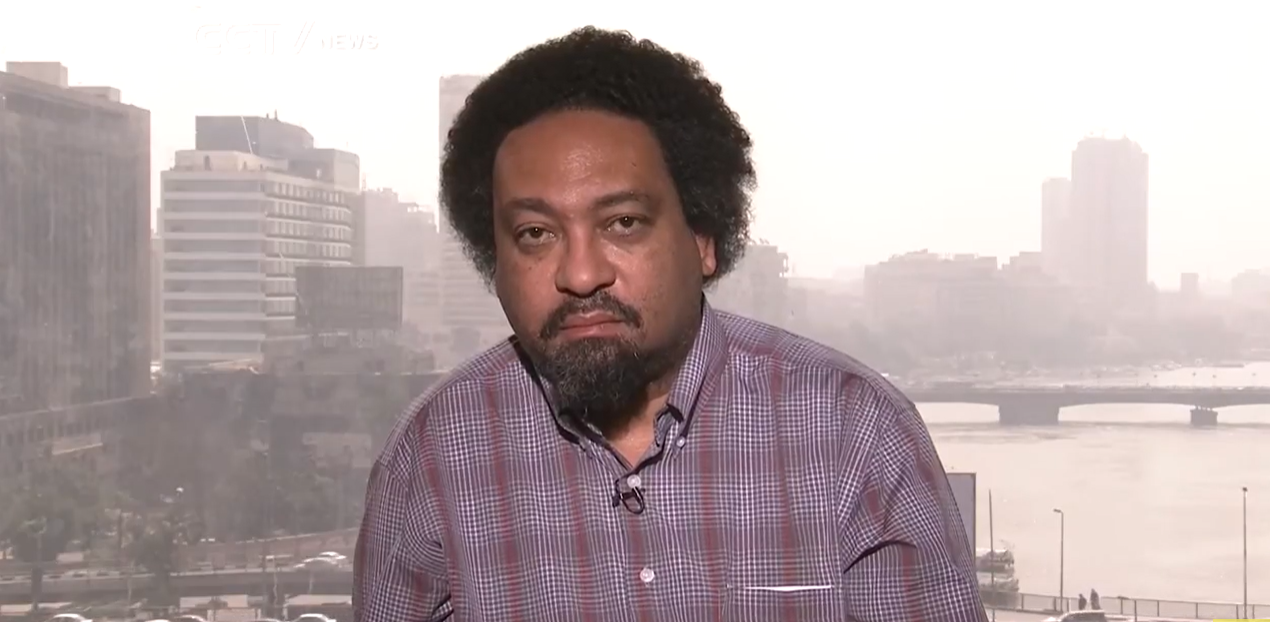

Gamal Gorkeh Nkrumah, a veteran journalist and son of Ghana’s first president, Kwame Nkrumah, has died in Cairo at the age of 68, leaving a legacy of reporting and analysis on African affairs, international relations and Pan-Africanism.
Nkrumah died on Wednesday, October 14, after a prolonged illness, according to his family. He had been receiving care at a rehabilitation centre following a stroke, Ghanaian media reported.
His death drew tributes from Egyptian officials and media institutions, reflecting his longstanding contribution to journalism and his role in covering Africa from Cairo for an international readership.
Egypt’s Foreign Minister Badr Abdelatty offered condolences, remembering Nkrumah as the son of Ghana’s founding president and noting that he was named after former Egyptian president Gamal Abdel Nasser. Both Nasser and Kwame Nkrumah were prominent advocates of African liberation and closer cooperation among newly independent states.
Egypt’s National Press Authority (NPA) also mourned Nkrumah, highlighting his work on African affairs and his coverage of the continent’s history, cultures, political challenges and pursuit of independence.
A career devoted to African affairs
Nkrumah spent around three decades working as a journalist and editor at Al-Ahram Weekly, Egypt’s English-language newspaper published by the Al-Ahram press organisation. His work explored African politics, international relations and the continent’s place in a changing global order.
A committed advocate of Pan-Africanism, he examined efforts to strengthen political, economic and cultural ties among African countries and peoples. His writing also sought to foster greater understanding between Arab and sub-Saharan African societies.
Ahmed Zayed, director of Bibliotheca Alexandrina, paid tribute to Nkrumah, describing him as an expert on African affairs and a prominent analyst based in Cairo. Zayed said Nkrumah had helped establish Al-Ahram Weekly and extended condolences to his sister, Samia Nkrumah, his children and his colleagues at the newspaper.
A life between Ghana and Egypt
Born in Accra in 1958, Nkrumah was the son of Kwame Nkrumah, who led Ghana to independence from British colonial rule in 1957 and became its first president in 1960, and his Egyptian wife, Fathia Nkrumah.
Named after Gamal Abdel Nasser, he was closely connected to the political history of both Ghana and Egypt, whose leaders shared a commitment to anti-colonialism and African solidarity.
After a military coup ousted his father in 1966, Nkrumah moved to Cairo with his mother and siblings, Samia and Sekou, with assistance from Nasser. The family settled in Egypt, where the children attended Al-Nasr College in Maadi.
Nkrumah later studied at the School of Oriental and African Studies in London, earning a doctorate in political science, according to biographical accounts. He also spent several years teaching development and economics in Zimbabwe before pursuing his journalism career in Cairo.
A legacy of Pan-Africanism
Nkrumah’s journalism reflected a sustained interest in the political and cultural forces shaping Africa, as well as the continent’s struggle to assert its interests on the international stage.
His work carried forward themes associated with his father’s political legacy, including African unity, independence and solidarity. Through his reporting and analysis, he sought to place African developments in a broader international context.
In a statement following his death, his family paid tribute to his intellectual independence and commitment to justice, human dignity, African unity and international solidarity. It also thanked the medical professionals and caregivers who supported him during his illness, along with the governments and people of Egypt and Ghana.
His sister, Samia Nkrumah, is a Ghanaian politician who served as a member of parliament and chaired the Convention People’s Party, founded by their father. His younger brother, Sekou Nkrumah, is a writer and political activist.


