
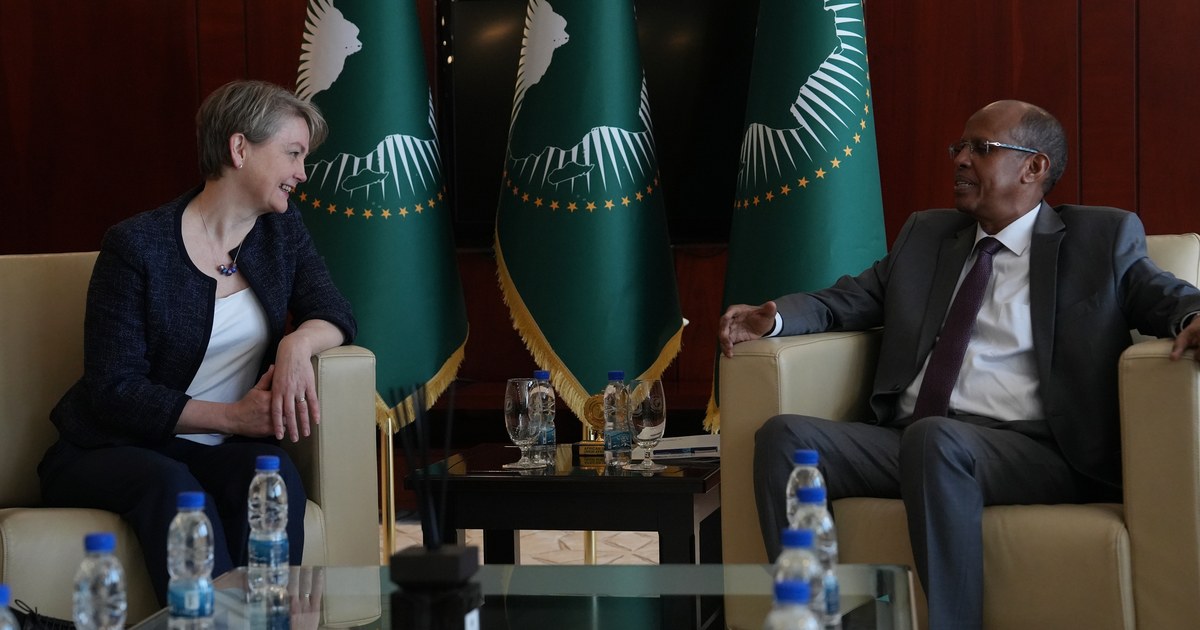

The 2023 IGAD treaty entered into force on 16 November, the African Union Commission said on 19 November, giving the Horn of Africa’s regional bloc a new legal foundation in the year of its 40th anniversary.
The change matters because the Intergovernmental Authority on Development is the main regional forum for crises in the Horn, including the war in Sudan and tensions between Ethiopia and its neighbours, and its founding texts date from the 1980s and 1990s.
What did the African Union say about the IGAD treaty?
In a statement, Mahmoud Ali Youssouf, chairperson of the African Union Commission, welcomed the entry into force of the IGAD treaty and congratulated the bloc’s heads of state and government. He commended IGAD’s executive secretary, Workneh Gebeyehu, and the secretariat for their work in getting the treaty ratified.
Mr Youssouf said strong regional economic communities were “indispensable pillars” of the AU’s integration plans and of Agenda 2063, the union’s long-term development programme. He said he expected the new treaty to strengthen IGAD’s capacity in peace and security, climate resilience, food security and economic integration.
He said the AU Commission would deepen its partnership with IGAD under the AU’s Constitutive Act and the revised protocol on relations between the union and regional communities, guided by coordination, subsidiarity and a division of labour. The real test, he said, would be the treaty’s “tangible contribution” to peace, stability and livelihoods in the region.

How did the IGAD treaty come into force?
IGAD heads of state adopted the treaty in 2023 to replace the agreement that set up the bloc. It needed ratification by a set number of member states before taking effect. Somalia’s federal parliament ratified the IGAD treaty in January 2026, becoming the fifth member state to do so after Djibouti, Ethiopia, Kenya and South Sudan, according to IGAD and Kenya’s Standard.
IGAD’s council of ministers confirmed at an extraordinary session on 15 September that the ratification threshold had been met and asked the executive secretary to notify members of the date of entry into force, Capital Ethiopia and other outlets reported. The AU statement gives that date as 16 November.
IGAD was founded in 1986 as the Intergovernmental Authority on Drought and Development, with a focus on drought and desertification. It was relaunched with a wider mandate in 1996, and has since mediated in South Sudan and Somalia, among other conflicts.
What does the IGAD treaty mean for the Horn of Africa?
The AU said the IGAD treaty would strengthen the legal and institutional basis for collective action in the region. The bloc faces a heavy agenda: the war in Sudan, the fragile peace deal in South Sudan, security in Somalia as African Union troops draw down, and recurring drought and floods.
The AU’s call for “coherence and complementarity” with regional bodies also reflects a long-running question about who leads mediation in the Horn, as several initiatives on Sudan have competed in recent years. DNE Africa has reported on the funding gap facing the AU mission in Somalia (see our report) and on Mr Youssouf’s priorities for the union (here).
IGAD has not yet set out publicly what institutional changes the IGAD treaty will bring first. Its summit of heads of state is the body that takes the bloc’s main decisions.
FAQ
When did the 2023 IGAD treaty enter into force?
On 16 November 2026, according to the African Union Commission, during IGAD’s 40th anniversary year.
Which countries ratified the IGAD treaty?
Djibouti, Ethiopia, Kenya, South Sudan and Somalia had ratified it by January 2026, when Somalia became the fifth, according to IGAD and regional media.
What is IGAD?
The Intergovernmental Authority on Development is the Horn of Africa’s regional economic community, based in Djibouti. It works on peace and security, drought, food security and economic integration.
What did the AU say the treaty should achieve?
AU Commission chairperson Mahmoud Ali Youssouf said it should strengthen IGAD’s capacity and be judged by its contribution to peace, stability and livelihoods in the region.


