
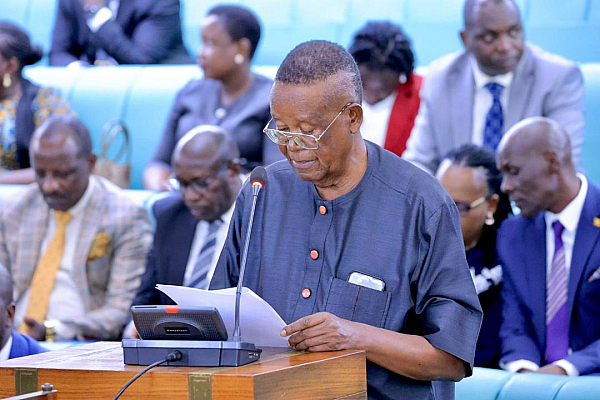

Only 10 of 107 banks and other partners were using Uganda’s new NIRA verification system for identity checks by 28 October, Internal Affairs minister Ephraim Kamuntu told Parliament on 18 November.
Under the new system, run by the National Identification and Registration Authority (NIRA), banks must retrieve a customer’s details directly from the national database using their national identification number, rather than relying on the ID card presented. MPs said the slow switch was costing customers time and money, according to a statement from the Parliament of Uganda.
How does the new NIRA verification work?
Under the NIRA verification rules, banks across the country will be required to integrate the National Security Information System into their own systems, Kamuntu said. Customer information can then be retrieved from the NIRA database only when a bank presents a national identification number (NIN).
“The new system was intended to improve security, privacy and data protection rights of personal data for any individual with a NIN,” the minister said. “This was a significant departure from verification that depended only on information presented on reading the ID document.”
The change means banks and telecoms operators have had to make significant upgrades to their technology, a process Kamuntu said had been slower than expected. “NIRA shared integration guidance with 107 partners and as at 28 October 2026, 10 partners were transacting on the new system,” he said. The Uganda Bankers’ Association had reported that many member institutions were still installing compatible biometric readers.
What happens if a card cannot be verified?
Where a customer’s card cannot be verified at the point of service, the minister said, their details can be checked through NIRA’s secure channel or through a Confirmation of Information Letter issued for that transaction.
That fallback to NIRA verification by letter drew criticism from opposition MPs. Paul Mwiru, a National Unity Platform (NUP) MP for Jinja South Division East, said banks should keep using the data customers had registered with their old ID cards. “You have added an extra burden to Ugandans and creates extra charges. If you go to NIRA, it is not easy to get the required confirmation letters,” he said.
Denes Sekabira, NUP MP for Katikamu County North, asked who would pay for a confirmation letter each time a bank needed one. He said charges could end up being passed on to customers while smaller institutions, such as microfinance lenders, upgraded their equipment. The minister’s reply, as reported in the statement, did not say who would bear the cost.
Why is Uganda tightening NIRA verification?
Deputy Speaker Thomas Tayebwa backed the change, linking it to Uganda’s efforts against money laundering. “We passed laws to remove Uganda from the grey list of the Financial Action Task Force regarding money laundering,” he said. He said forged national IDs had been used to launder money and finance terrorism.
The Financial Action Task Force, the global anti-money-laundering watchdog, removed Uganda from its list of jurisdictions under increased monitoring in February 2025, after the country completed an action plan agreed in 2020. Stronger NIRA verification of customers’ identities is part of the know-your-customer controls that the watchdog expects banks to apply.
Uganda began replacing its first generation of national ID cards, issued from 2014, with new cards as the old ones expired. The new cards include a chip that can be read by biometric devices.
The NIRA debate is one of several this month in which MPs have questioned how state systems are being rolled out, including over vehicle inspection assets bought from SGS.
FAQ
What is the new NIRA verification system?
It requires banks to retrieve a customer’s details from the national identity database using their national identification number, instead of relying on the ID card shown.
How many banks use NIRA verification?
NIRA shared guidance with 107 partners, and 10 were using the system by 28 October 2026, the Internal Affairs minister said.
What if my ID cannot be verified at the bank?
Details can be checked through NIRA’s secure channel or a Confirmation of Information Letter for the transaction, the minister said.
Is Uganda still on the FATF grey list?
No. The Financial Action Task Force removed Uganda from its list of jurisdictions under increased monitoring in February 2025.


