

By using this site, you agree to the Privacy Policy and Terms of Use.
Accept
DNE Africa
  • Home
  • Politics
    IMG 20261128 WA0013
    BusinessPolitics

    Egypt Seeks Investor Protection Mechanisms to Boost Business Expansion in Africa

    By Ahmed Emam 2 Min Read
    Benin HPV vaccination: officials, partners and traditional leaders at the cervical cancer elimination day in Cotonou, 27 November 2026
    Health

    Benin HPV vaccination campaign to reach 320,000 more girls

    By DNE Africa November 28, 2026
    Tunisian harissa ingredients: split red chilli peppers and their seeds drying in the sun on a green mesh in Tunisia
    Culture

    Tunisian harissa marks four years on UNESCO heritage list

    By DNE Africa November 28, 2026
  • Business
    Screenshot ٢٠٢٦١١٢٨ ١٥٣٥٥٩
    BusinessPolitics

    INTERVIEW: Namibia Amb. Calls for Africa-Wide Cooperation, Stronger Trade Ties with Egypt

    CAIRO - Namibia's Ambassador to Egypt, Weich Mupya, has called for stronger…

    By Ahmed Emam 3 Min Read
    IMG 20261128 122305
    BusinessPolitics
    Cameroon Amb. Calls for Egypt-Africa Industrial Partnerships, Cross-Border Investment
    IMG 20261128 112036 1
    BusinessPolitics
    Abdelatty: Egypt to Establish Investment Entity to Boost African Investments
    Egypt LNG exports: an LNG tanker approaches the loading jetty at Egypt's Idku liquefaction plant
    Business
    Egypt LNG exports set for Europe from Idku as plant supply halts
    AfDB at 60: Time to reclaim the zeal of its visionary reformers
    Business
    AfDB Approves J.P. Morgan Payments as Confirming Bank to Boost African Trade Finance
  • Culture
  • Opinion
  • Technology
  • Sports
  • World
  • My Bookmarks
Reading: Botswana’s Tsodilo Hills rock art nears 25 years on UNESCO list
Sign In
  • About us
DNE AfricaDNE Africa
Font ResizerAa
  • Home
  • Politics
  • Business
  • Culture
  • Opinion
  • Technology
  • Sports
  • World
  • My Bookmarks
Search
  • Home
  • Politics
  • Business
  • Culture
  • Opinion
  • Technology
  • Sports
  • World
  • My Bookmarks
Have an existing account? Sign In
Follow US
© 2026 DNE Africa. All rights reserved.
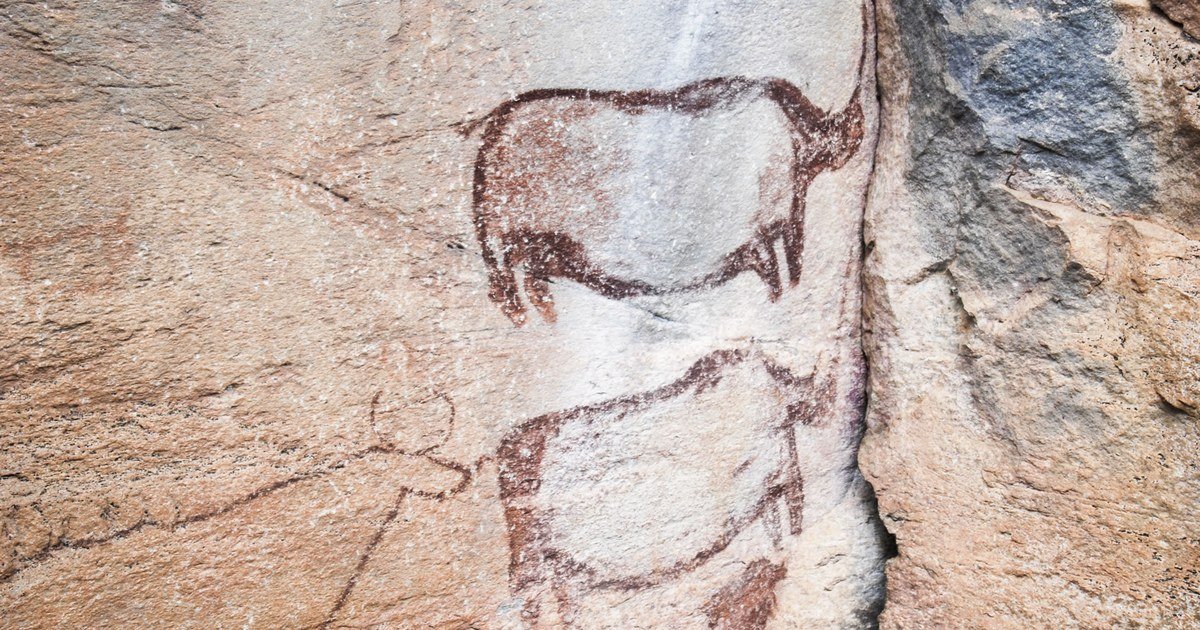
Tsodilo Hills: two rhinoceros painted in dark red on a pale rock face at the rock art site in north-west Botswana

Botswana’s Tsodilo Hills rock art nears 25 years on UNESCO list

DNE Africa
Last updated: November 27, 2026 6:16 pm
By DNE Africa 8 Min Read
Share
The 'Two Rhino' painting at Tsodilo, 2012. Photo: Oliver Vass / Wikimedia Commons, CC BY-SA 3.0
SHARE

The Tsodilo Hills in north-west Botswana, where more than 4,500 rock paintings survive in about 10 square kilometres of the Kalahari, mark 25 years as the country’s first UNESCO World Heritage site in December.

Contents
What are the Tsodilo Hills?Who painted the rock art in the Tsodilo Hills?Why are the Tsodilo Hills sacred?How are the Tsodilo Hills protected?FAQWhere are the Tsodilo Hills?How many rock paintings are at the Tsodilo Hills?When did the Tsodilo Hills become a World Heritage site?Can visitors see the paintings?

A documentary on the Tsodilo Hills produced by the Metropolitan Museum of Art in New York, first shown there in May 2025, was screened in Gaborone in March and then toured communities near the hills, the state news agency BOPA reported.

What are the Tsodilo Hills?

The Tsodilo Hills are a small group of quartzite outcrops in the Ngamiland District, near the Namibian border. According to UNESCO, they rise from ancient sand dunes to the east and a dry fossil lake bed to the west. The protected property covers 4,800 hectares, with a buffer zone of 70,400 hectares.

There are four main hills, known as Male Hill, Female Hill, Child Hill and North Hill, and paintings are found on all of them, according to the British Museum’s African rock art project. The Met notes they are the only source of water for miles around.

UNESCO says the archaeological record at Tsodilo traces human activity and environmental change over at least 100,000 years, though not continuously. UNESCO’s listing calls the Tsodilo Hills the “Louvre of the Desert”.
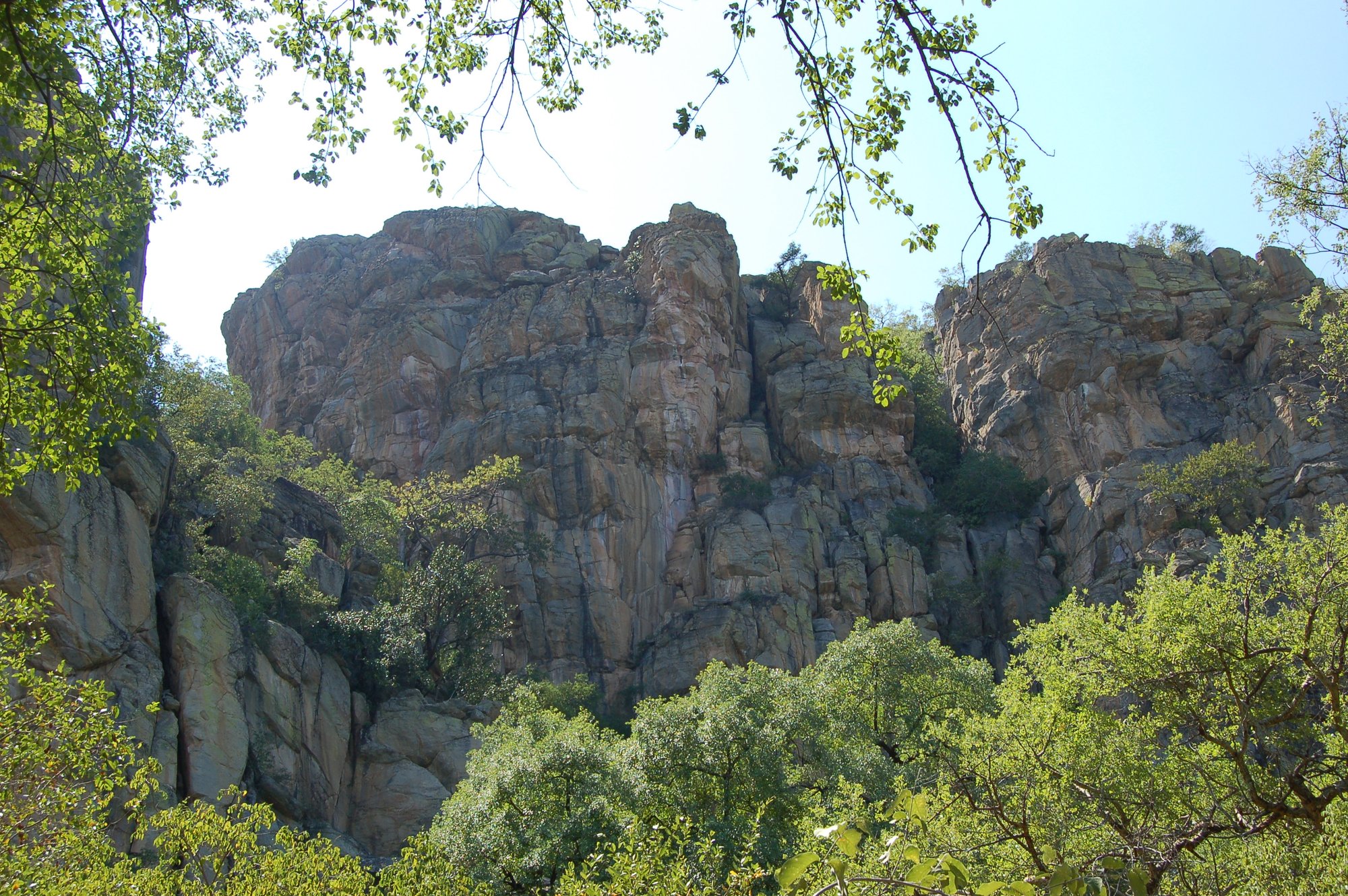
Tsodilo Hills: sheer quartzite cliffs rise above green trees and bush in the Kalahari in north-west Botswana
Quartzite cliffs in the Tsodilo Hills, 2007. Photo: Joachim Huber / Wikimedia Commons, CC BY-SA 2.0

Who painted the rock art in the Tsodilo Hills?

The paintings in the Tsodilo Hills fall into red and white groups and show animals, human figures and geometric designs. The British Museum says the red paintings were probably made by San hunter-gatherers. The white ones are harder to attribute and may be a later continuation of the red tradition. Among the best-known panels are a pair of rhinoceros on Female Hill and the “Giraffe Panel” on the same hill’s east side.

Dating the art has proved difficult. Many paintings sit on exposed rock faces, worn by sun, rain and wind, so what remains is probably not very old, the British Museum says. Faded paintings of cattle probably date to between AD 800 and 1150, when people kept cattle in the area. UNESCO describes the paintings as “not accurately dated” but says they appear to span the Stone Age to the 19th century. There are no engravings at Tsodilo, but cupules (small hollows ground into the rock) and grooves are common.

The German geologist Siegfried Passarge photographed a few paintings in 1898, and Laurens van der Post’s The Lost World of the Kalahari brought the hills to a wide readership in 1958. From 1963 Alec Campbell, later director of Botswana’s National Museum, recorded the art and excavated the shelters, and by the 1990s museum staff had documented about 400 sites with more than 4,000 paintings.
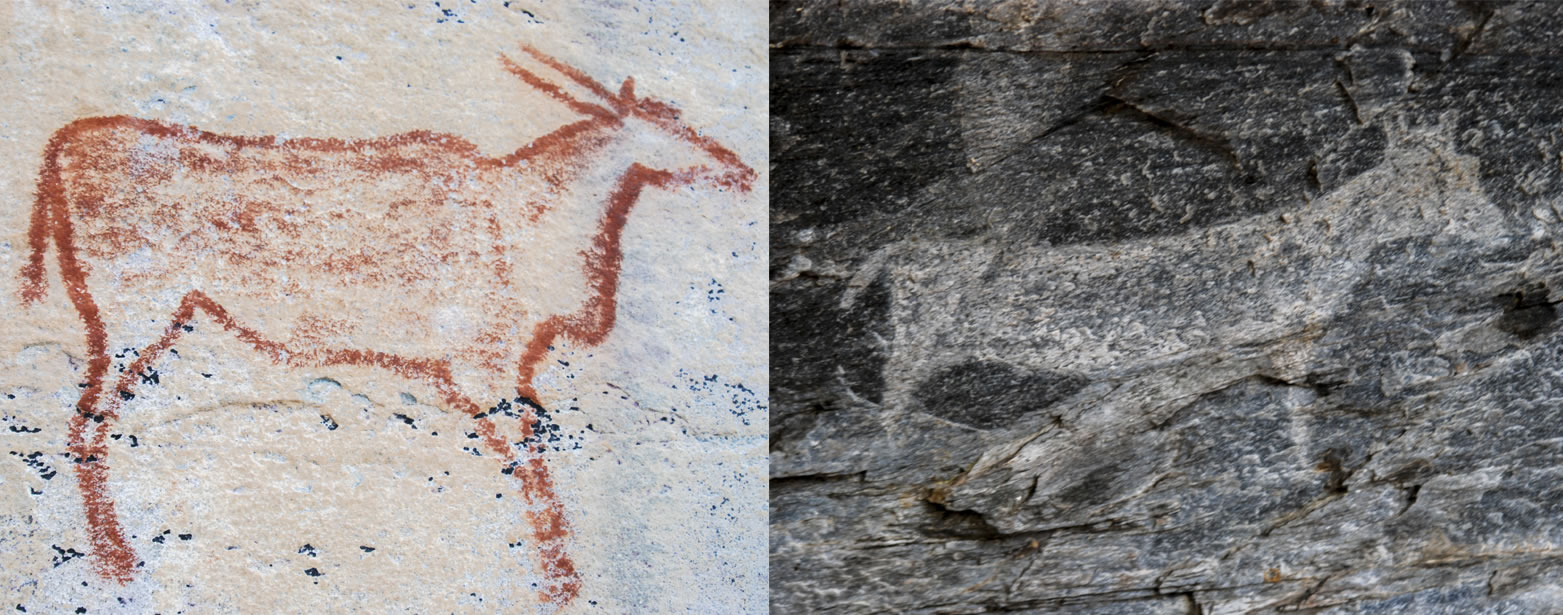
Tsodilo Hills rock art: an eland painted in red beside a second animal painted in white, two styles found at the Botswana site
Red and white paintings at Tsodilo, 2012. Photo: Oliver Vass / Wikimedia Commons, CC BY-SA 3.0

Why are the Tsodilo Hills sacred?

UNESCO listed Tsodilo under three criteria, one of them its “immense symbolic and religious significance” for the people who live around it. The Hambukushu and San communities regard the hills and their water holes as a sacred landscape and a home for ancestral spirits, UNESCO says.

Local accounts gathered by researchers say those who enter the hills must behave with respect, because the spirits can both cure and punish, according to the British Museum. The White Paintings Shelter on Male Hill was used for curative dances in which people placed their hands on the paintings to draw on their power. The Met says the imagery marks a threshold between the living and the ancestors for the Ju/’hoansi, a San people who live near the site today.

How are the Tsodilo Hills protected?

Tsodilo was declared a national monument in 1927. It is looked after by Botswana’s Department of National Museum and Monuments with the Tsodilo Management Authority, which includes a community trust, UNESCO says. Visits to the painted shelters must be guided, a rule UNESCO credits with keeping vandalism and graffiti low. The World Heritage Committee inscribed the site at its session in Helsinki in December 2001, the first property from Botswana on the list.

The weather still wears at the paintings. The documentary, Tsodilo: The Jewel of the Desert, directed by Sosena Solomon, points to damage from sun, wind and rain, BOPA reported, and notes that some attempts by local people to “revive” paintings for spiritual reasons have sped up their decay. Alisa LaGamma, curator in charge of the Met’s Michael C. Rockefeller Wing, called Tsodilo “the place where the visual arts begin”, according to BOPA.

The Tsodilo Hills share the World Heritage list with other southern African rock art sites such as Namibia’s Twyfelfontein, and with South Africa’s Mapungubwe cultural landscape on the Limpopo.

FAQ

Where are the Tsodilo Hills?

The Tsodilo Hills are in the Ngamiland District of north-west Botswana, in the Kalahari Desert near the border with Namibia.

How many rock paintings are at the Tsodilo Hills?

UNESCO counts more than 4,500 paintings in an area of about 10 square kilometres. They are red and white images of animals, people and geometric designs.

When did the Tsodilo Hills become a World Heritage site?

The World Heritage Committee inscribed the Tsodilo Hills in December 2001 at its session in Helsinki. It was the first site in Botswana on the list.

Can visitors see the paintings?

Yes. Visits to the painted shelters are guided, under rules set by the site’s managers, the Department of National Museum and Monuments and the Tsodilo Management Authority.


You Might Also Like

Tunisian harissa marks four years on UNESCO heritage list

Fantasia: An Algerian Cavalcade, the conquest in its victors’ words

UNESCO Creative Cities conference opens in Morocco’s Essaouira

Cameroon’s Ngondo festival returns to Douala after UNESCO listing

Nervous Conditions, Zimbabwe’s novel of losing Shona, now speaks it

TAGGED:BotswanaUNESCO
Share This Article
Facebook Twitter Pinterest Whatsapp Whatsapp LinkedIn Reddit Telegram Email Copy Link

You Might Also Like

Kilwa Kisiwani: pointed arches and coral-stone pillars inside the Great Mosque, the oldest standing mosque on the East African coast, Tanzania
Culture

Kilwa Kisiwani ruins recall Tanzania’s medieval Swahili trading port

By DNE Africa 7 Min Read
A Grain of Wheat by Ngũgĩ wa Thiong'o: Africa's 100 Best Books, No. 4 of 100, DNE Africa series card with a 2019 photo of the author
Culture

Ngũgĩ rewrote A Grain of Wheat, Kenya’s independence novel, in exile

By DNE Africa 16 Min Read
World Heritage Sites: hills of the Vredefort Dome near Venterskroon and Parys, South Africa
Culture

South Africa’s World Heritage Sites need urgent fixes, MPs say

By DNE Africa 6 Min Read

More Popular from DNE AFRICA

Biometric identity: illustration of a fingerprint, an iris and a secured data network from the African Narratives study
Technology

Biometric identity systems in Africa need tighter control, study says

By DNE Africa 10 Min Read
Ethiopia-Eritrea tensions: Eritrean President Isaias Afwerki and Ethiopian Prime Minister Abiy Ahmed talk in Eritrea in March 2019, beside both national flags

Ethiopia-Eritrea tensions explained: Assab, Badme and the risk of war

By DNE Africa
IMG 20261128 WA0013
BusinessPolitics

Egypt Seeks Investor Protection Mechanisms to Boost Business Expansion in Africa

By Ahmed Emam 2 Min Read
Ad imageAd image
BusinessPolitics

Africa Must Move from Exporting Its Wealth to Manufacturing It: Eissa

CAIRO - Nov. 28, Africa must move from exporting its wealth to manufacturing it and turn…

By Ahmed Emam
BusinessPolitics

Abdelatty: Egypt to Establish Investment Entity to Boost African Investments

Egypt is preparing to establish a new investment entity to channel public- and private-sector investments into…

By Ahmed Emam
Politics

King Cuffee bust unveiled as Ghana and Barbados twin two port towns

The twinning of Cape Coast and Speightstown during Mahama's state visit links Ghana's reparations drive with…

By DNE Africa
Politics

Libyan army chief Namroush tours Morocco’s F-16 base at Ben Guerir

Morocco is building military ties with both of Libya's rival camps, hosting Tripoli's army chief weeks…

By DNE Africa
Politics

Chad’s Deby takes ECCAS chair and drops UN Security Council bid

Chad will lead Central Africa's economic bloc and host its next summit, and has stepped aside…

By DNE Africa
DNE Africa

News by Africans, For Africans

Categories

  • Science
  • Health
  • Entertainment
  • Business
  • The Escapist

Quick Links

  • Advertise with us
  • Newsletters
  • Complaint

DNE Africa.All Rights Reserved.

Welcome Back!

Sign in to your account

Username or Email Address
Password

Lost your password?