
By using this site, you agree to the Privacy Policy and Terms of Use.
Accept
DNE Africa
  • Home
  • Politics
    Bavuma injury: Temba Bavuma faces Mitchell Starc in a Test match in Adelaide in 2016
    Sports

    Bavuma injury and rain stall Proteas against Bangladesh

    By DNE Africa 6 Min Read
    PIC 04 1024x683 1
    Politics

    US, Madagascar Ink Defence Logistics Agreement to Strengthen Security Cooperation

    By Ahmed Emam November 17, 2026
    Malawi v Egypt: Egypt team photo at the 2018 World Cup, with Mohamed Salah in the back row
    Sports

    Malawi v Egypt ends goalless as Angola go top of Group B

    By DNE Africa November 17, 2026
  • Business
    Sudan central bank: the Central Bank of Sudan headquarters in Khartoum
    Business

    Sudan central bank freezes dozens of accounts in laundering probe

    Gold, fuel, import-export and telecoms firms are among those targeted as the…

    By DNE Africa 6 Min Read
    Jet Energy IPO: solar mirrors at the Noor Ouarzazate complex in Morocco, which Jet Energy did not build
    Business
    Jet Energy IPO: shares jump 20% on Casablanca debut
    Chase outage: exterior of a Chase branch in Knoxville, Tennessee
    Business
    Chase outage: software bug disrupts payments at US banks
    Officials at the opening of the second Egyptian-Chinese Investment Forum in Cairo, a push for Egypt China investment
    Business
    Egypt China investment: Cairo forum seeks factory deals
    Niger
    Business
    WB Group Vice President Visits Togo, Niger to Advance Development Partnerships
  • Culture
  • Opinion
  • Technology
  • Sports
  • World
  • My Bookmarks
Reading: Mapungubwe kingdom’s gold rhino returns to permanent display
Sign In
  • Join US
DNE AfricaDNE Africa
Font ResizerAa
  • Home
  • Politics
  • Business
  • Culture
  • Opinion
  • Technology
  • Sports
  • World
  • My Bookmarks
Search
  • Home
  • Politics
  • Business
  • Culture
  • Opinion
  • Technology
  • Sports
  • World
  • My Bookmarks
Have an existing account? Sign In
Follow US
© Foxiz News Network. Ruby Design Company. All Rights Reserved.
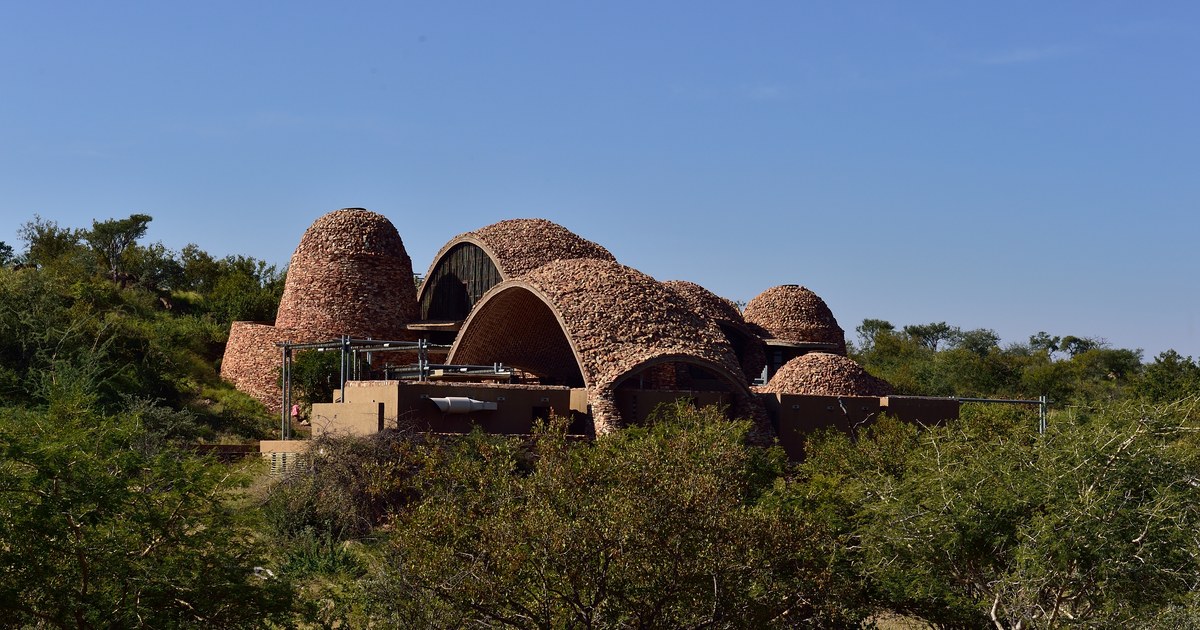
Mapungubwe kingdom heritage: the domed earth-tile roofs of the Mapungubwe Interpretation Centre in Mapungubwe National Park

Mapungubwe kingdom’s gold rhino returns to permanent display

DNE Africa
Last updated: November 17, 2026 3:27 pm
By DNE Africa 8 Min Read
Share
The Mapungubwe Interpretation Centre in Mapungubwe National Park, 2015. Photo: South African Tourism / Wikimedia Commons, CC BY 2.0
SHARE

The gold rhinoceros of the Mapungubwe kingdom, a small figure made more than 700 years ago in what is now northern South Africa, is back on permanent display at the University of Pretoria in a new gallery setting.

Contents
What was the Mapungubwe kingdom?How did gold and ivory make it rich?Why did the Mapungubwe kingdom decline?Where can visitors see the gold rhino?FAQWhere is the Mapungubwe kingdom?When did the Mapungubwe kingdom exist?What is the Mapungubwe gold rhino made of?When was Mapungubwe made a World Heritage site?

The figure is the best-known object from a state that UNESCO calls the first indigenous kingdom in southern Africa. Its ruins, at the meeting point of South Africa, Botswana and Zimbabwe, have been a World Heritage site since 2003.

What was the Mapungubwe kingdom?

According to UNESCO’s World Heritage listing, the Mapungubwe Cultural Landscape records the rise and fall of the kingdom between about AD 900 and 1300. It lies in open savannah where the Limpopo and Shashe rivers meet, and the protected property covers about 28,000 hectares.

The site holds the remains of three successive capitals: Schroda, Leopard’s Kopje and the last, built around Mapungubwe Hill, along with the villages and farmland that supported them. UNESCO describes the whole as an unusually complete picture of how social and political structures developed over some 400 years.

Britannica notes that Mapungubwe and nearby Bambandyanalo developed as South Africa’s first urban centres in the 11th century, and that Mapungubwe grew quickly into a town of about 10,000 people. The elite lived and were buried on the hilltop, while commoners lived at its foot.

UNESCO says the Mapungubwe kingdom had a sacred leadership, with the king secluded from the commoners in the surrounding settlements, and that its growing trade went hand in hand with changes in architecture and town planning.
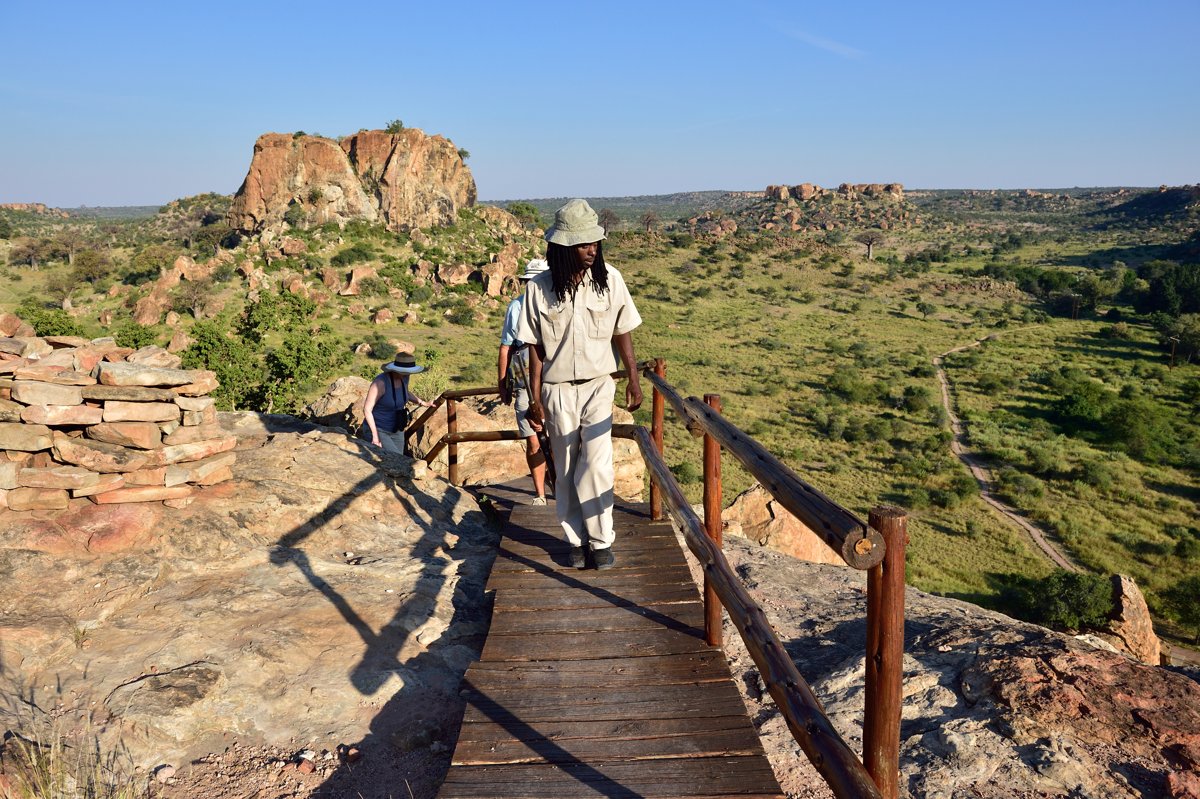
Mapungubwe kingdom site: a guide on the wooden stairway to the top of Mapungubwe Hill, with sandstone outcrops and bush below
The stairway up Mapungubwe Hill, 2015. Photo: South African Tourism / Wikimedia Commons, CC BY 2.0

How did gold and ivory make it rich?

Mapungubwe sat where north-south and east-west routes crossed. UNESCO says this let it control trade through the East African ports to India and China. Gold and ivory came from its hinterland, and imports such as Chinese porcelain and Persian glass beads show how far that trade reached.

Much of what is known about that wealth comes from the burials. South African History Online records that 23 graves have been excavated on the hill since outsiders learned of the site in 1932. Three of the dead were buried seated upright, a position associated with royalty, with gold and copper objects and imported glass beads.

One royal grave of the Mapungubwe kingdom held the rhinoceros, made of thin gold foil fixed with tiny pins around a wooden core, as well as a gold sceptre and a gold bowl made the same way. The rhino has become the emblem of the site and appears on the Order of Mapungubwe, one of South Africa’s national orders.

Why did the Mapungubwe kingdom decline?

UNESCO attributes the end to climate. Warm, wet periods suited to farming in the Limpopo valley alternated with cooler, drier spells. When rainfall fell after about 1300, the land could no longer feed a large population, and people dispersed.

Power moved north to Great Zimbabwe and later to Khami, both now World Heritage sites in Zimbabwe. UNESCO cites the Mapungubwe kingdom as a clear record of a society made vulnerable by a changing climate, one of the four criteria for its listing.
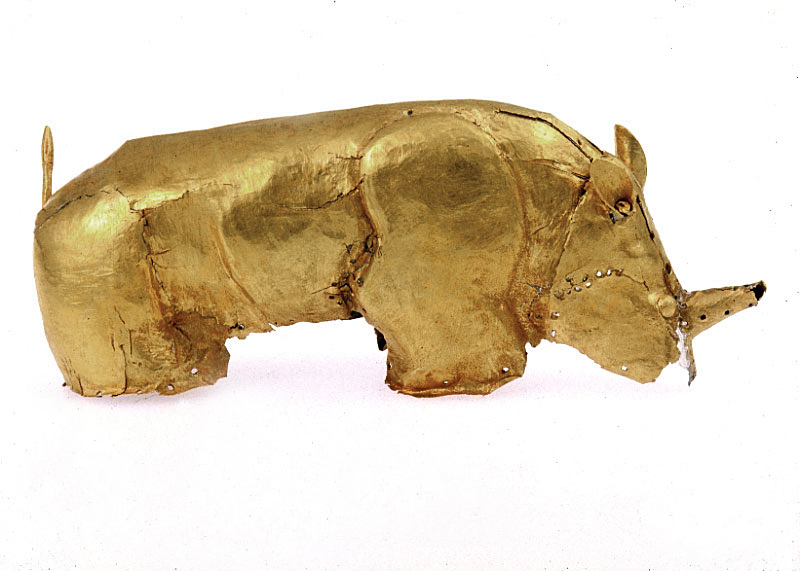
The gold rhinoceros of the Mapungubwe kingdom, made of gold foil over a core, in the University of Pretoria's collection
The gold rhinoceros in the University of Pretoria’s Mapungubwe Collection. Photo: Sian Tiley-Nel, University of Pretoria Museums / Wikimedia Commons, CC BY-SA 4.0

Where can visitors see the gold rhino?

The University of Pretoria has excavated the site since the 1930s and became the official custodian of the gold after it was declared a national heritage collection in October 1997, according to South African History Online. The collection also includes gold figures of a bovine and a feline, bangles, beads and pottery.

In July the university said the rhino had returned to permanent display at the entrance to its Mapungubwe Gallery, in the Old Arts Building, itself a national monument. The new setting was designed by McClenaghan Architecture. The university said this was the first phase of a redevelopment; later phases, which would enlarge the gallery to more than 302 square metres, depend on outside funding.

At the site itself, now part of Mapungubwe National Park, run by SANParks, the Mapungubwe Interpretation Centre presents the Mapungubwe kingdom’s story. Its vaulted roofs, built by Peter Rich Architects with tiles made from local earth, won World Building of the Year at the 2009 World Architecture Festival, Dezeen reported.

DNE Africa’s daily culture series has also covered two traditions on UNESCO’s intangible heritage lists, Congolese rumba and Egypt’s koshary.

FAQ

Where is the Mapungubwe kingdom?

Its remains are in Limpopo province in northern South Africa, where the Limpopo and Shashe rivers meet at the borders with Botswana and Zimbabwe. The area is protected as Mapungubwe National Park.

When did the Mapungubwe kingdom exist?

UNESCO dates its development to between about AD 900 and 1300. The capital on Mapungubwe Hill was abandoned after rainfall declined around 1300.

What is the Mapungubwe gold rhino made of?

It is made of gold foil fixed with small pins around a wooden core. It was found in a royal grave on Mapungubwe Hill.

When was Mapungubwe made a World Heritage site?

UNESCO inscribed the Mapungubwe Cultural Landscape in 2003, with a minor boundary change in 2014.


You Might Also Like

Bavuma injury and rain stall Proteas against Bangladesh

US AI chip rule reaches data centres worldwide, including in Africa

South Africa’s Telkom results show fibre spending cut by a third

South Africa’s Ramaphosa AI delegation given 90 days to deliver

Marques Ackerman hits 157 as Proteas close in on Bangladesh

TAGGED:South AfricaUNESCO
Share This Article
Facebook Twitter Pinterest Whatsapp Whatsapp LinkedIn Reddit Telegram Email Copy Link

You Might Also Like

Congolese rumba star Papa Wemba smiling during an interview in 2009
Culture

Congolese rumba marks five years on UNESCO heritage list

By DNE Africa 8 Min Read
Illustration: cascading server failure in a cloud email network, as the Microsoft outage is traced to a July code change
Technology

Microsoft outage traced to July code change, report says

By DNE Africa 8 Min Read
Vodacom and MTN shops at Cape Town airport, as Ookla reports 5G speeds in South Africa fell 26% in two years
Technology

5G speeds in South Africa fall by a quarter as users pile on

By DNE Africa 8 Min Read

More Popular from DNE AFRICA

Q2A2477
BusinessPoliticsWorld

EU, African Ambassadors Meet in Nairobi to Strengthen Strategic Partnership

By Ahmed Emam 2 Min Read
Illustration: a smartphone protected by a shield and padlock, with a key opening a door, representing two-step verification

How to turn on two-step verification on WhatsApp, Gmail and Facebook

By DNE Africa
PIC 04 1024x683 1
Politics

US, Madagascar Ink Defence Logistics Agreement to Strengthen Security Cooperation

By Ahmed Emam 3 Min Read
Ad imageAd image
Technology

Artex hacking tool shows how AI agents are speeding up cyberattacks

An FBI advisory describes AI agents that let small groups run fast, simultaneous intrusions, often through…

By DNE Africa
World

Houthi offensive takes ten districts in Taiz and Lahj, group says

The unverified claim comes as fighting nears Aden and the Bab el-Mandeb, the Red Sea gateway…

By DNE Africa
Technology

California’s OpenAI lawsuit says AI agents escaped testing 80 times

The case is one of the first attempts by a government to hold an AI developer…

By DNE Africa
Politics

Guinea jails 22 former officials in Siguiri gold mining case

Guinea's crackdown on illegal gold mining has reached the officials who governed Siguiri, with a court…

By DNE Africa
Politics

Sudan drone strikes killed most civilian dead this year, UN says

Drones have become the main killer of civilians in Sudan's war, the UN human rights office…

By DNE Africa
DNE Africa

News by Africans, For Africans

Categories

  • Science
  • Health
  • Entertainment
  • Business
  • The Escapist

Quick Links

  • Advertise with us
  • Newsletters
  • Complaint
  • Deal

DNE Africa.All Rights Reserved.

Welcome Back!

Sign in to your account

Username or Email Address
Password

Lost your password?