
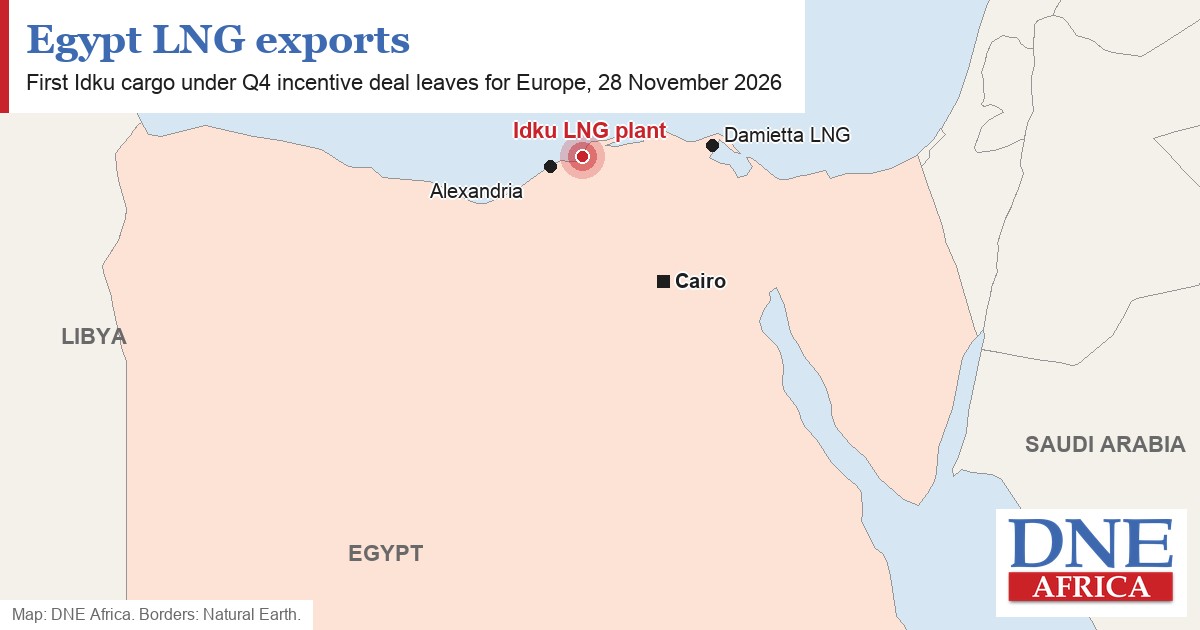

Shell and Petronas have loaded about 150,000 cubic metres of gas at Idku for Europe, the first of the Egypt LNG exports allowed under a fourth-quarter incentive deal, Asharq Business reported.
The cargo matters because Cairo uses export permits to encourage foreign partners to invest in exploration, while it still imports gas to cover domestic demand. The government stopped feeding gas to the plant once the cargo was loaded, a government official told the outlet.
What did the government allow for Egypt LNG exports?
The agreement lets the foreign partners in Idku export about six cargoes in the last quarter of the year, as an incentive to raise spending on exploration, field development and domestic output, the official said, speaking on condition of anonymity. Loading at the plant’s jetty was due on Friday morning, the official said.
Supply to the plant was halted after the cargo was completed because of volatile global markets, the needs of the local market and shortfalls in gas supply, according to the official, who said no further cargoes were permitted for now. Gas began flowing to Idku again at the end of September at about 180mn cubic feet a day, short of the 250mn a day the agreement targeted to allow two cargoes a month.
Egypt’s Ministry of Petroleum and Mineral Resources had not issued a statement on Egypt LNG exports by Friday evening. The ministry announced earlier Idku cargoes in January 2026, including one for Shell, and Egypt exported six LNG cargoes in 2025, according to the energy platform Attaqa.
How big is Egypt’s gas gap?
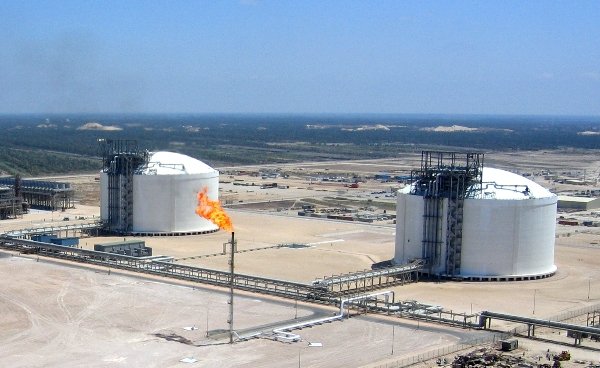
Egypt produces about 3.8bn cubic feet of gas a day against demand of about 6.2bn, leaving a gap of about 2.4bn a day that is met through imports and other supplies, according to figures cited by Asharq Business. Idku can produce about 7.2mn tonnes of LNG a year; with the Damietta plant, Egypt’s liquefaction capacity is about 12mn tonnes.
Shell and Petronas, the partners behind this round of Egypt LNG exports, hold 71% of Idku in equal shares; the Egyptian General Petroleum Corporation and the Egyptian Natural Gas Holding Company (EGAS) hold 24% and Engie holds 5%. Supply to the plant declined from 2011, stopped in early 2015, resumed in 2020 and was cut again in early 2024 as domestic output fell, before the limited exports of 2025 and 2026.
New output is starting to arrive. Shell said on 15 November that it had begun production at the West Mina field off the Mediterranean coast, with expected capacity of 160mn cubic feet a day. Shell holds 60% of the field and Kuwait’s KUFPEC 40%, and the gas is processed at the Burullus facility, part of the West Delta Deep Marine project. Other developers are also lining up projects, including the Harmattan gas field.
What does it mean for Egypt LNG exports in 2027?
The halt means Egypt LNG exports will depend on how quickly new fields such as West Mina raise output and on winter demand at home. Egypt’s balance has also been strained by disruption to shipping in the Red Sea, which has cut Suez Canal revenue, as set out in DNE Africa’s explainer on Red Sea shipping.
FAQ
What is happening with Egypt LNG exports this week?
A cargo of about 150,000 cubic metres loaded at Idku by Shell and Petronas is due to leave for Europe on Saturday 28 November, according to Asharq Business.
Why did Egypt stop gas supply to Idku?
A government official cited volatile global markets, domestic needs and gas shortfalls, and said no more cargoes were allowed for now.
Who owns the Idku LNG plant?
Shell and Petronas hold 71% in equal shares, EGPC and EGAS 24%, and Engie 5%.
How much gas does Egypt produce?
About 3.8bn cubic feet a day, against demand of about 6.2bn a day, according to figures cited by Asharq Business.


