
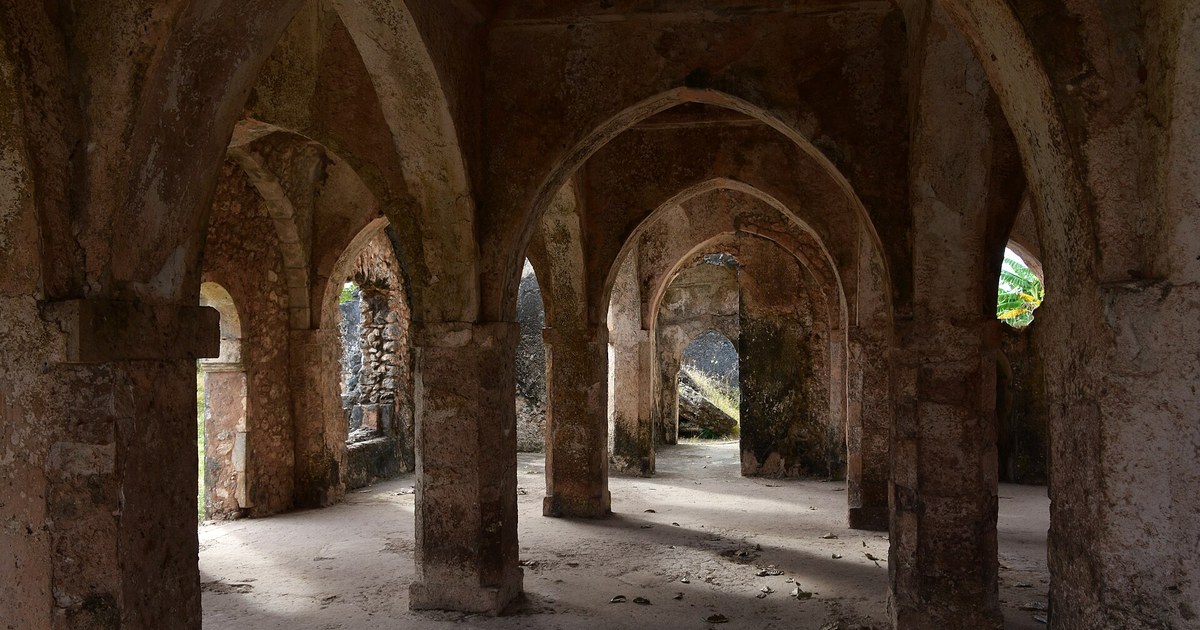

Kilwa Kisiwani, an island off southern Tanzania about 300km south of Dar es Salaam, holds the coral-stone ruins of a Swahili port that UNESCO says handled much of the Indian Ocean’s trade between the 13th and 16th centuries.
The ruins, listed as a World Heritage site in 1981 together with those of neighbouring Songo Mnara, include the oldest standing mosque on the East African coast and a 14th-century palace. UNESCO cites them as evidence of the spread of Swahili coastal culture and of the town’s trade with Arabia, India and China.
What is Kilwa Kisiwani?
According to the UNESCO World Heritage Centre, Kilwa Kisiwani was occupied from the 9th to the 19th century and was at its most prosperous in the 13th and 14th centuries. Its merchants traded gold and ivory from the interior for silver, carnelians, perfumes, Persian faience and Chinese porcelain.
The city also struck its own coins. UNESCO dates its currency to the 11th to 14th centuries. A radiocarbon study published in 2022 in the African Archaeological Review by Mark Horton, Jesper Olsen, Jeffrey Fleisher and Stephanie Wynne-Jones, based on a 2016 excavation, places the first coral buildings and the first coins at the end of the tenth century.
The Kilwa Chronicle, a medieval history of the town’s rulers, traces the ruling dynasty to Shiraz in Persia. Historians treat that account as tradition, and the archaeology shows a town that was already settled before the dynasty it describes.
What can visitors see at the Kilwa Kisiwani ruins?
The standing buildings are made of coral stone and lime mortar. The best known is the Great Mosque, built in the 11th century and greatly enlarged in the 13th. UNESCO describes it as roofed entirely with domes and vaults, some decorated with embedded Chinese porcelain, across sixteen bays. Its 13th-century dome was the largest in East Africa until the 19th century.
The palace of Husuni Kubwa, which UNESCO dates to between about 1310 and 1333, has a large octagonal bathing pool. The site also has a smaller complex, Husuni Ndogo, several other mosques, houses, public squares and burial grounds. Much of the town has never been excavated.
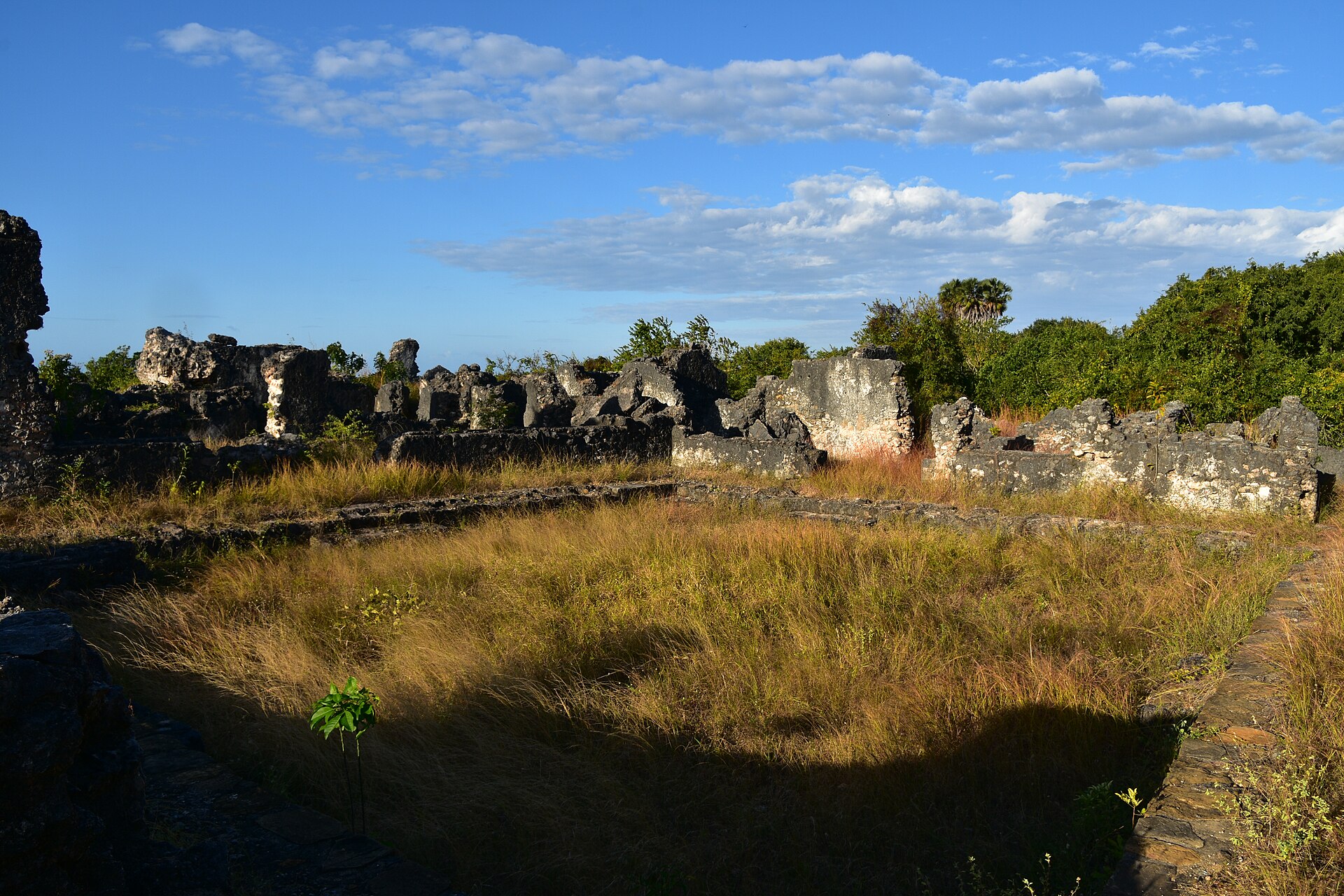
Songo Mnara, on a smaller island to the south, has the remains of five mosques, a palace complex and some 33 houses inside a town wall. Lamu Old Town, on the Kenyan coast, is another Swahili town on the UNESCO list.
What did Ibn Battuta say about Kilwa?
The Moroccan traveller Ibn Battuta stopped at Kilwa in 1331-1332, UNESCO says, and described it as one of the most beautiful cities in the world. In H.A.R. Gibb’s 1929 English translation, published by Fordham University’s Internet History Sourcebooks, he calls it “a very fine and substantially built town”.
He also wrote that the ruler at the time, Sultan Abu’l-Muzaffar Hasan, was known for his generosity, and that Sofala, on the coast of what is now Mozambique, lay a fortnight’s journey to the south. Gold dust reached Sofala from the interior, he was told.
Why did Kilwa decline?
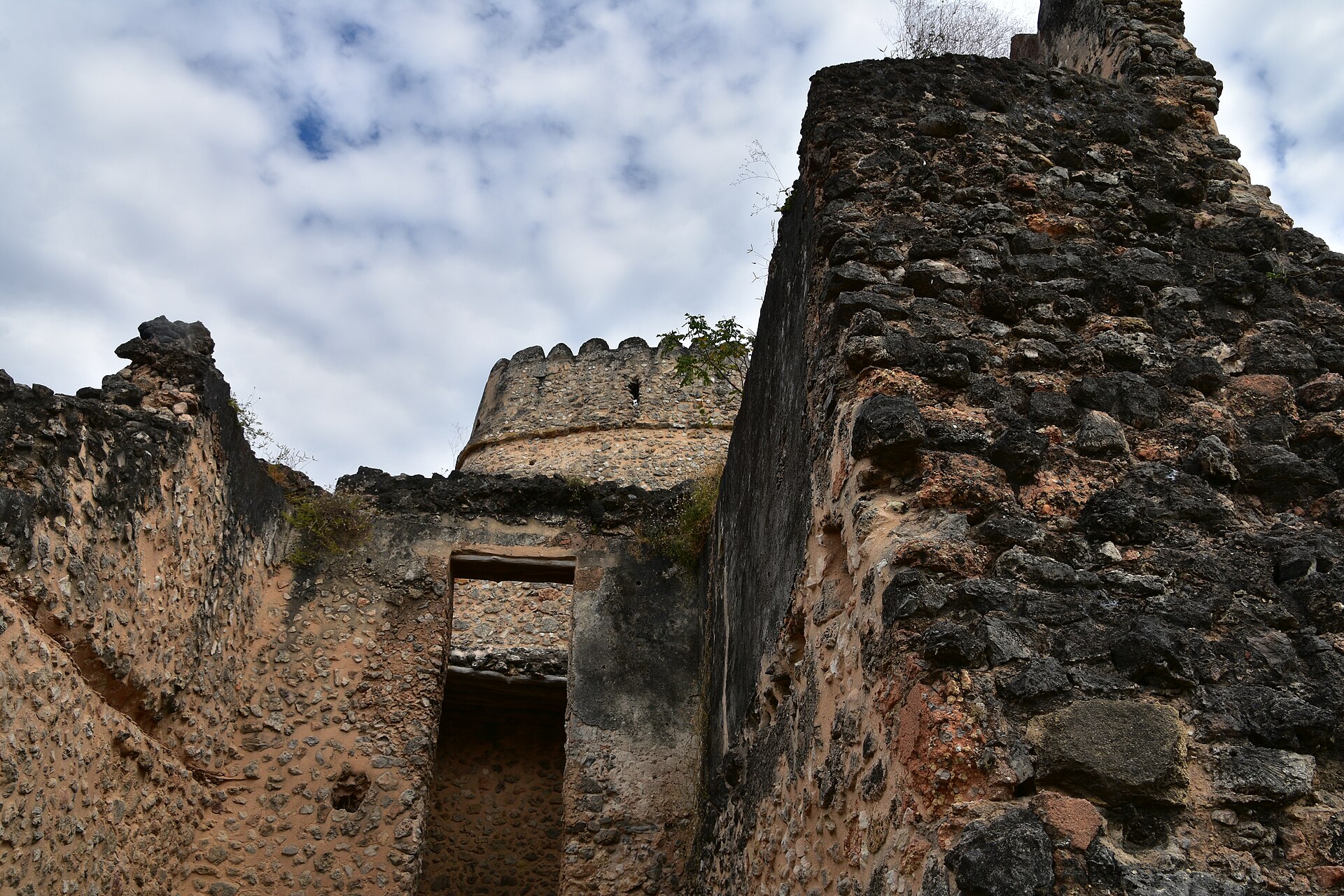
The Portuguese held the town from 1505 to 1512, according to Encyclopaedia Britannica, and built a fort there. UNESCO dates the decline of Kilwa Kisiwani and Songo Mnara from that time. A later fortification, the Gereza, stands on the ruins of the Portuguese fort.
UNESCO placed the site on its List of World Heritage in Danger in 2004 because structures were decaying and collapsing, and removed it in 2014. It still lists vegetation, flooding from the sea, beach erosion and new building and farming on buried remains as pressures.
The Tanzania Wildlife Management Authority (TAWA) now manages Kilwa Kisiwani and Songo Mnara. In November 2025 the cruise ship SH Diana brought 147 visitors from 13 countries, Tanzania’s Daily News reported, citing TAWA. Site commander Kelvin Stanslaus called the site “a vital symbol of medieval international trade” between East Africa and the wider world.
FAQ
Where is Kilwa Kisiwani?
Kilwa Kisiwani is an island in Kilwa District, Lindi region, off the coast of southern Tanzania, about 300km south of Dar es Salaam.
When did Kilwa Kisiwani become a World Heritage site?
UNESCO listed the ruins of Kilwa Kisiwani and Songo Mnara in 1981. The site was on the List of World Heritage in Danger from 2004 to 2014.
What is the Great Mosque of Kilwa?
It is the oldest standing mosque on the East African coast, according to UNESCO, built in the 11th century and enlarged in the 13th, with sixteen domed and vaulted bays.
Who manages the Kilwa Kisiwani ruins today?
The Tanzania Wildlife Management Authority manages the site, with legal protection under Tanzania’s Antiquities Act of 1964.


