

Intra-African trade reached $213.8bn in 2026 but accounts for only 18% of the continent’s total trade, according to the organisers of InoVesTri 2026, the African economic forum that opens in Cairo on Saturday.
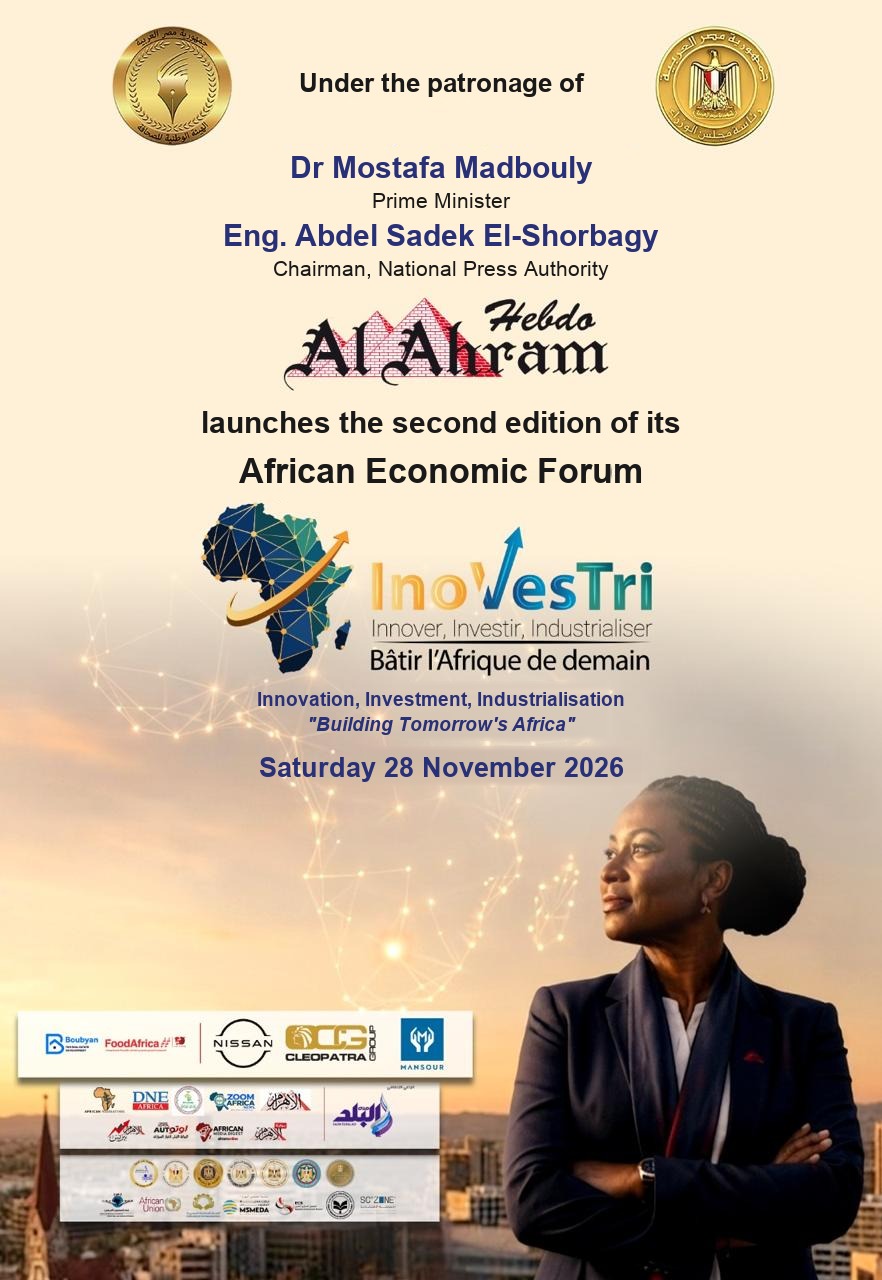
That gap frames the second edition of Al-Ahram Hebdo’s forum, which will ask where Africa should invest, how it can turn raw materials into products and how it can pay for the infrastructure that links its markets. DNE Africa is a media partner of the forum, and African Narratives is its strategic partner.
Why is intra-African trade so low?
Intra-African trade is equal to 3.1% of world trade, the organisers’ briefing says. Manufacturing contributes 10.8% of Africa’s GDP, against 16.5% worldwide, and the continent faces a financing gap of more than $1.3tn a year to meet the UN Sustainable Development Goals by 2030, they said.
The organisers trace part of the problem to history. Investment followed an extractive logic inherited from the colonial era, they argue, so mines, oil fields and export ports shaped the economic map. Railways and roads were built to carry raw materials to the coast rather than to connect African countries with each other, which still holds back intra-African trade.
Their answer is the forum’s three-part model of innovation, investment and industrialisation. “Innovation without finance stays ink on paper,” the briefing says, and finance without logistics stays idle capital, while infrastructure without factories becomes empty corridors.
What could the AfCFTA change?
The African Continental Free Trade Area is the forum’s main reference point. The AfCFTA Secretariat describes it as a single market of 1.3bn people with a combined GDP of about $3.4tn. The organisers say its full implementation could raise intra-African trade by more than $77bn.
They also point to demographics and land: more than 60% of Africans are under 25, the workforce is expected to reach 1.1bn by 2050, and Africa holds more than 60% of the world’s uncultivated arable land, according to the briefing. Those figures are the organisers’ and could not be independently checked before publication.

How does Egypt want to connect its market to the continent?
Transport links are central to Egypt’s pitch. Hossam El-Din Mostafa, deputy transport minister for African affairs, is among the speakers, alongside Transport Minister Kamel El-Wazir, according to the organisers.
A study by African Narratives’ researcher Nashwa Abdelnaby, published in October, examined the planned 4,300km Berenice-N’Djamena corridor from Egypt’s Red Sea coast through Libya to Chad and on to Douala in Cameroon. Goods shipped from Egypt to Chad can take around three months to arrive, and Cairo says the road could cut that to about a week, the study said.
The study found progress uneven. Chad launched construction of the 381km Amdjarass-Abéché stretch in May at an announced cost of 354.4bn CFA francs ($636mn), while parts of the Libyan and Chadian sections remain at the design stage and no joint financing plan or security framework has been published, it said. The study argued that the real prize is the logistics, finance and industry Egypt can build around the road.
Which companies will take part?
The organisers’ list mixes Egyptian groups with African and Gulf investors. Mohamed Abou El-Enein, chairman of Cleopatra Group, and Sherine Helmy, chief executive of Pharco Pharmaceuticals, are due to attend. From Senegal comes Alhousseynou Ba, founder of One Africa Group and Ba Investment Group; from Nigeria, the founder of Elsooltaan Group.
Business councils will be represented by Magued George, chairman of the Egyptian-South African Business Council, Mohie Hafez, chairman of the Export Council for Medical Industries, and the head of the Congolese-Egyptian Chamber of Commerce and Industry. Mona Wahba will present Bayt Misr, an alliance of six Egyptian companies set up to export to African markets. Al-Mansour Automotive, Nissan, Konzept, organiser of the Food Africa exhibition, and Kuwait’s Boubyan are also taking part.
How will the forum approach finance?
The closing session brings in Finance Minister Ahmed Kouchouk and Planning Minister Ahmed Rostom to discuss financial sovereignty, tools to close the infrastructure investment gap and an economic roadmap for 2027, the organisers said. The forum’s programme and speakers were announced on Monday.
Trade finance is already moving through regional lenders: Afreximbank recently extended a $30mn facility to Nigerian exporters. Whether the Cairo forum produces deals of its own, or only recommendations, will be clear on Saturday.
FAQ
How large is intra-African trade?
The InoVesTri 2026 organisers put intra-African trade at $213.8bn in 2026, or 18% of the continent’s total trade and 3.1% of world trade.
Why is intra-African trade lower than in other regions?
The organisers say infrastructure was built mainly to carry raw materials to ports for export rather than to link African countries, and that manufacturing remains small at 10.8% of GDP.
What is the Berenice-N’Djamena corridor?
It is a planned 4,300km route from Egypt’s Red Sea port of Berenice through Libya and Chad to Douala in Cameroon, studied by African Narratives in October 2026.
When is the InoVesTri 2026 forum?
It takes place on Saturday 28 November 2026 at the Al-Ahram headquarters in Cairo.


