
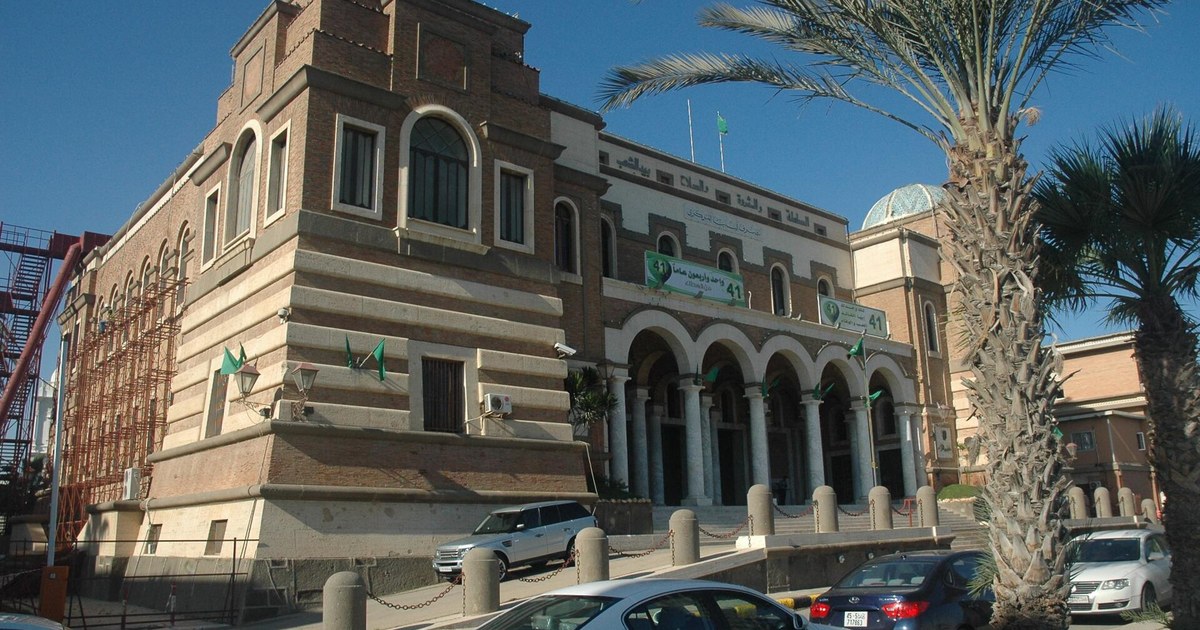

Libya’s High Council of State will vote on the Libya central bank governor on 1 December, the Tripoli-based council said on Wednesday, after a consultative session on the leadership of the country’s most important financial institution.
The vote will show whether the council endorses Fawzi Abu Khazam, whom the eastern-based House of Representatives appointed this month, or reopens a dispute over a bank that holds Libya’s oil revenue and foreign reserves.
What did the High Council of State decide?
The council held a consultative session devoted to the file of the governor of the Central Bank of Libya and exchanged views on the latest developments, according to a statement carried by the Libyan News Agency (LANA) (translated from Arabic).
Members agreed to continue consultations and to meet the governor “to learn about his programme and vision for managing the bank and his priorities in tackling the financial and monetary challenges”, the statement said. The vote on the Libya central bank governor will be held next week, on 1 December, “in accordance with the legal frameworks and the council’s internal rules”.
The statement did not name the Libya central bank governor. The post has been held since early November by Mr Abu Khazam, a former member of the bank’s board.
How did Abu Khazam become Libya central bank governor?
Naji Issa, who became governor in 2024, submitted his resignation on 9 August 2026 without publicly giving reasons. The High Council of State and the House’s finance committee both urged him to stay, the Libya Observer reported.
On 22 October the presidency of the House of Representatives accepted the resignation in principle and named Mr Abu Khazam to run the bank temporarily. Mr Issa rejected that step, and the council’s first deputy chairman, Naji Mukhtar, called it “a unilateral move” and asked that it be given no legal effect, according to the Libya Observer.
The House then voted on 2 November to accept the resignation and appoint Mr Abu Khazam, with 78 of the 90 members present in favour, Reuters reported. He took the oath before the House on 4 November, and the bank said the handover from Mr Issa was completed on 8 November, the Libya Observer reported, citing a bank statement.

Why does the High Council of State vote matter?
Under the 2015 Libyan Political Agreement, appointments to the country’s top “sovereign positions”, including the Libya central bank governor, are made by the House of Representatives in agreement with the High Council of State, an advisory chamber based in Tripoli. A vote by the council would give the appointment the backing of both bodies, as in 2024.
That year a dispute over the bank’s leadership led to the shutdown of much of Libya’s oil production. It ended in September 2024 with a UN-backed deal between the two chambers, and the House approved Mr Issa as governor unanimously, with 108 members present, on 30 September.
The Central Bank of Libya is the only body that receives the country’s oil revenue, which funds the public payroll, fuel subsidies and imports for both the Government of National Unity in Tripoli and the authorities in the east. A split over who is Libya central bank governor would put salaries and letters of credit for importers at risk, as in 2024.
What happens next?
Before the vote, members are due to meet the Libya central bank governor to hear his plans. The council has not said what majority it needs or what it would do if the vote fails. The House of Representatives has not commented on the council’s decision.
The vote comes during a tense week for Libya. The country is preparing to host the Africa-Turkey summit in Tripoli on 8-9 December, while the eastern authorities have asked the UN to investigate attacks on Benghazi port.
FAQ
Who is the Libya central bank governor?
Fawzi Abu Khazam, appointed by the House of Representatives on 2 November 2026 after it accepted Naji Issa’s resignation. He took over from Mr Issa on 8 November, the bank said.
When will the High Council of State vote on the Libya central bank governor?
On 1 December 2026, according to the council’s statement carried by LANA on 25 November.
Why does the High Council of State have a say?
The 2015 Libyan Political Agreement requires the House of Representatives and the council to agree on appointments to sovereign positions such as the central bank governor.
Why did Naji Issa resign?
He did not publicly give his reasons when he submitted his resignation on 9 August 2026.


