
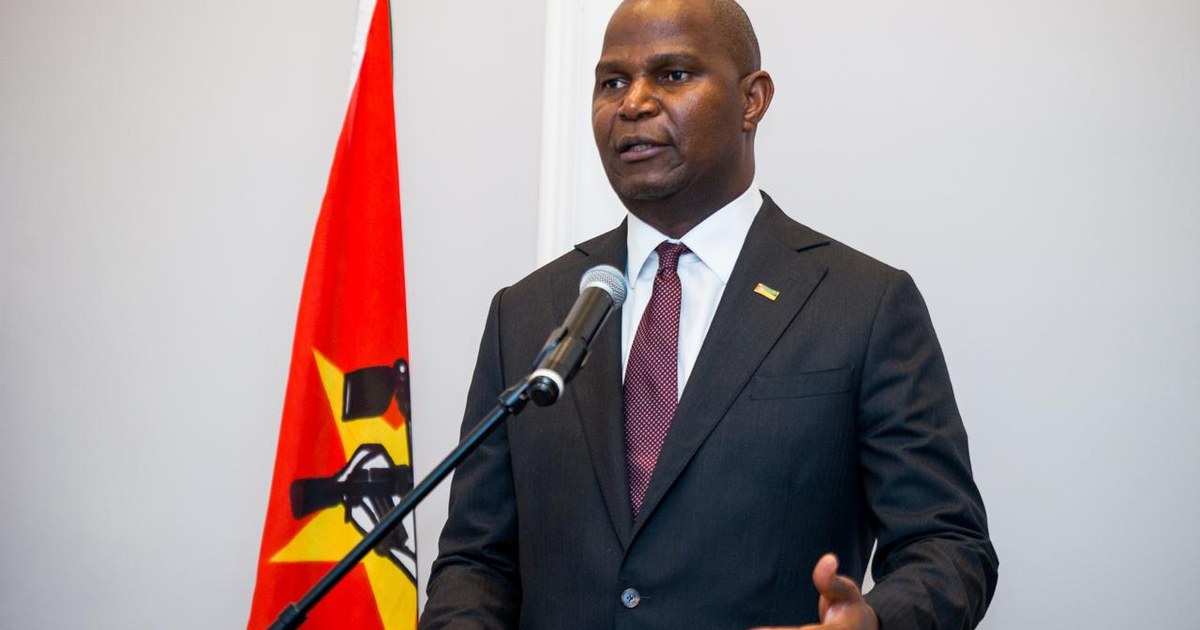

Mozambique stock exchange listings may become compulsory for companies in strategic sectors, President Daniel Chapo said on Wednesday, as the government prepares a proposal to phase in the rule.
Chapo announced the plan in Matutuine, south of Maputo, opening the 29th annual conference of the African Securities Exchanges Association (ASEA), according to the text of his speech published by the Presidency (translated from Portuguese). The move would widen a market that has few listed companies and few local investors, in an economy dominated by large gas and mining projects.
What did Chapo announce for the Mozambique stock exchange?
The government is preparing a revision of the Securities Market Code and of the laws on public-private partnerships, large-scale projects and business concessions, Chapo said. Alongside them it is drafting a proposal for “the gradual introduction of compulsory listing” of companies in strategic sectors, “with clear and predictable rules”.
He did not say which sectors would be covered, how large a stake companies would have to float or when the proposal would go to parliament. The Presidency published no further detail.
“Our aim is not only to have more companies listed on the exchange, but more Mozambicans taking part in the economy,” Chapo said. For the Mozambique stock exchange and its peers, he set out four challenges: deeper integration between markets, finance for agriculture, industry, infrastructure and the energy transition, wider access for young people, women and small businesses, and stronger governance and cyber-security.
How small is the Mozambique stock exchange?
The Mozambique stock exchange (Bolsa de Valores de Mocambique, BVM) aims to have 30 listed companies by 2028 under its strategic plan, Chapo said. He gave figures that show how narrow the investor base is: the country has close to 26mn mobile money accounts, but only about 29,000 holders are registered at the central securities depository.
The government’s model for wider ownership is the 2019 public offering of shares in Hidroelectrica de Cahora Bassa, the hydropower company, which allowed subscription by mobile phone and drew more than 16,000 investors, most of them individuals, he said. He called for a “stock exchange in the people’s pocket”, and said the BVM is renewing its trading and registration technology.
In October the exchange admitted MECTS, the first company under the public-private partnership regime to list, although the law requiring such listings was passed some 15 years ago, Portugal’s RTP reported. Chapo said then that the slow pace called for more commitment from the institutions responsible.
Why does Mozambique want more listings?
Chapo framed the plan as part of a push for “economic sovereignty”. Africa still depends too much on foreign finance and raw-material exports, he said, and capital markets should channel savings held by banks, insurers and pension funds into agriculture, industry, energy, transport and small businesses.
He linked the plan to the African Continental Free Trade Area, arguing that Africa cannot be commercially integrated “while it remains financially fragmented”. He welcomed the African Exchanges Linkage Project run by ASEA and the African Development Bank, which he said had grown from seven to eleven linked exchanges in its second phase, with a goal of fifteen.
He also cited Mozambique’s removal from the Financial Action Task Force’s grey list in October 2025 as a reason for investors to trust its financial system, and said the government wants to use green and blue bonds to finance environmental projects.
What is the background?
Mozambique’s economy is dominated by large extractive projects, chiefly liquefied natural gas in Cabo Delgado, coal and graphite, largely led by foreign companies. A listing rule for strategic sectors on the Mozambique stock exchange would give Mozambicans a way to buy into them, though Chapo did not name any company.
The government has pressed for more domestic ownership on other fronts. This week the Council of Ministers approved a public-private concession for Quelimane port, and the government has set out plans to make the country a southern African energy hub. Trading on the continent’s larger exchanges is tracked in our daily African markets wrap.
The next step is the draft legislation, for which Chapo gave no date. The securities market is supervised by the Bank of Mozambique, whose deputy governor attended the opening.
FAQ
What did Chapo say about the Mozambique stock exchange?
He said the government is preparing a proposal for the gradual introduction of compulsory listing for companies in strategic sectors, with clear and predictable rules, alongside a revision of the Securities Market Code.
Which companies will have to list on the Mozambique stock exchange?
Chapo did not say. The speech referred only to companies in “strategic sectors” and gave no list, stake size or timetable.
How many investors does the Mozambique stock exchange have?
About 29,000 holders are registered at the central securities depository, compared with close to 26mn mobile money accounts, according to the President.
What is the ASEA?
The African Securities Exchanges Association groups the continent’s stock exchanges. Mozambique hosted its 29th annual conference in Matutuine, near the borders with South Africa and Eswatini.


