
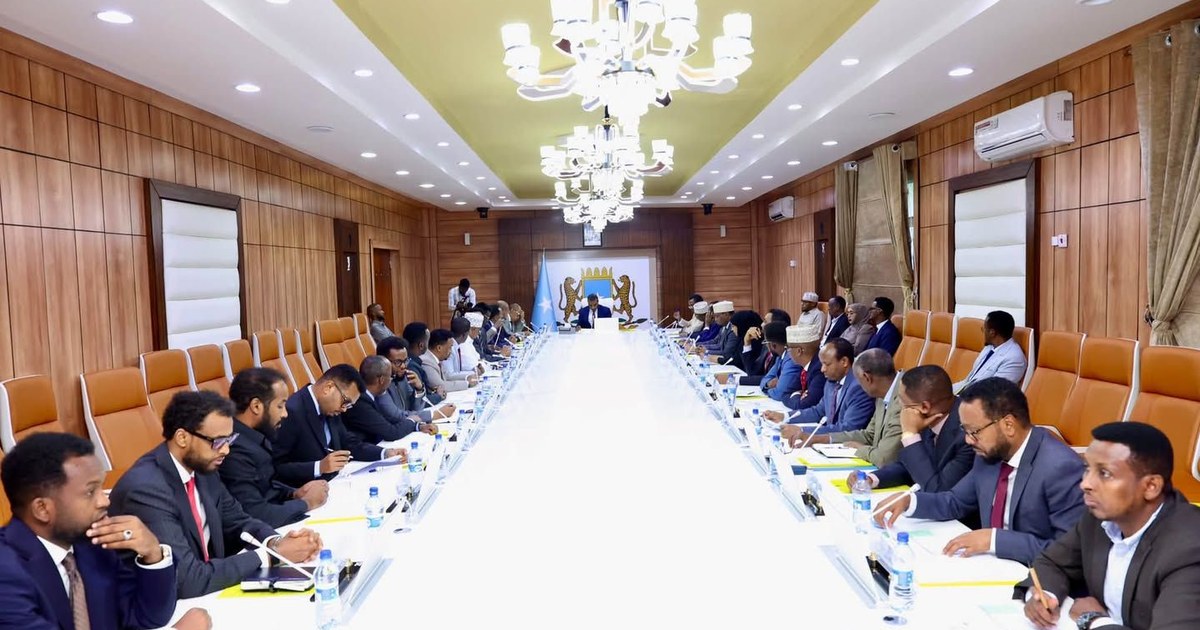

Somalia’s Council of Ministers has approved amendments to the Somalia electoral law that bring in closed-list voting for parliament and require political organisations to win at least 10% of the vote in federal elections to become national parties.
The changes, approved at an extraordinary session in Mogadishu on Tuesday chaired by Prime Minister Hamza Abdi Barre, are the federal government’s latest step towards direct elections in 2027, a plan the opposition and two federal member states reject.
What changes does the Somalia electoral law amendment make?
The cabinet approved changes to 23 articles of the National Electoral Law and eight articles of the Law on Political Organisations and Parties, the government said in a statement. “These amendments are intended to facilitate the implementation of the Constitution, as these laws were enacted prior to the adoption of the Constitution and now require alignment with its constitutional provisions,” it said.
Under the amended Somalia electoral law, citizens would directly elect local councils, federal member state assemblies and members of both houses of the Federal Parliament. Those bodies would then choose officials at other levels, including district commissioners and the president.
Parliamentary candidates would run on closed lists: parties submit ranked lists, voters choose a party rather than an individual, and seats are allocated by vote share and list position.
What is the 10% threshold for parties?
The Somalia electoral law package also amends the parties law: a political organisation that wins at least 10% of the vote in a federal election would qualify as a national political party, which the government said would regulate the move from registered political organisations to recognised parties.
The changes would also let the National Independent Electoral and Boundaries Commission (NIEBC) set the technical procedures for voter registration and voting. “The changes are intended to facilitate public participation in elections,” the statement said.
The Somalia electoral law amendments are not yet in force: they go to the Federal Parliament for approval. The statement had not been posted on the Prime Minister’s Office website by Wednesday morning.
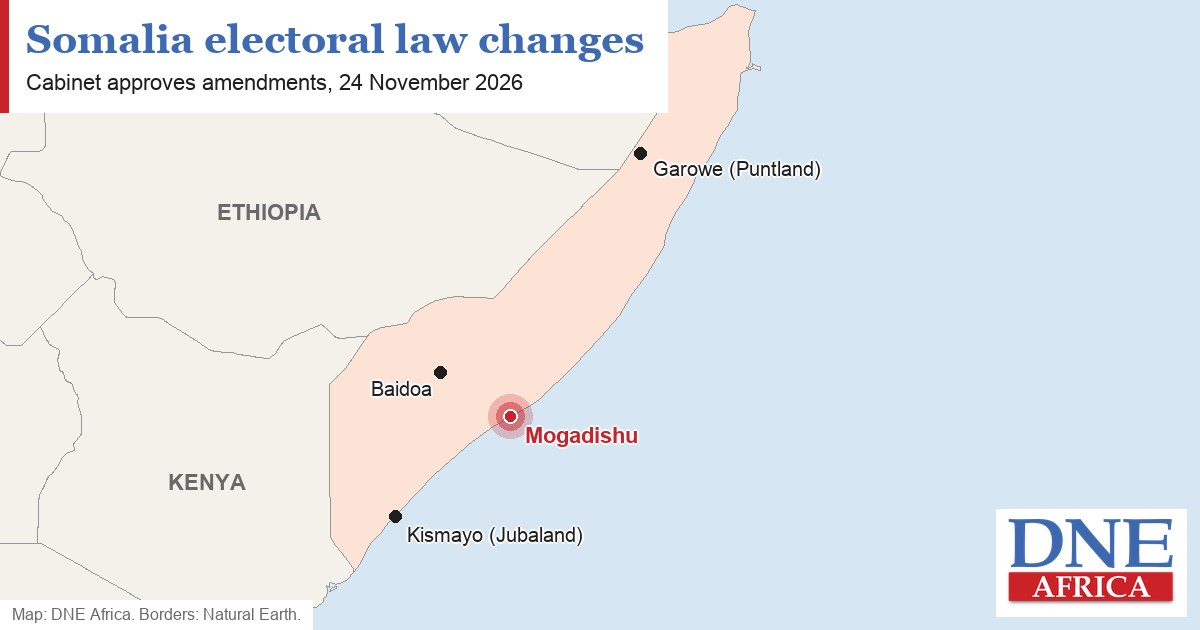
Why is the Somalia electoral law disputed?
Somalia has not held a one-person, one-vote national election since 1969. Its presidents have been chosen by parliaments whose members were selected by clan elders and delegates. In March 2026 the Federal Parliament approved the final amendments to the Provisional Constitution, ending a review that began in 2012 and setting the basis for direct elections, according to ConstitutionNet, a project of the intergovernmental institute International IDEA.
Opposition coalitions and the administrations of Puntland and Jubaland have rejected the constitutional changes, saying they were adopted without enough consultation, and have threatened to organise their own votes. Talks on a national dialogue failed to open this month after an opposition boycott. The federal government says the amendments give it the legal basis to hold elections in 2027.
What happens next?
The electoral commission has scheduled parliamentary elections for 15 April 2027 and a presidential election for 15 May 2027, and has extended the deadline for political organisations to submit registration documents from 22 November to 30 November.
The amended Somalia electoral law now needs approval by both houses of parliament. Security remains a constraint: the government is fighting al-Shabaab with the help of African Union forces and partners, including Uganda, and large parts of the countryside are outside state control.
FAQ
What did Somalia’s cabinet approve?
Amendments to 23 articles of the National Electoral Law and eight of the political parties law, approved on 24 November, which the government says align them with the revised constitution.
What is a closed-list system in the Somalia electoral law?
Parties submit ranked lists of candidates; voters choose a party, and seats go to candidates in list order according to each party’s share of the vote.
When are Somalia’s next elections?
The electoral commission has set parliamentary elections for 15 April 2027 and a presidential election for 15 May 2027.
Who opposes the Somalia electoral law changes?
Opposition coalitions and the Puntland and Jubaland administrations, which reject the constitutional amendments on which the new electoral framework is based.


