

Eastern Congo mortality doubled in the months after the M23 armed group’s January 2025 offensive and the US aid freeze, causing about 175,000 excess deaths in North and South Kivu, a peer-reviewed study published on Tuesday found.
The survey, in BMJ Global Health, is the only province-wide estimate based on fresh household data since Goma fell, its authors said. Eastern Congo mortality rose by a similar amount in government-held and M23-held areas, and the authors named the loss of aid-funded health care as a primary driver.
What did the eastern Congo mortality study find?
The eastern Congo mortality rate rose from 0.38 to 0.74 deaths per 10,000 people a day, comparing August 2024 to 22 January 2025 with 23 January to 26 September 2025. After adjusting for province and access, the risk of death was 2.0 times higher in the later period, with a wide 95% confidence interval of 1.06 to 3.76. Deaths among women rose 2.6 times.
Applied to the health ministry’s population estimate of 19.8mn for the two provinces, the change gives about 175,120 excess deaths between late January and late September 2025 (95% range 57,969 to 292,271). If rates stayed the same, that would mean about 260,000 excess deaths a year, the authors said.
Malaria and fever were the most common causes of death reported by households, at about 31%, followed by newborn conditions and diarrhoea. Violence was sixth, at about 6%. The authors estimate that between 6,800 and 11,500 deaths were directly attributable to violence.
The authors said a doubling of the baseline death rate meets the emergency threshold for a humanitarian crisis, describing the eastern Congo mortality rise as the sign of “a population in acute crisis”.
How was the survey carried out?
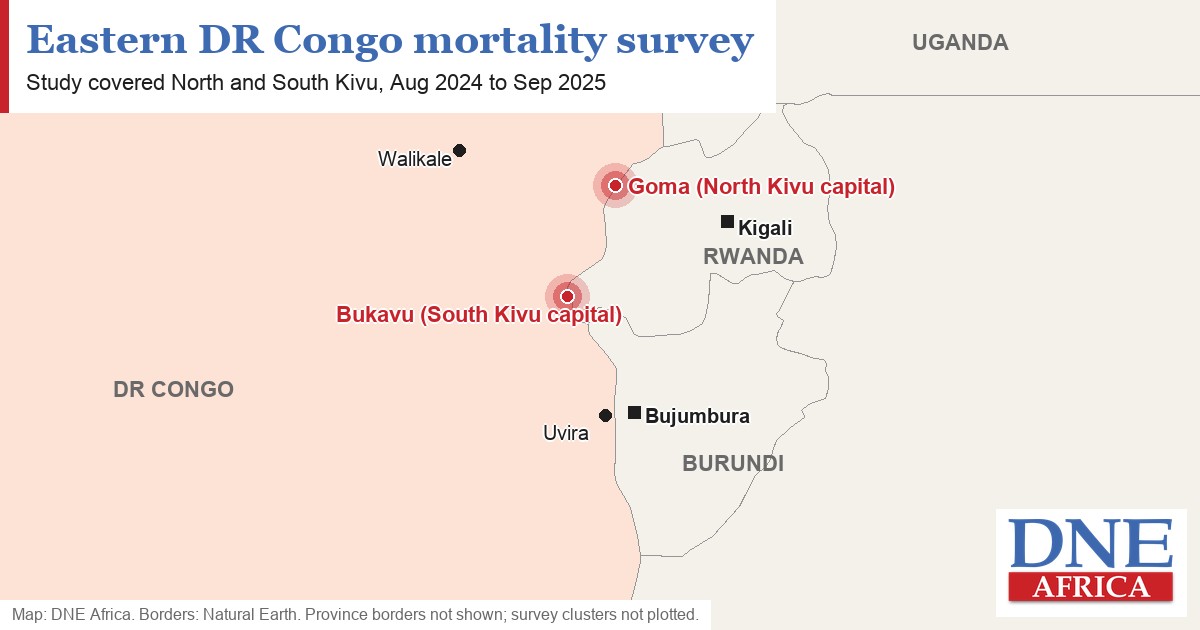
The study was led by Jennifer OKeeffe and Augustin Gang Karume of Rebuild Hope for Africa, a Bukavu-based organisation, with Les Roberts of Columbia University’s Mailman School of Public Health. Teams interviewed 899 households in 60 randomly selected clusters between 31 July and 26 September 2025, covering 6,736 people, with a 93% response rate.
An anonymous private donor funded the study and had no role in it, the paper said. Ethics approval came from the Catholic University of Bukavu and the University of Goma.
The authors list limits. Nine clusters could not be reached because of fighting and one had been abandoned, so the worst-hit areas were probably missed. Only 128 deaths were recorded, making estimates for children under five and for men imprecise. Causes of death were reported by families, not clinicians. Because the offensive and the aid cuts came in the same week, the study cannot separate their effects. The authors say eastern Congo mortality is therefore probably understated.
Why do aid cuts matter for eastern Congo mortality?
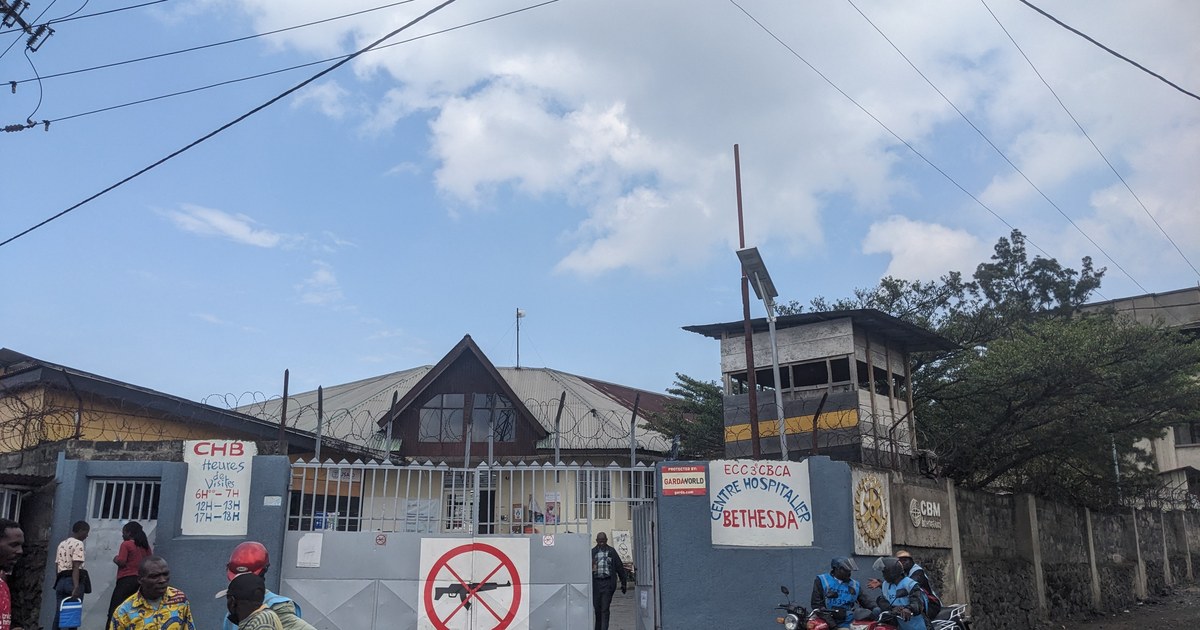
The US share of humanitarian funding for DR Congo fell from 68% of the total, or $965mn of $1.4bn, to under 20% ($36mn) by March 2025, the paper said, citing UN data. Of 46 health facilities whose staff were interviewed, three had closed and only 10 had received any supplies or money since February 2025. Average weekly attendance fell by about 40%; the three clinics with no decline still had international funding.
Acute malnutrition among children was higher in government-held areas (9.8%) than in M23-held areas (3.2%), which the authors linked to those areas being cut off from markets and supplies.
The authors call for funding to be restored and directed more to local organisations. They note that the 2026 humanitarian plan for the country sought $1.4bn, against a US allocation of $161mn at the time of writing.
What is the background to the crisis?
The M23 took Goma in late January 2025 and Bukavu in February; the AFC/M23 alliance now calls itself the Front for the Refoundation of the Nation (FRN), as set out in DNE Africa’s M23 conflict explainer. UN experts have reported that Rwanda supports the group, which Kigali denies, saying it has taken defensive measures against the FDLR militia.
The east is also battling an Ebola outbreak that began in Ituri province in May, and fighting has hampered the response, as DNE Africa reported this week. Citing both, the authors say eastern Congo mortality has probably risen since their data were collected.
A July preprint of the study estimated 165,391 excess deaths. DR Congo’s government and the FRN had not commented publicly on the findings by Wednesday.
FAQ
How many people died in eastern Congo after the 2025 crisis?
The BMJ Global Health study estimates about 175,000 excess deaths in North and South Kivu between late January and late September 2025, with a wide uncertainty range of roughly 58,000 to 292,000.
Did eastern Congo mortality differ between M23 and government areas?
No. The study found death rates rose by a similar amount in both, which the authors say shows the rise was not caused by fighting alone.
What drove eastern Congo mortality in the survey?
Families most often reported malaria or fever, newborn conditions and diarrhoea, which are largely treatable. Violence was the sixth most common cause.
Who funded the study?
A private donor who asked not to be named, according to the paper, which says the funder had no role in the research.


