

By using this site, you agree to the Privacy Policy and Terms of Use.
Accept
DNE Africa
  • Home
  • Politics
    IMG 20261128 WA0013
    BusinessPolitics

    Egypt Seeks Investor Protection Mechanisms to Boost Business Expansion in Africa

    By Ahmed Emam 2 Min Read
    Benin HPV vaccination: officials, partners and traditional leaders at the cervical cancer elimination day in Cotonou, 27 November 2026
    Health

    Benin HPV vaccination campaign to reach 320,000 more girls

    By DNE Africa November 28, 2026
    Tunisian harissa ingredients: split red chilli peppers and their seeds drying in the sun on a green mesh in Tunisia
    Culture

    Tunisian harissa marks four years on UNESCO heritage list

    By DNE Africa November 28, 2026
  • Business
    Screenshot ٢٠٢٦١١٢٨ ١٥٣٥٥٩
    BusinessPolitics

    INTERVIEW: Namibia Amb. Calls for Africa-Wide Cooperation, Stronger Trade Ties with Egypt

    CAIRO - Namibia's Ambassador to Egypt, Weich Mupya, has called for stronger…

    By Ahmed Emam 3 Min Read
    IMG 20261128 122305
    BusinessPolitics
    Cameroon Amb. Calls for Egypt-Africa Industrial Partnerships, Cross-Border Investment
    IMG 20261128 112036 1
    BusinessPolitics
    Abdelatty: Egypt to Establish Investment Entity to Boost African Investments
    Egypt LNG exports: an LNG tanker approaches the loading jetty at Egypt's Idku liquefaction plant
    Business
    Egypt LNG exports set for Europe from Idku as plant supply halts
    AfDB at 60: Time to reclaim the zeal of its visionary reformers
    Business
    AfDB Approves J.P. Morgan Payments as Confirming Bank to Boost African Trade Finance
  • Culture
  • Opinion
  • Technology
  • Sports
  • World
  • My Bookmarks
Reading: Tunisian harissa marks four years on UNESCO heritage list
Sign In
  • About us
DNE AfricaDNE Africa
Font ResizerAa
  • Home
  • Politics
  • Business
  • Culture
  • Opinion
  • Technology
  • Sports
  • World
  • My Bookmarks
Search
  • Home
  • Politics
  • Business
  • Culture
  • Opinion
  • Technology
  • Sports
  • World
  • My Bookmarks
Have an existing account? Sign In
Follow US
© 2026 DNE Africa. All rights reserved.
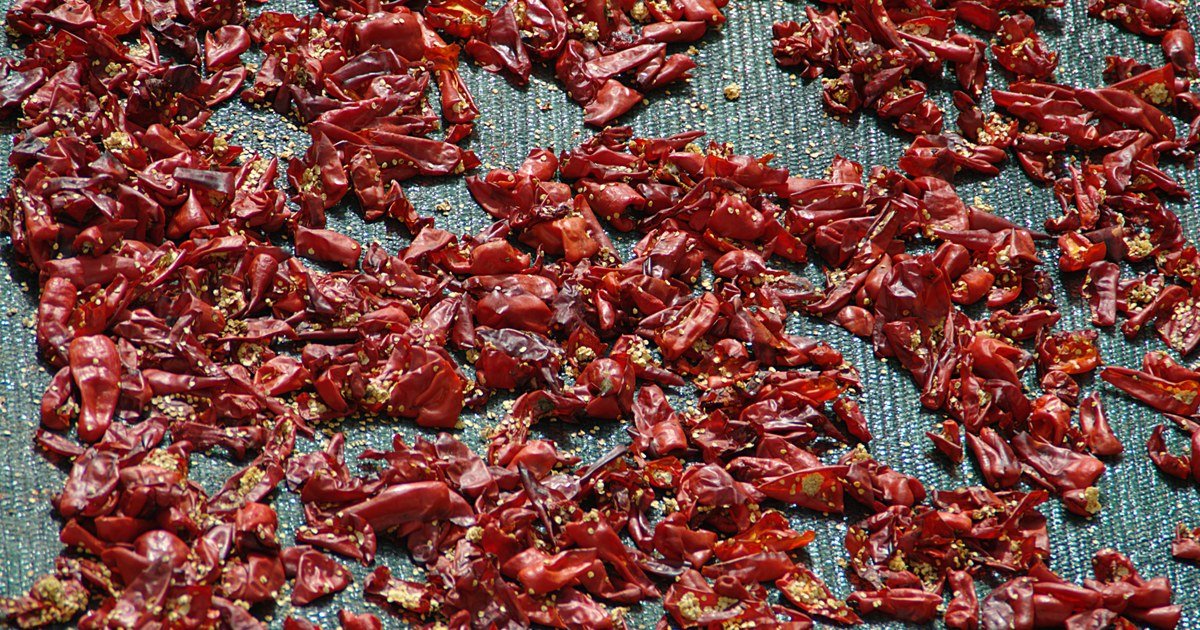
Tunisian harissa ingredients: split red chilli peppers and their seeds drying in the sun on a green mesh in Tunisia

Tunisian harissa marks four years on UNESCO heritage list

DNE Africa
Last updated: November 28, 2026 5:07 pm
By DNE Africa 8 Min Read
Share
Red chilli peppers drying in the sun in Tunisia, 2014. Photo: Habib M'henni / Wikimedia Commons, CC BY-SA 4.0
SHARE

Tunisian harissa, the chilli paste made from sun-dried peppers, garlic, salt and coriander, marks four years on UNESCO’s list of the intangible cultural heritage of humanity on 1 December.

Contents
What did UNESCO inscribe?How is Tunisian harissa made?What customs surround the chilli harvest?How is Tunisian harissa safeguarded today?FAQWhen was Tunisian harissa added to UNESCO’s list?What is Tunisian harissa made of?Does the UNESCO listing protect one official recipe?Where is the Tunisian harissa festival held?

The listing covers the knowledge, skills and social customs around the paste, from the farmer’s calendar to the family kitchen, and UNESCO asked Tunisia to keep commerce from standardising the practice.

What did UNESCO inscribe?

UNESCO’s Intergovernmental Committee for the Safeguarding of the Intangible Cultural Heritage, meeting in Rabat, added “Harissa, knowledge, skills and culinary and social practices” to its Representative List at its 17th session in 2022, according to the UNESCO listing. Africanews, reporting with AP, put the announcement on 1 December 2022.

UNESCO describes Tunisian harissa as “an integral part of domestic provisions” and of the country’s daily food traditions. Tunisia’s nomination file, quoted by Africanews, called it “a unifying element of an entire country”. The paste is exchanged between relatives, neighbours and friends, eaten every day, and prepared for Ramadan and for important family occasions, the committee’s decision notes.

The nomination began with the people who make it. According to the committee’s decision, practitioners raised the idea in 2016 and asked the government for help. A team of practitioners, associations, researchers and state bodies prepared the file, and harissa entered Tunisia’s national inventory of intangible heritage in October 2016.

How is Tunisian harissa made?

Under the method set out by UNESCO, chilli peppers are dried in the sun, split, their stalks removed and their seeds taken out. They are then washed, ground and seasoned with salt, garlic and coriander, using a pestle and mortar or a hand-turned meat mincer. The paste is kept in glass or earthenware jars for use through the year.
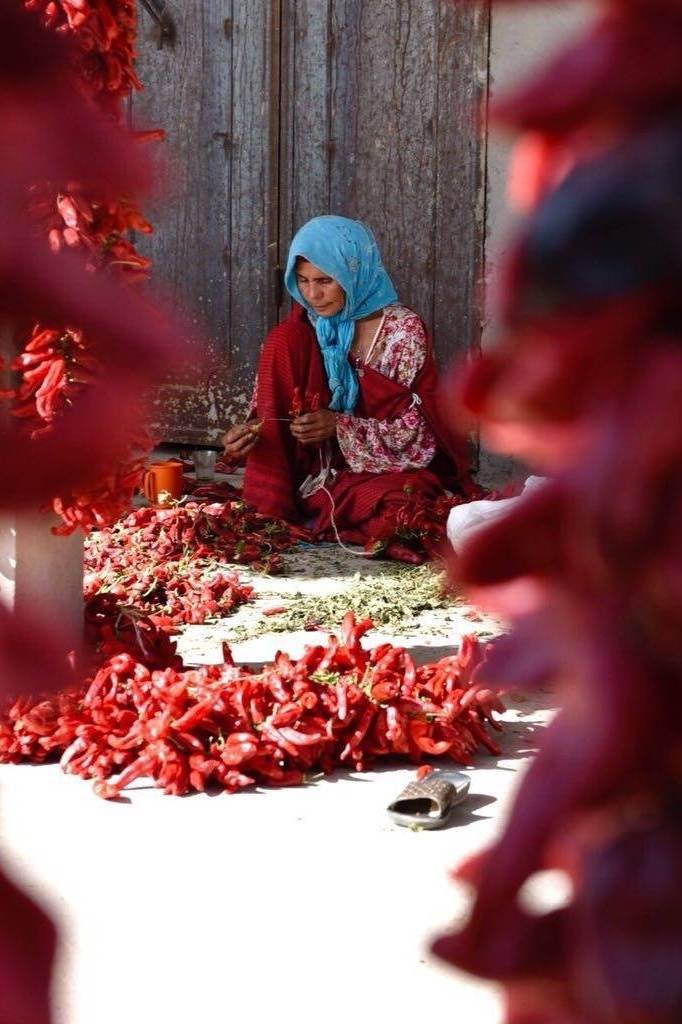
Tunisian harissa: a woman sits among piles of fresh red chilli peppers, removing stalks, with strings of peppers hanging nearby
Preparing red chilli peppers for harissa in Tunisia, 2017. Photo: FawziSan / Wikimedia Commons, CC BY-SA 4.0

Olive oil is added to finished Tunisian harissa. Africanews wrote that the oil preserves it and softens its heat. Euronews, reporting with AFP, described harissa as a condiment, an ingredient and a dish in its own right in Tunisian cooking.

The work is usually done by women, “in a convivial and festive family or neighbourhood setting”, UNESCO says. Younger cooks learn by watching mothers, grandmothers and neighbours during the yearly preparation. The skills are also taught formally in hotel and restaurant schools.

What customs surround the chilli harvest?

Growing the chillies follows an agrarian calendar that rules out sowing at certain times considered unlucky, according to UNESCO. Once picked, the peppers are hung on looms to dry, and replicas made of coral are used to keep bad luck away. These are customs passed on among farming communities and through agronomy schools, the listing says.

The committee’s decision says Tunisian harissa strengthens family and community ties and carries a symbolic meaning of “vitality, activity and warmth”.
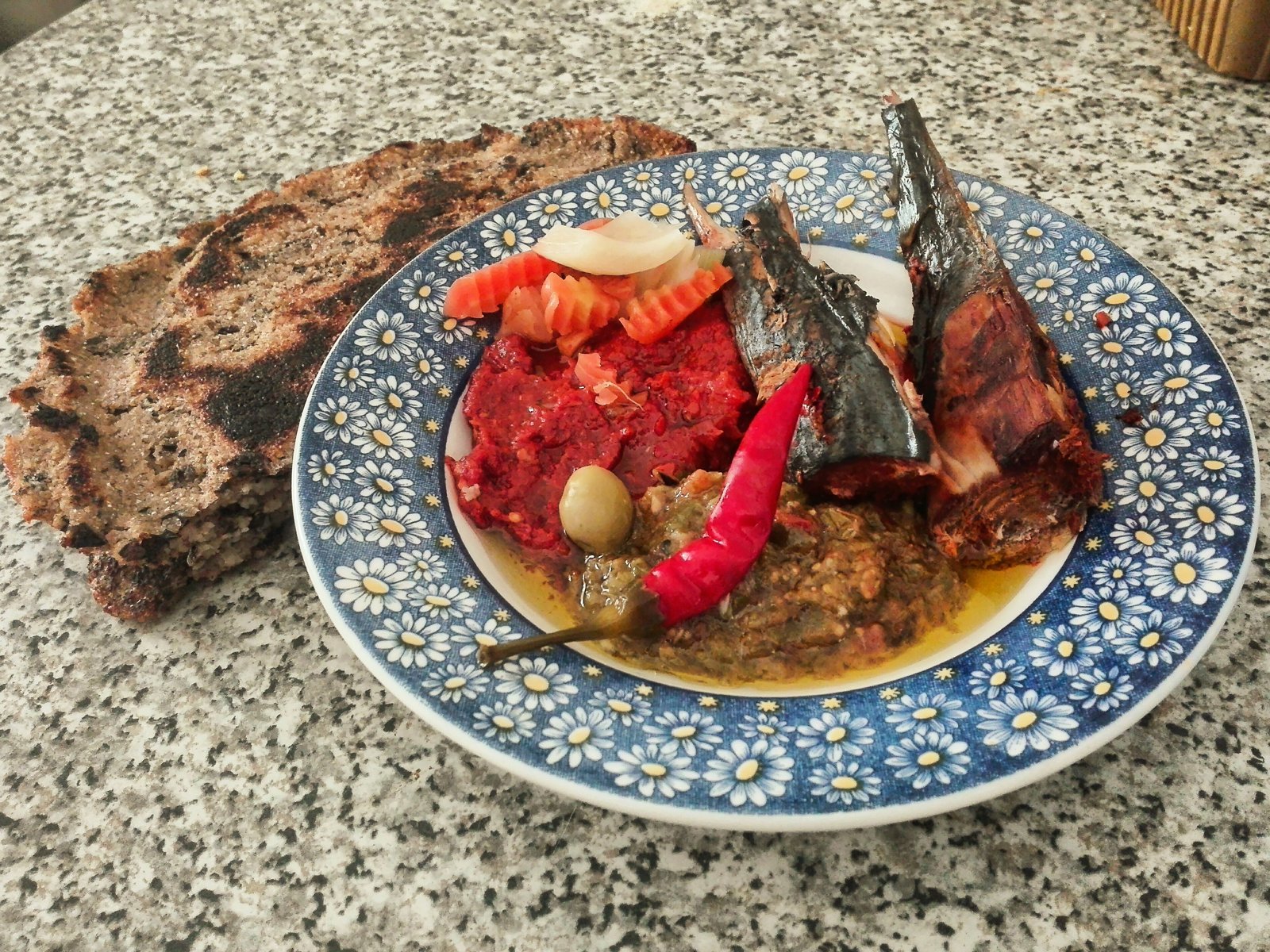
Tunisian harissa served on a plate with baked tuna, pickled vegetables, an olive and a fresh chilli, beside kissra bread
A Tunisian plate of harissa and tuna with kissra bread, 2019. Photo: Habib M’henni / Wikimedia Commons, CC BY-SA 4.0

How is Tunisian harissa safeguarded today?

Associations of practitioners have run festivals, workshops and training sessions, among them the Ilaf association in Tataouine in the south, the decision records. Tunisia proposed measures in five areas, from education and documentation to legal protection and promotion, and set up a committee to watch for unintended effects of the listing.

UNESCO added a caution. Its decision invited Tunisia to make sure that any standard procedure for making harissa does not “restrict or stifle human creativity”, and to avoid over-commercialisation.

The best-known of the festivals is in Nabeul, on the Cap Bon peninsula, which the Tunisian news site Kapitalis called one of the capitals of harissa production. The 12th edition ran from 30 October to 1 November this year, organised by the Association for the Safeguarding of the City of Nabeul, which founded it in 2015. About 30 producers and artisans sold and offered tastings of traditional harissa on Avenue Habib Bourguiba, while the association’s seat, Dar Nabeul, held talks on local food heritage and workshops on preparing the paste by hand.

This year’s guests were two pizza makers from Naples, who reworked Neapolitan pizza with a harissa sauce. Samir Kerkeni, the festival’s director, told the radio station Diwan FM that the aim was to promote Nabeul harissa, protect the region’s food heritage and find new uses for it in international cooking, Kapitalis reported.

Harissa joins a growing number of African food traditions on UNESCO’s lists, including Senegal’s ceebu jen, inscribed in 2021. Tunisia’s cultural calendar this autumn also included the Carthage Theatre Days in Tunis.

FAQ

When was Tunisian harissa added to UNESCO’s list?

UNESCO’s committee inscribed it on the Representative List of the Intangible Cultural Heritage of Humanity at its 17th session, held in Rabat, with the decision announced on 1 December 2022.

What is Tunisian harissa made of?

According to UNESCO, sun-dried chilli peppers are deseeded, washed and ground, then seasoned with salt, garlic and coriander. Olive oil is added to preserve the paste.

Does the UNESCO listing protect one official recipe?

No. The listing covers the knowledge, skills and social practices around harissa, and UNESCO asked Tunisia to ensure standard procedures do not stifle creativity or lead to over-commercialisation.

Where is the Tunisian harissa festival held?

The best-known one is in Nabeul, on the Cap Bon peninsula. Its 12th edition ran from 30 October to 1 November 2026.


You Might Also Like

Botswana’s Tsodilo Hills rock art nears 25 years on UNESCO list

Fantasia: An Algerian Cavalcade, the conquest in its victors’ words

UNESCO Creative Cities conference opens in Morocco’s Essaouira

Cameroon’s Ngondo festival returns to Douala after UNESCO listing

Tunisia’s first climate film festival opens with 12 films

TAGGED:TunisiaUNESCO
Share This Article
Facebook Twitter Pinterest Whatsapp Whatsapp LinkedIn Reddit Telegram Email Copy Link

You Might Also Like

Nervous Conditions by Tsitsi Dangarembga: Africa's 100 Best Books, No. 5 of 100, DNE Africa series card with a 2021 photo of the author
Culture

Nervous Conditions, Zimbabwe’s novel of losing Shona, now speaks it

By DNE Africa 17 Min Read
Africa news today: the National Assembly building in Dakar, Senegal, where MPs voted against the budget decree
BusinessPolitics

Africa news today: Senegal budget standoff, South Africa prices jump

By DNE Africa 11 Min Read
Tunisia central bank headquarters in Tunis, behind a row of palm trees
Business

Tunisia central bank holds rate at 7% as deficit doubles

By DNE Africa 7 Min Read

More Popular from DNE AFRICA

Biometric identity: illustration of a fingerprint, an iris and a secured data network from the African Narratives study
Technology

Biometric identity systems in Africa need tighter control, study says

By DNE Africa 10 Min Read
Ethiopia-Eritrea tensions: Eritrean President Isaias Afwerki and Ethiopian Prime Minister Abiy Ahmed talk in Eritrea in March 2019, beside both national flags

Ethiopia-Eritrea tensions explained: Assab, Badme and the risk of war

By DNE Africa
IMG 20261128 WA0013
BusinessPolitics

Egypt Seeks Investor Protection Mechanisms to Boost Business Expansion in Africa

By Ahmed Emam 2 Min Read
Ad imageAd image
BusinessPolitics

Africa Must Move from Exporting Its Wealth to Manufacturing It: Eissa

CAIRO - Nov. 28, Africa must move from exporting its wealth to manufacturing it and turn…

By Ahmed Emam
BusinessPolitics

Abdelatty: Egypt to Establish Investment Entity to Boost African Investments

Egypt is preparing to establish a new investment entity to channel public- and private-sector investments into…

By Ahmed Emam
Politics

King Cuffee bust unveiled as Ghana and Barbados twin two port towns

The twinning of Cape Coast and Speightstown during Mahama's state visit links Ghana's reparations drive with…

By DNE Africa
Politics

Libyan army chief Namroush tours Morocco’s F-16 base at Ben Guerir

Morocco is building military ties with both of Libya's rival camps, hosting Tripoli's army chief weeks…

By DNE Africa
Politics

Chad’s Deby takes ECCAS chair and drops UN Security Council bid

Chad will lead Central Africa's economic bloc and host its next summit, and has stepped aside…

By DNE Africa
DNE Africa

News by Africans, For Africans

Categories

  • Science
  • Health
  • Entertainment
  • Business
  • The Escapist

Quick Links

  • Advertise with us
  • Newsletters
  • Complaint

DNE Africa.All Rights Reserved.

Welcome Back!

Sign in to your account

Username or Email Address
Password

Lost your password?