
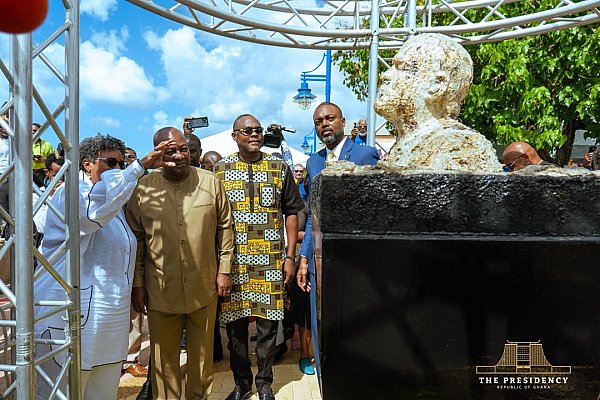

Ghana’s President John Dramani Mahama and Barbados Prime Minister Mia Mottley unveiled a bust of King Cuffee in Speightstown, Barbados, and formalised a twinning of the town with Cape Coast, Ghana, the Ghanaian Presidency said.
The ceremony was the centrepiece of Mahama’s state visit to Barbados as the island marks 60 years of independence, and both leaders used it to press the case for reparations for the transatlantic slave trade, an agenda Ghana has led at the UN this year.
Who was King Cuffee?
King Cuffee (Kofi) was an enslaved man from Cape Coast who led a 1675 plan to overthrow colonial rule in Barbados, according to the Presidency of Ghana. He was to be crowned king in Speightstown but was betrayed, and he and other fighters were executed and burned by British enslavers, the Presidency said.
Historians of the period describe the 1675 plot as a conspiracy by enslaved Coromantee, or Akan, people from the Gold Coast, now Ghana, to set up an African-style kingdom on the island. An account published in London in 1676 said the conspirators had planned to crown Cuffee on 12 June 1675, and that an enslaved woman revealed the plan to a planter before the rising began, according to a summary of the record by researchers at the University of Maryland. The plot was followed by mass executions.
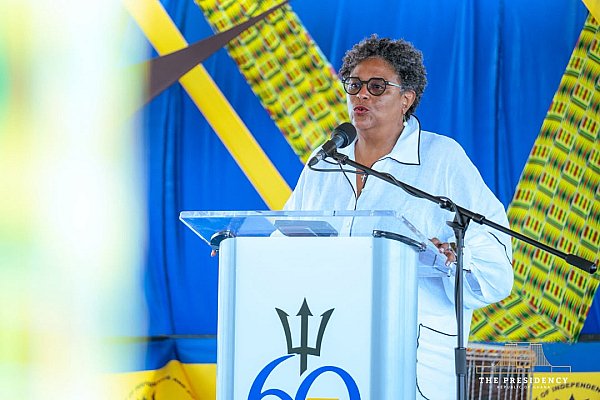
Mottley said the ceremony corrected a colonial narrative that had portrayed King Cuffee as a conspirator, and recognised him as a freedom fighter, the Presidency said.
What does the Cape Coast and Speightstown twinning cover?
Mahama said Cape Coast, where captives passed through the “Door of No Return”, and Speightstown, a historic port once known as “Little Bristol”, stood on opposite sides of a shared history. He said the twinning agreement would turn that separation into a partnership in culture, education, tourism and community development.
“May it clearly affirm that the Door of No Return has become a Door of Eternal Return,” Mahama said. He also proposed a school exchange programme between the two towns. Mottley pledged her government’s commitment to strengthening ties between Speightstown and Cape Coast.
The Presidency’s statement did not give a budget or timetable for the exchange programme or other joint projects.
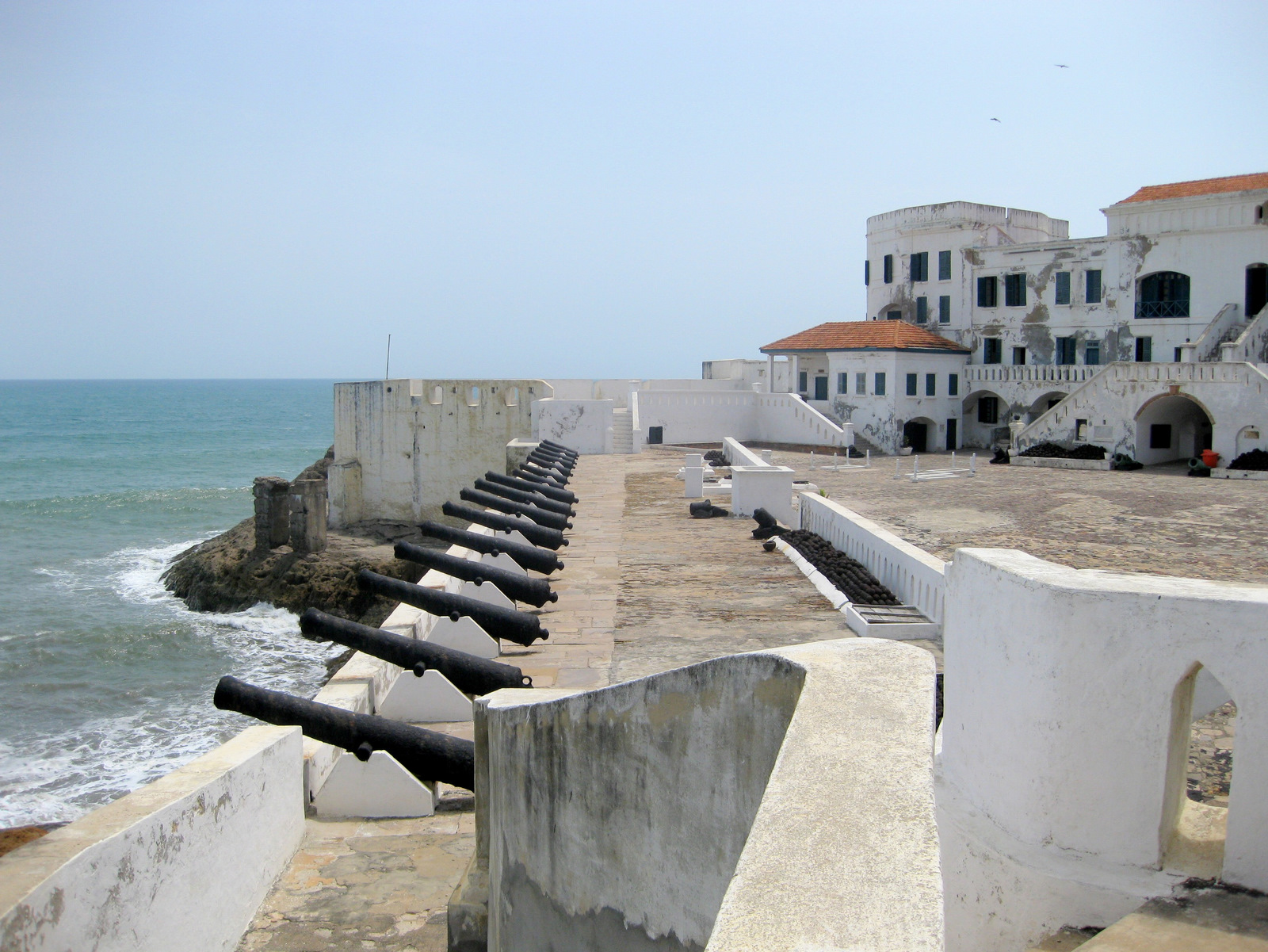
Cape Coast Castle, one of the forts through which enslaved Africans were shipped across the Atlantic, is a UNESCO World Heritage site and among Ghana’s most visited heritage attractions.
What did the leaders say about reparations?
In remarks at the same ceremony, Mottley called for sustained international efforts to address the injustices of the transatlantic slave trade, saying that acknowledging historical wrongs was essential for lasting healing and justice, according to a second statement from the Presidency.
She commended Mahama for securing global recognition of the slave trade as a grave wrong and welcomed Ghana’s Global Africa Commission on Reparatory Justice, which Barbados has agreed to join, as a platform for structured discussions on reparations. She said the legacy of slavery and colonialism still drives inequality in global relations, including unequal access to markets and to international decision-making.
In March the UN General Assembly adopted a Ghana-led resolution, backed by the African Union, declaring the trafficking and chattel enslavement of Africans the gravest crime against humanity. It passed with 123 votes in favour, 3 against (the US, Israel and Argentina) and 52 abstentions, and calls for reparations.
Ghana has since pushed the agenda in other forums, including urging the IMF and World Bank to build reparations into development financing. Mahama has made the issue a theme of his foreign policy since taking office, calling for reparations to restore Africa’s dignity, and a UN committee has also called for reparations.
What happens next?
Barbados marks 60 years of independence on 30 November, which is also the fifth anniversary of its becoming a republic. Mahama’s visit to the Caribbean follows a state visit to Jamaica in August and his attendance at the Commonwealth meeting in Antigua and Barbuda this month. The twin-town agreement and the proposed school exchange will be the first tests of whether the King Cuffee ceremony leads to lasting links between the two towns.
FAQ
Who was King Cuffee?
King Cuffee (Kofi) was an enslaved man from Cape Coast, in present-day Ghana, who led a planned 1675 uprising against colonial rule in Barbados. He was betrayed before he could be crowned and was executed with other fighters.
Where was the King Cuffee bust unveiled?
The King Cuffee bust stands at the Speightstown Esplanade in Barbados. It was unveiled at a ceremony attended by Ghana’s President John Dramani Mahama and Barbados Prime Minister Mia Mottley.
What is the Cape Coast and Speightstown twinning?
A twin-town relationship between Cape Coast in Ghana and Speightstown in Barbados, covering culture, education, tourism and community development, according to the Ghanaian Presidency.
Has Barbados joined Ghana’s reparations commission?
Mottley said Barbados had agreed to take part in Ghana’s Global Africa Commission on Reparatory Justice, according to the Ghanaian Presidency.


