
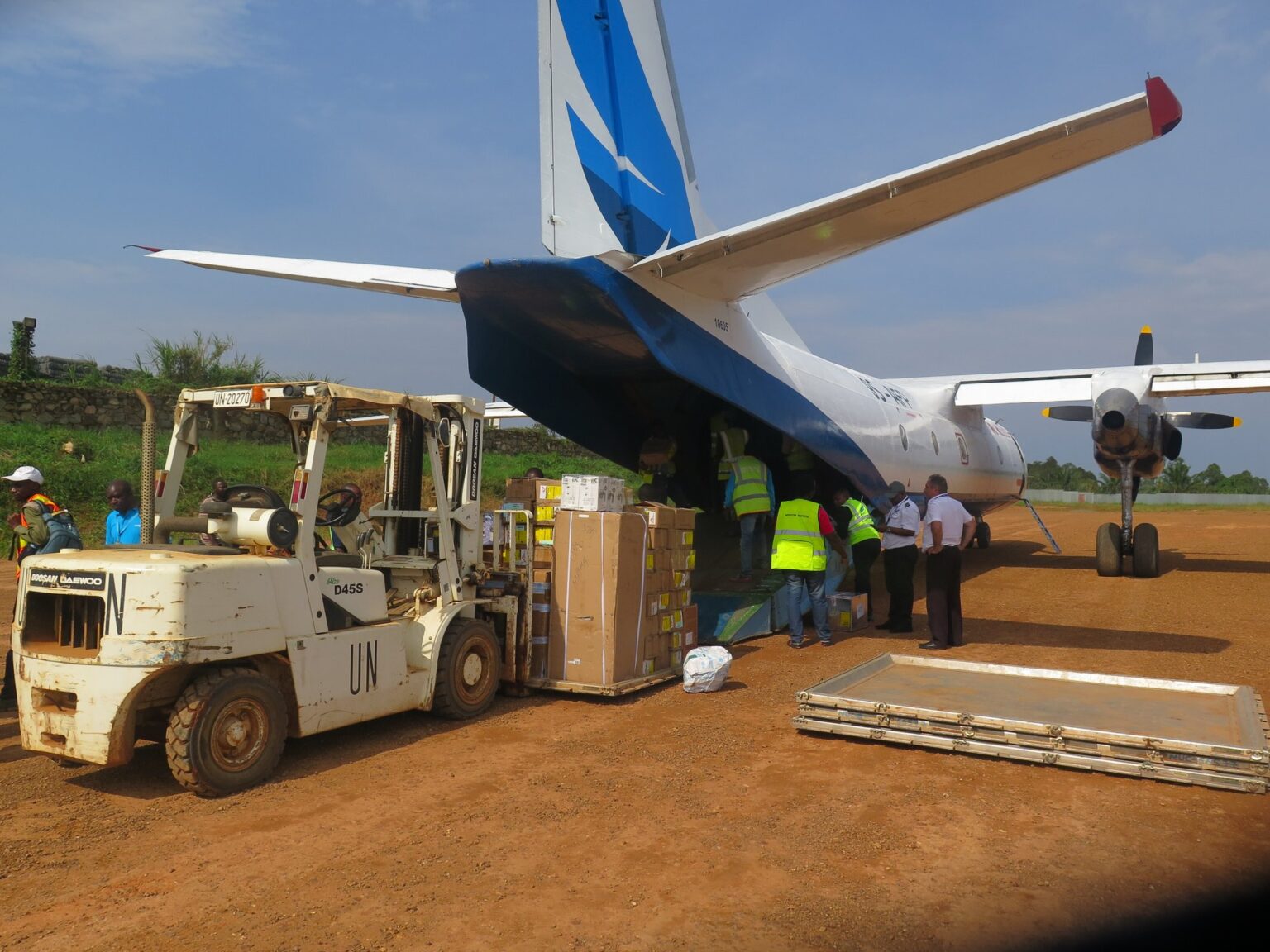

The Ebola emergency in DR Congo remains a public health emergency of international concern, the World Health Organization said on 27 November, as it named 15 other countries at high risk.
The decision keeps the Bundibugyo outbreak under the highest alert in global health law six months after it was declared. It also brings detailed border rules for Congo’s neighbours, while WHO again advises against flight bans, which Africa CDC has urged governments to review.
What did WHO decide on the Ebola emergency?
WHO Director-General Tedros Adhanom Ghebreyesus accepted the advice of the International Health Regulations Emergency Committee, which met for the third time on 17 November, and determined on 18 November that the epidemic still constitutes an emergency, according to the temporary recommendations he issued on 25 November. WHO announced them in a news release on 27 November.
“Six months into this emergency, the Committee remains deeply concerned by continued transmission and the high number of Ebola-related deaths,” said Professor Lucille Blumberg, who chairs the committee.
WHO said more than 12,000 cases and 5,900 deaths had been reported in DR Congo as of 24 November, and that it had verified at least 94 attacks on health care since the Ebola emergency was declared. Congo’s health ministry put the total at 12,021 confirmed cases and 5,904 deaths in its latest report, with Ituri province the epicentre.
Which countries does WHO see at high risk?
The updated recommendations add four groups of countries, sorted by the risk they face. DR Congo, rated “very high”, is the only country with community transmission of Bundibugyo virus disease. Kenya and Nigeria, with confirmed cases but no community spread, are rated “high”.
A further 13 countries are rated “high” because of heavy movement of people to and from the affected areas or weaker response capacity: Angola, Burundi, the Central African Republic, Ethiopia, the Republic of Congo, Rwanda, South Sudan, Tanzania, Uganda, Zambia, Djibouti, Somalia and Sudan.
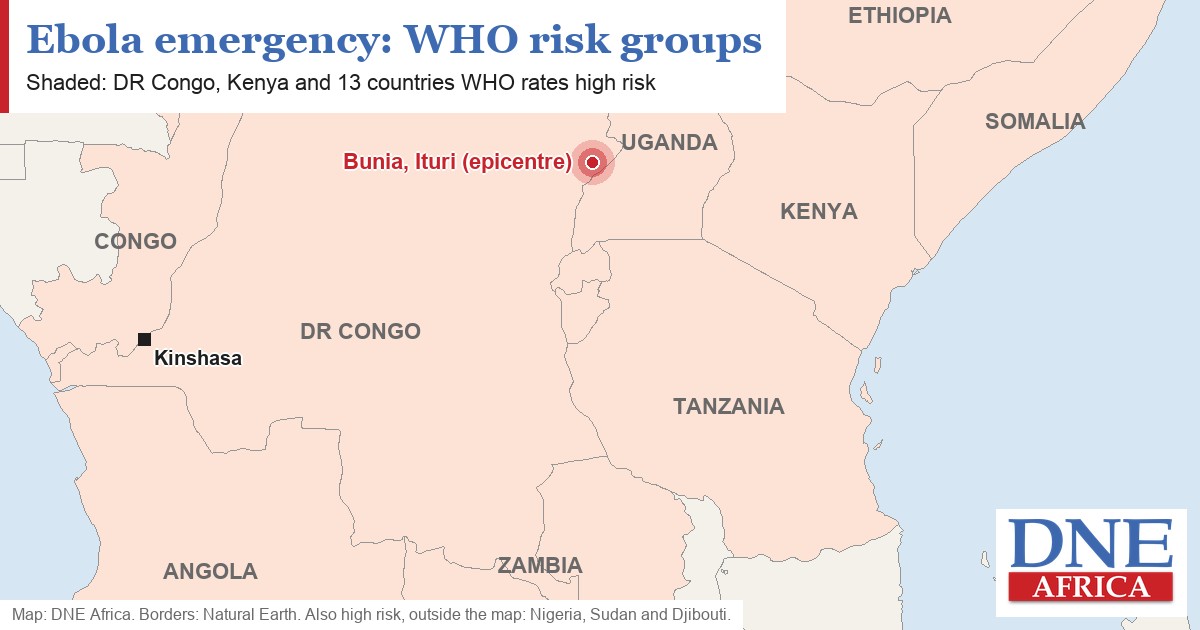
Egypt, South Africa, Saudi Arabia, the United Arab Emirates, Belgium, France, the UK, India and China form a separate group with strong travel links but high response capacity, where WHO rates the risk as “low”.
Uganda, which reported cases earlier in the outbreak, is now listed among the connected countries rather than those with cases. On 26 November the Africa Centres for Disease Control and Prevention (Africa CDC) welcomed Qatar’s decision to lift Ebola-related travel and visa restrictions on Uganda and urged other countries with similar measures to review them.
What must DR Congo do under the new rules?
The longest section of the Ebola emergency rules is addressed to DR Congo. WHO calls for high-level engagement beyond the health sector to secure access in conflict areas and protect patients, health workers and facilities, after fighting near a hospital in Ituri disrupted the response this month.
The document says infections in health facilities, partly through unsafe injection practices, are among the factors driving the epidemic, along with deaths in the community and geographic spread. It asks the authorities to supervise public, private and traditional practitioners, pay response staff on time and cut delays between first symptoms and treatment.
New measures include exit screening at airports, ports and border crossings, with known patients and contacts denied exit, 24-hour road screening points, surveillance on boats heading towards Kinshasa, and a limit of one passenger on motorcycles.
Are there vaccines or treatments for the Ebola emergency?
There is no approved vaccine or treatment for the Bundibugyo species, unlike the Zaire strain behind earlier Congolese outbreaks, WHO says. The committee called for faster clinical trials of candidate vaccines and treatments while keeping ethical and safety standards.
Gavi, the Vaccine Alliance, said on 24 November it had agreed to buy up to 1.5 million doses of ChAdOx1 BDBV, a candidate developed by the University of Oxford and the Serum Institute of India, if trials succeed and regulators approve it.
What does the Ebola emergency mean for travel?
WHO said the Ebola emergency measures aim to stop transmission at its source “without unnecessarily interfering with flights and international traffic”. It does not recommend suspending flights, river or road routes with DR Congo, and says such measures are not warranted against Kenya or Nigeria.
High-risk countries are instead asked to screen arrivals from DR Congo and ask travellers to monitor their health for 21 days. DR Congo must report to WHO monthly on its progress.
FAQ
Is the DR Congo Ebola emergency still in force?
Yes. WHO determined on 18 November that the Bundibugyo Ebola emergency remains a public health emergency of international concern and issued updated recommendations on 25 November.
How many Ebola cases has DR Congo reported?
More than 12,000 cases and 5,900 deaths as of 24 November, according to WHO. The health ministry reported 12,021 confirmed cases and 5,904 deaths.
Which countries are at high risk in the Ebola emergency?
WHO rates Kenya and Nigeria, which have confirmed cases, as high risk, along with 13 connected countries including Uganda, Rwanda, South Sudan, Ethiopia and Sudan. DR Congo is rated very high.
Does WHO recommend travel bans?
No. WHO advises against suspending flights or routes and against denying entry to travellers from DR Congo, Kenya or Nigeria, and recommends screening instead.
Is there an approved vaccine for Bundibugyo Ebola?
No. Candidate vaccines and treatments are in clinical trials, which WHO wants accelerated.


