
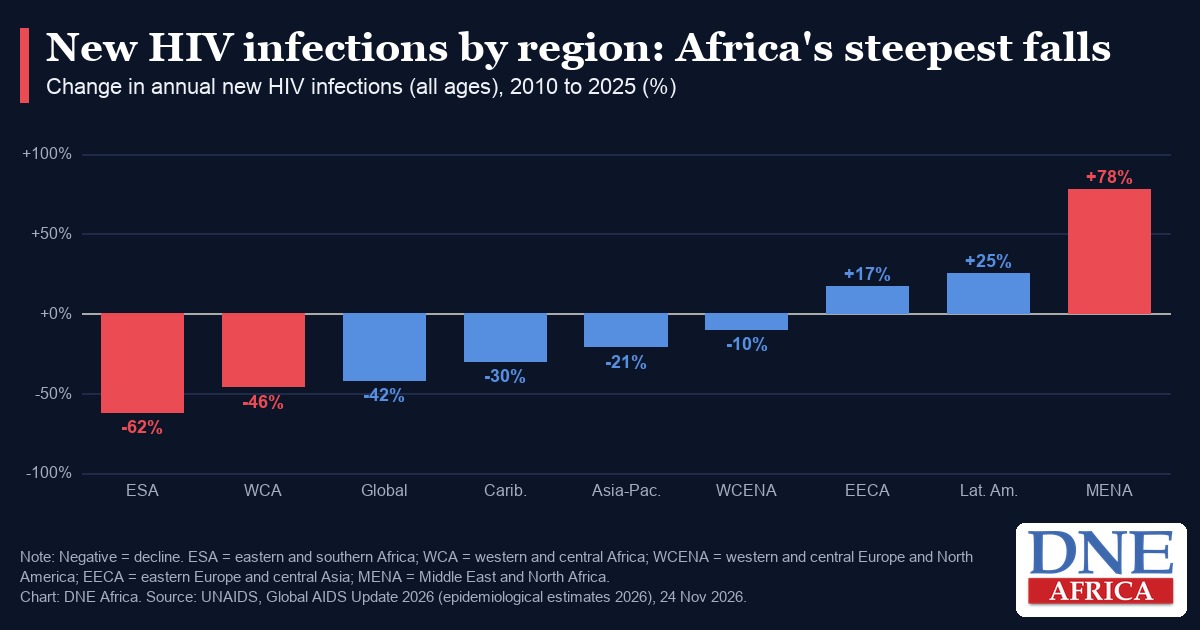

New HIV infections in eastern and southern Africa fell by 62% between 2010 and 2025, the steepest decline of any world region, according to UNAIDS estimates published on 24 November 2026.
Western and central Africa recorded the second-largest fall, at 46%, ahead of the global decline of 42%. The Middle East and North Africa moved the other way, with annual new HIV infections up 78% over the same period.
How have new HIV infections changed by region?
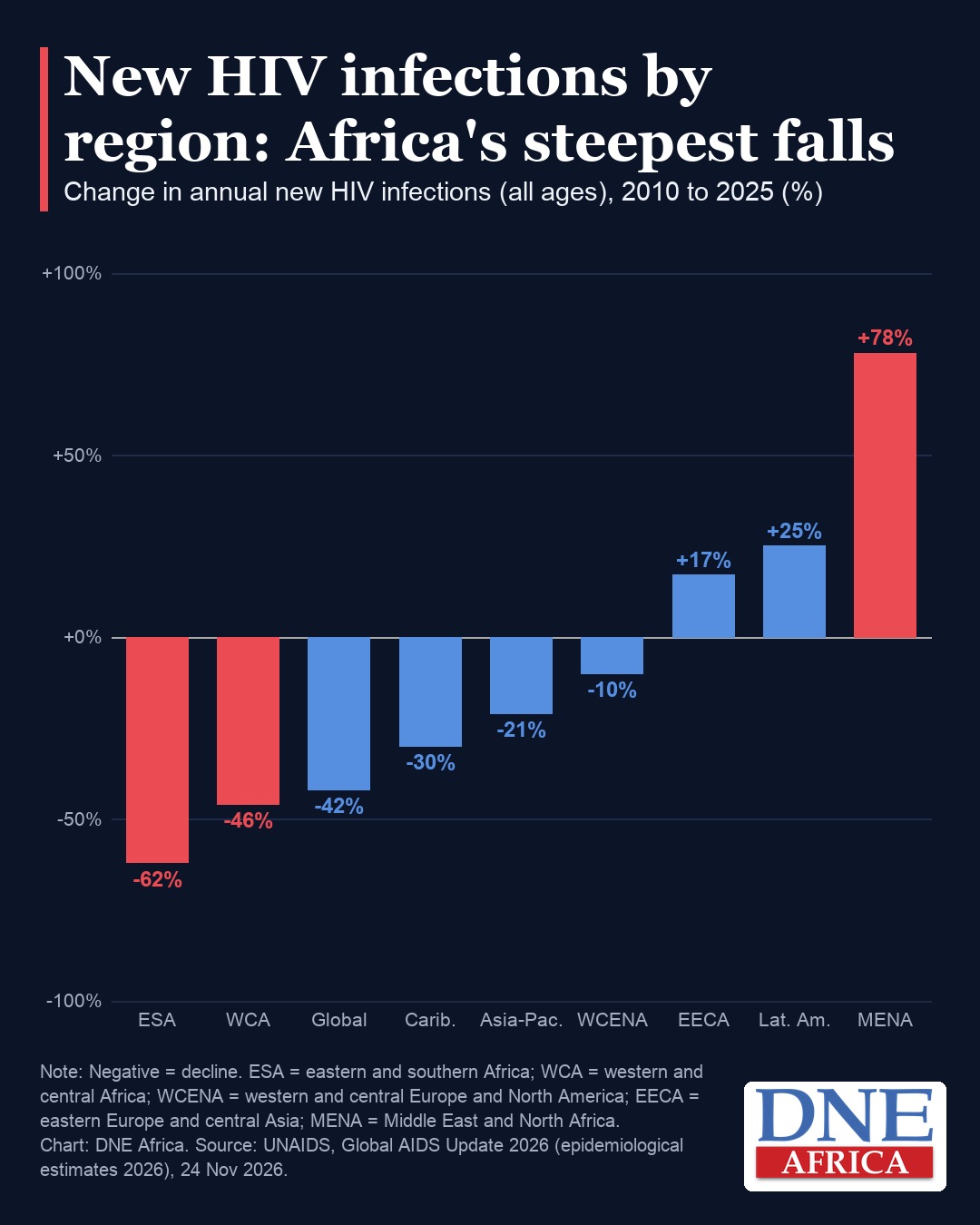
The table gives the change in the annual number of new HIV infections (all ages) between 2010 and 2025, from Figure 1.1 of the UNAIDS Global AIDS Update 2026.
| Region | Change, 2010-2025 |
|---|---|
| Eastern and southern Africa | -62% |
| Western and central Africa | -46% |
| Global | -42% |
| Caribbean | -30% |
| Asia and the Pacific | -21% |
| Western and central Europe and North America | -10% |
| Eastern Europe and central Asia | +17% |
| Latin America | +25% |
| Middle East and North Africa | +78% |
In numbers, new HIV infections in eastern and southern Africa fell from 1.1 million in 2010 to 420,000 in 2025, and in western and central Africa from 340,000 to 190,000, UNAIDS said. About 1.2 million people acquired HIV worldwide in 2025.
What do the figures measure?
They are modelled estimates from the UNAIDS epidemiological estimates for 2026, built from national surveillance, surveys and programme data. Each figure carries a wide uncertainty range: the 2025 estimate for eastern and southern Africa runs from 300,000 to 580,000. Percentage changes also say nothing about the size of an epidemic, and eastern and southern Africa still accounted for 34% of all new infections in 2025.
Which African countries are seeing new HIV infections rise?
UNAIDS said Benin, Eswatini, Kenya, Lesotho, Rwanda and Zimbabwe had cut annual new infections by at least 78% since 2010, which puts them close to the 90% reduction targeted for 2030. Lesotho’s own figures on testing and treatment were reported this week in Lesotho’s progress on HIV targets.
Elsewhere, the report found numbers rising since 2020 in Madagascar (from 13,000 to 26,000), Egypt (from 4,700 to 6,300) and Sudan (from 4,000 to 5,300), and also rising in Algeria. UNAIDS said the rises come amid upheavals in HIV funding, especially for prevention services and community programmes, after international HIV financing fell by 18% in 2025.
FAQ
Which region had the biggest fall in new HIV infections?
Eastern and southern Africa, where new HIV infections fell by 62% between 2010 and 2025, according to UNAIDS.
Where are new HIV infections rising?
In the Middle East and North Africa (+78% since 2010), Latin America (+25%) and eastern Europe and central Asia (+17%), UNAIDS said.
How many people acquired HIV in 2025?
About 1.2 million people worldwide, with a range of 950,000 to 1.7 million, a 42% drop from 2010.


