
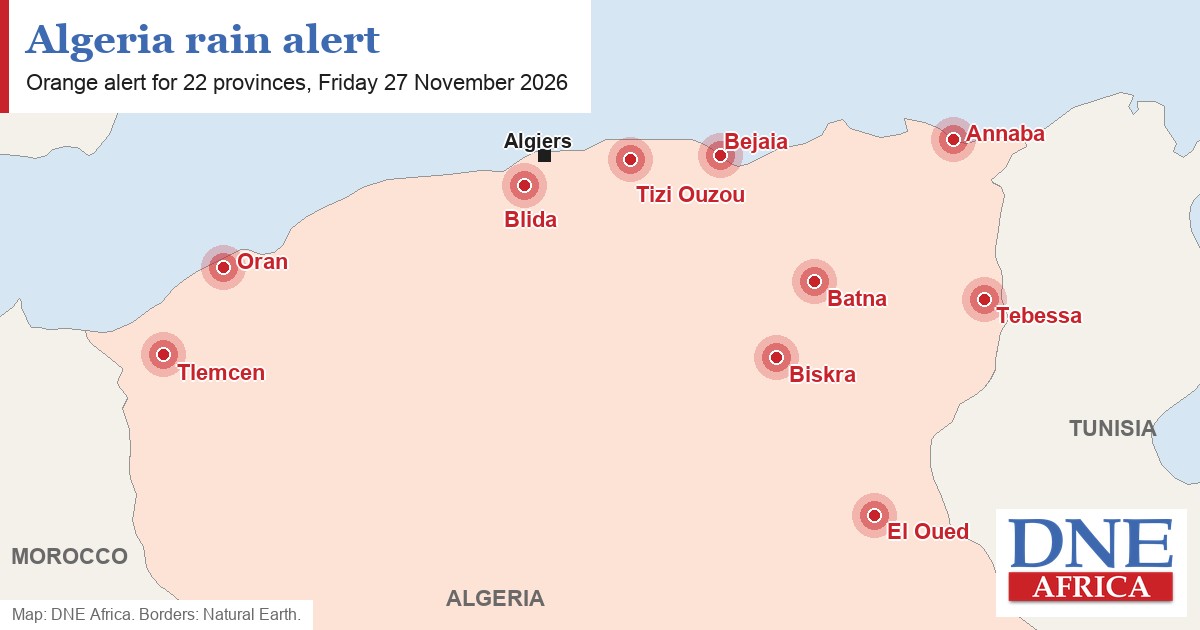

Algeria’s National Meteorological Office issued an orange Algeria rain alert on Thursday for 22 provinces, forecasting 20mm to 40mm of rain on Friday from Tlemcen and Oran in the west to Annaba and El Oued in the east.
The heavy rain is due the day before Algerians vote in municipal and provincial elections on Saturday, and follows a year in which storms caused flash floods in several provinces while rainfall helped refill the country’s dams.
Which provinces are under the Algeria rain alert?
The special bulletin from the National Meteorological Office (ONM), carried by state broadcaster Radio Algérie, sets out three groups of provinces, or wilayas:
- Tlemcen, Aïn Témouchent, Oran, Sidi Bel Abbès, Blida, Médéa, Tipaza, Aïn Defla, Algiers, Boumerdès and Bouira: 20mm to 30mm from 03:00 to 15:00 local time on Friday.
- Tizi Ouzou, Béjaïa, Jijel, Skikda, Annaba and El Tarf: 20mm to 40mm from 06:00 to 23:00.
- Biskra, Batna, Khenchela, Tébessa and El Oued: 20mm to 30mm from 13:00 to 22:00.
The bulletin is classed at orange level and did not mention wind or snow.
Why does the Algeria rain alert matter for Saturday’s vote?
Algerians elect members of municipal and provincial assemblies on Saturday 28 November, after the campaign closed and the electoral silence period began. DNE Africa’s preview of the local elections sets out what is at stake.
Voting has already started in remote areas. Mobile polling stations opened on Wednesday, 72 hours before polling day, in Ouargla, Illizi, Djanet, Tamanrasset, In Guezzam, Tindouf, Béchar and Béni Abbès, Radio Algérie reported, with 34 mobile stations in five southern provinces alone. Those areas are outside the alert. The heaviest rain on Friday is forecast for the north-east coast and Kabylie.
The Algeria rain alert covers Friday only. The office had not issued a forecast for Saturday by Thursday afternoon.
How have storms and rain affected Algeria this year?
A severe weather system on 20 January 2026 brought heavy rain, strong winds and snow to high ground, and flash floods hit Relizane, Chlef, Tiaret, Tissemsilt, Médéa and Aïn Defla, according to the IFRC’s account on ReliefWeb. Civil protection confirmed at least one death, a 60-year-old man in Relizane province, and several injuries and evacuations.
The same wet year eased years of drought pressure. In May the director general of the National Agency for Dams and Transfers, Abdelatif Aziza, said Algeria’s dams held 4.6bn cubic metres, a fill rate of 59.55 per cent, about 20 percentage points higher than a year earlier, Radio Algérie reported. He said 20 dams were full, including Beni Haroun in Mila and Tichy Haf in Béjaïa. No newer national figure has been published.
What happens next?
The ONM updates its bulletins as systems develop, and civil protection usually publishes a toll of interventions after heavy rain. The Algeria rain alert ends at 23:00 on Friday in the north-east. DNE Africa will cover the election results, which the National Independent Election Authority is due to announce after Saturday’s count. Earlier this week President Abdelmadjid Tebboune set a target of ending fertiliser imports by 2028.
FAQ
What is the Algeria rain alert for 27 November?
It is an orange-level special bulletin from the National Meteorological Office forecasting 20mm to 40mm of rain in 22 provinces on Friday 27 November.
Which areas get the most rain?
Tizi Ouzou, Béjaïa, Jijel, Skikda, Annaba and El Tarf, where 20mm to 40mm is forecast between 06:00 and 23:00.
Does the Algeria rain alert cover Saturday’s local elections?
No. The alert covers Friday only. The office had not issued a warning for Saturday, polling day, by Thursday afternoon.
How full are Algeria’s dams?
The national dams agency said in May 2026 that dams were 59.55 per cent full, holding 4.6bn cubic metres. No newer figure has been published.


