
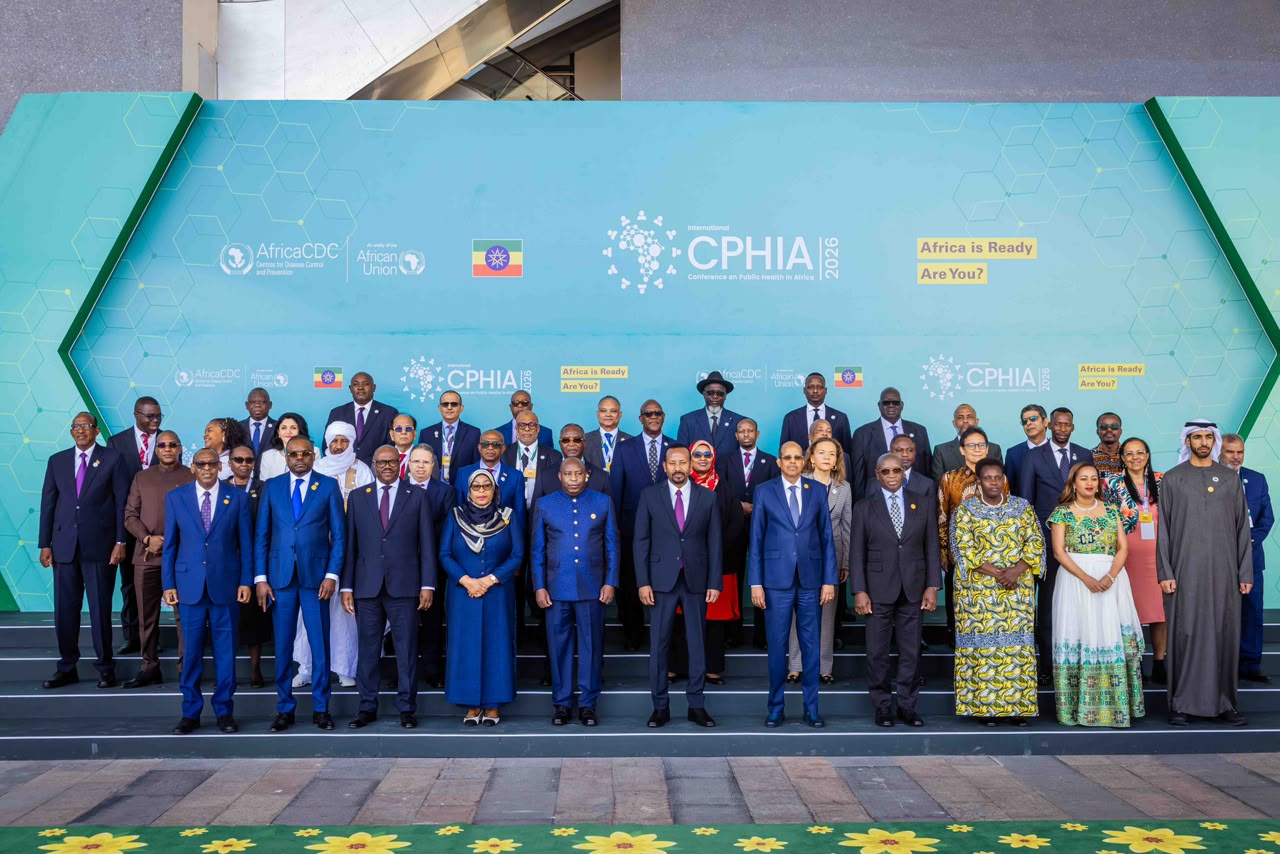

CPHIA 2026, Africa’s main public health conference, closed in Addis Ababa on Friday with a $1bn Ghanaian pledge for drug and vaccine manufacturing and a Central African Republic promise to more than double health spending.
The CPHIA 2026 commitments, which also added three members to a continental medicines-buying pool, matter because foreign health aid to Africa is falling while outbreaks, including the Bundibugyo Ebola epidemic in the Democratic Republic of Congo, keep testing health systems, and governments are under pressure to pay for more of their own care.
The outcomes were set out in a statement from the Africa Centres for Disease Control and Prevention (Africa CDC), which co-hosted the five-day meeting with Ethiopia’s government. Africa CDC said 29,000 people attended in person and 270,000 online, including six heads of state and government and 63 ministers.
What did governments commit to at CPHIA 2026?
The Central African Republic committed to raise health’s share of its national budget from about 4% in 2026 to 10% by 2029 and to report spending every quarter, Africa CDC said. African Union members pledged in the 2001 Abuja Declaration to spend at least 15% of their budgets on health, a target few have met.
Ghana announced a $1bn investment over four years in pharmaceutical and biomanufacturing hubs and authorised direct procurement of locally made snake antivenom. Zambia broke ground on a cholera vaccine plant, with fill-and-finish operations targeted within a year, according to the statement.
At CPHIA 2026, Sudan, South Sudan and Botswana signed the agreement for the African Pooled Procurement Mechanism, which buys medicines and vaccines in bulk for member states, and Zimbabwe is completing the steps to join. Five Southern African Development Community countries joined regional pooled procurement, which Africa CDC said is projected to save about $200mn.
Africa CDC and the African Medicines Agency will submit a continental quality assurance policy for medicines to the African Union in early 2027.
What did CPHIA 2026 say about Sudan and Ebola?
Rebuilding Sudan’s health system, damaged by the war between Sudan’s army and the Rapid Support Forces (RSF) militia, was named a continental priority. Sudan’s health minister, Haitham Mohammed Ibrahim, appealed for help to close an annual funding gap of at least $700mn over the next three years, Africa CDC said. The agency said it would support Sudan in setting up an emergency operations centre and rebuilding laboratory and genomic sequencing capacity.
On Ebola, the statement said the revised continental response plan for the Bundibugyo outbreak needs an estimated $1.576bn over six months, with the World Bank leading its socio-economic protection component. Congo’s health ministry has reported more than 12,000 confirmed cases, as DNE Africa reported this week. Gavi’s advance purchase commitment, announced at CPHIA 2026, for up to 1.5mn doses of a Bundibugyo vaccine, conditional on phase 3 trial results, was also presented at the conference.
What else was launched at CPHIA 2026?
Tanzania’s President Samia Suluhu Hassan launched a continental roadmap aiming for zero home deliveries, zero preventable maternal and newborn deaths and zero unvaccinated children, and Tanzania pledged 60 specialist scholarships. The Beginnings Fund announced $665mn for maternal and newborn health in 14 African countries, Africa CDC said. Maternal health was also the focus when the conference opened earlier this week.
Ethiopia’s Prime Minister Abiy Ahmed launched a continental roadmap on artificial intelligence and digital health and announced plans for an AI university in Ethiopia open to students from across Africa. Africa CDC released its first continental public health intelligence report and an Africa Health Atlas with comparable indicators for all 54 countries, and member states agreed to build climate-health early warning systems with set response triggers.
All seven candidates to succeed Tedros Adhanom Ghebreyesus as director-general of the World Health Organization attended, the first time they had appeared together on an African platform, according to the statement.
What happens next?
Africa CDC launched a mechanism to monitor the Lusaka Agenda, a 2023 framework for aligning donor funding behind national plans, and Zambia committed to report on its progress at the next conference. Delegates agreed that the conference after CPHIA 2026 would review what had been delivered: resources raised, budgets spent and measurable improvements in services.
The conference ended as Africa CDC’s governing board weighs a second term for director-general Jean Kaseya.
FAQ
What is CPHIA 2026?
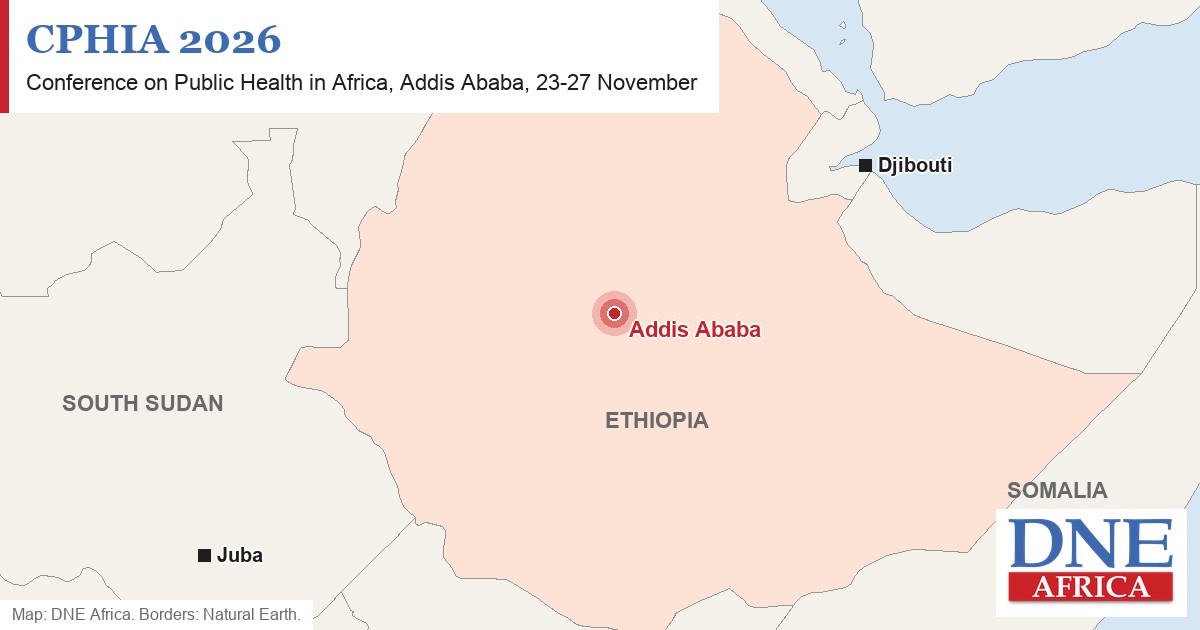
The fifth International Conference on Public Health in Africa, co-hosted by Africa CDC and Ethiopia’s government in Addis Ababa, which ended on 27 November 2026.
What were the main pledges at CPHIA 2026?
Ghana announced $1bn over four years for drug and vaccine manufacturing, the Central African Republic pledged to lift health to 10% of its budget by 2029, and Sudan, South Sudan and Botswana joined the African Pooled Procurement Mechanism, Africa CDC said.
How much does Africa’s Ebola response need?
Africa CDC said the revised continental plan for the Bundibugyo Ebola outbreak needs about $1.576bn over six months.
Who checks that the commitments are kept?
Africa CDC said the next conference will review delivery, and it has launched a mechanism to track the Lusaka Agenda on aligning health funding.


