
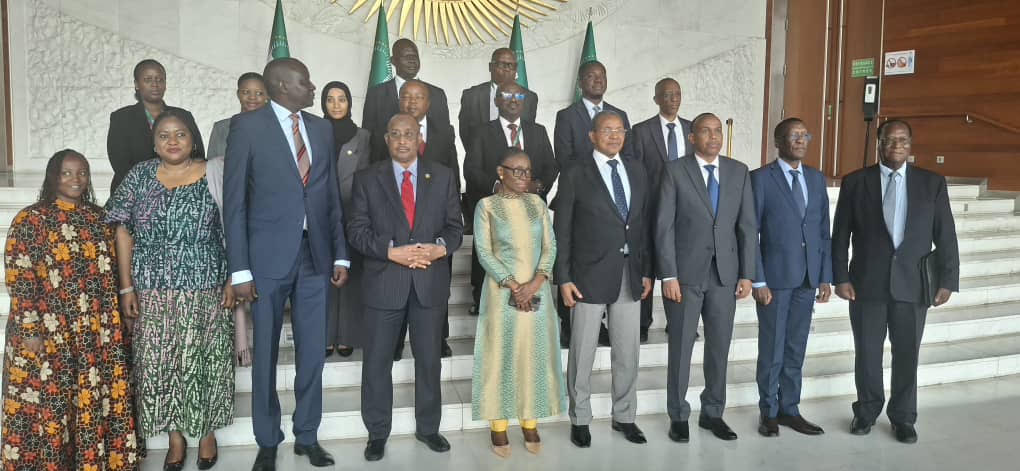

The African Union, IGAD and the UN have launched a joint South Sudan task force in Addis Ababa to prevent a return to war before elections on 11 February 2027, the UN mission said.
The South Sudan task force brings the three bodies that guarantee or back the 2018 peace deal under one structure at a time when the ceasefire is fragile, the transitional government has been replaced by a caretaker administration and the country is preparing for its first vote since independence in 2011.
What will the South Sudan task force do?
The South Sudan task force aims to strengthen preventive diplomacy, political oversight and strategic guidance, according to a statement from the United Nations Mission in South Sudan (UNMISS). Its immediate priorities are to de-escalate tensions, secure adherence to the permanent ceasefire, rebuild trust among the parties and build wider political consensus on the way forward, UNMISS said.
The task force is led by former Tanzanian president Jakaya Kikwete, the AU’s special envoy for the Horn of Africa, according to South Sudan’s foreign ministry, as DNE Africa reported before the launch. Partners pledged continued support but set clear expectations: progress on preventing violence, no unilateral actions that undermine the peace process, and full implementation of the outstanding parts of the agreement, the UNMISS statement said.
“Elections are an important milestone, but not an end to the peace process,” said Anita Kiki Gbeho, the UN Secretary-General’s special representative and head of UNMISS. Lasting stability also needs respect for the ceasefire, inclusive governance and delivery of commitments ranging from a permanent constitution and transitional security arrangements to judicial reform, transitional justice and national reconciliation, she said.
What did South Sudan’s government say?
Cecilia Adut Manyok Adeng, the caretaker foreign minister, said her country “cannot remain indefinitely defined by conflict, humanitarian emergencies and transitional arrangements”, and asked the task force to recognise the link between political stability, economic recovery and development.
Speaking at the launch of the South Sudan task force, she said responsibility for peace, security and reconciliation rested with South Sudan’s government and people. “We do not seek to transfer that responsibility,” she said, adding that sustainable peace also needed resources, functioning institutions and economic stability. South Sudanese representatives stressed national ownership of the process and matching expectations with financial and technical support, UNMISS said.
What did the AU and IGAD say about the South Sudan task force?
“Peace in South Sudan is not only a national imperative, it is also a regional necessity,” said Moussa Djama Ali, IGAD’s special envoy, warning that the region could not afford “another cycle of conflict”. He said early warning had to turn into timely political engagement, with civilian protection and humanitarian access central to the South Sudan task force’s work.
African Union Commission chairperson Mahmoud Ali Youssouf said the organisations stood ready to help, but that lasting peace depended on “the political will, commitment, and leadership of the South Sudanese themselves”, according to the UNMISS statement.
Why does the launch matter before the 2027 elections?
The launch came a day after the close of an inter-party dialogue in Juba that adopted resolutions on political freedoms, security guarantees and preparations for the vote, UNMISS said. Days earlier, President Salva Kiir lifted the state of emergency in four states, a step parties had sought so they could campaign.
A civil war that began in 2013 killed an estimated 400,000 people before the 2018 Revitalised Agreement brought Kiir and his rival Riek Machar into a unity government. The elections have been postponed several times, and the AU’s envoy has warned that a disorderly vote could put the peace deal at risk. South Sudan also faces pressure from the war across its northern border, covered in DNE Africa’s Sudan war explainer.
The South Sudan task force has not published a work plan or timetable. Gbeho said its success would be measured by “the tangible changes” it helps deliver for South Sudan’s people.
FAQ
What is the South Sudan task force?
It is a joint body of the African Union, IGAD and the UN, launched in Addis Ababa to co-ordinate support for South Sudan’s political transition and to help prevent a return to conflict, according to UNMISS.
Who leads the South Sudan task force?
Former Tanzanian president Jakaya Kikwete, the AU’s special envoy for the Horn of Africa, according to South Sudan’s foreign ministry.
When are South Sudan’s elections?
The general elections are scheduled for 11 February 2027, the first since independence in 2011.
What are the task force’s first priorities?
De-escalating tensions, securing adherence to the permanent ceasefire, rebuilding trust among the parties and building political consensus, UNMISS said.


