
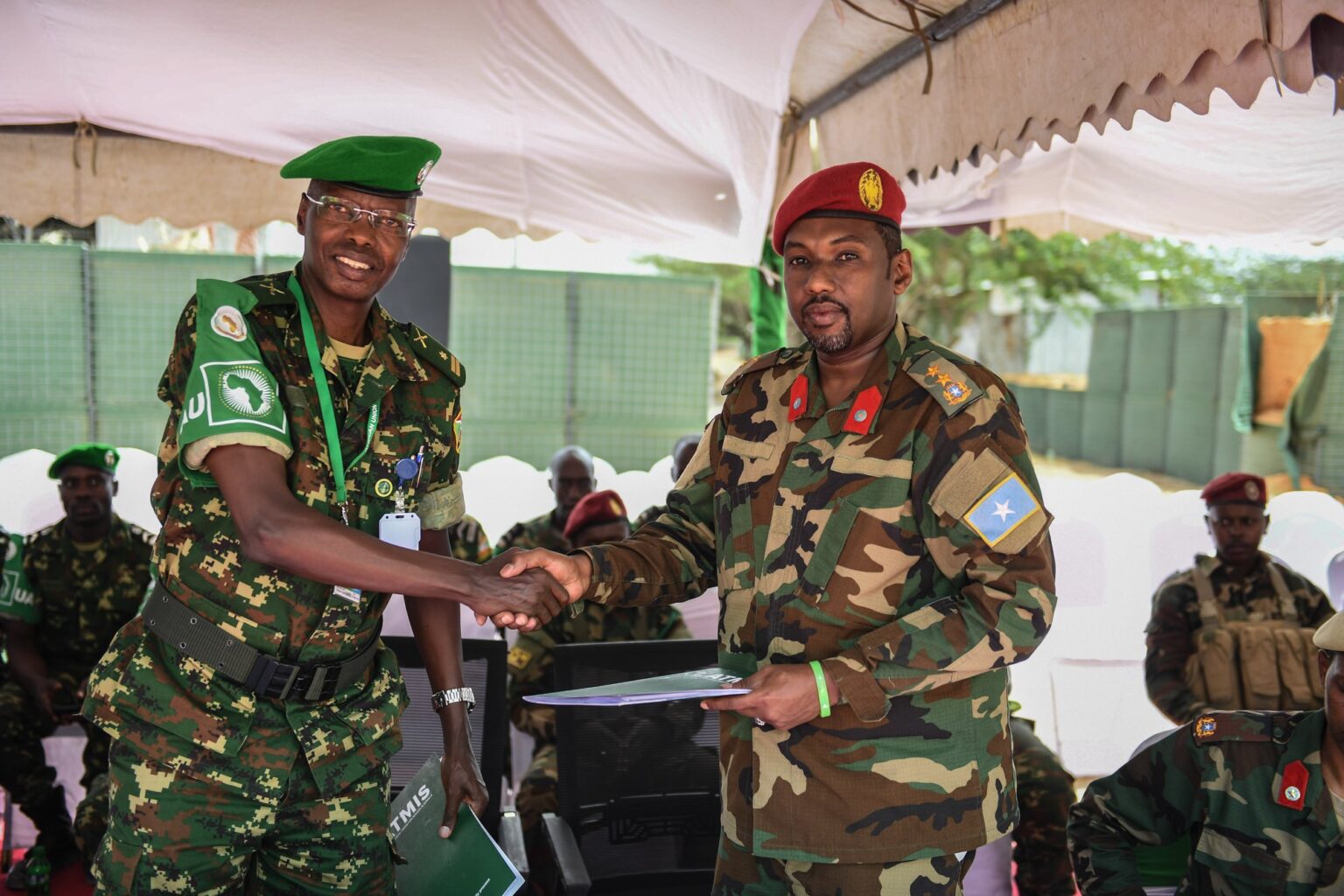

Al-Shabaab, the al-Qaeda-linked armed group that has fought Somalia’s federal government since 2006, still holds much of the countryside in south and central Somalia as African Union troops begin to leave and a dispute over the president’s term divides Mogadishu.
Last updated: 28 November 2026
The war with al-Shabaab matters beyond Somalia. The group has carried out attacks in Kenya and Uganda, and the AU mission that holds the line with Somali forces is short of money. On 25 November the AU Peace and Security Council approved a phased cut in that mission, warning that a drawdown driven by funding could let the group retake towns.
In brief
- Al-Shabaab took back most of the ground it had lost in Middle Shabelle since 2022 within months of starting an offensive in February 2025, according to an analysis in the CTC Sentinel.
- The AU mission, AUSSOM, is shrinking: Ugandan troops began leaving on 30 October, and the AU has endorsed a two-phase drawdown running to the end of 2027.
- Somalia’s Supreme Court ruled on 5 November that the president’s term ended on 15 May; the government says the ruling has no legal effect and that the term runs to May 2027.
- About 4.8mn Somalis need humanitarian aid in 2026, according to the UN.
What is happening in the war with al-Shabaab now?
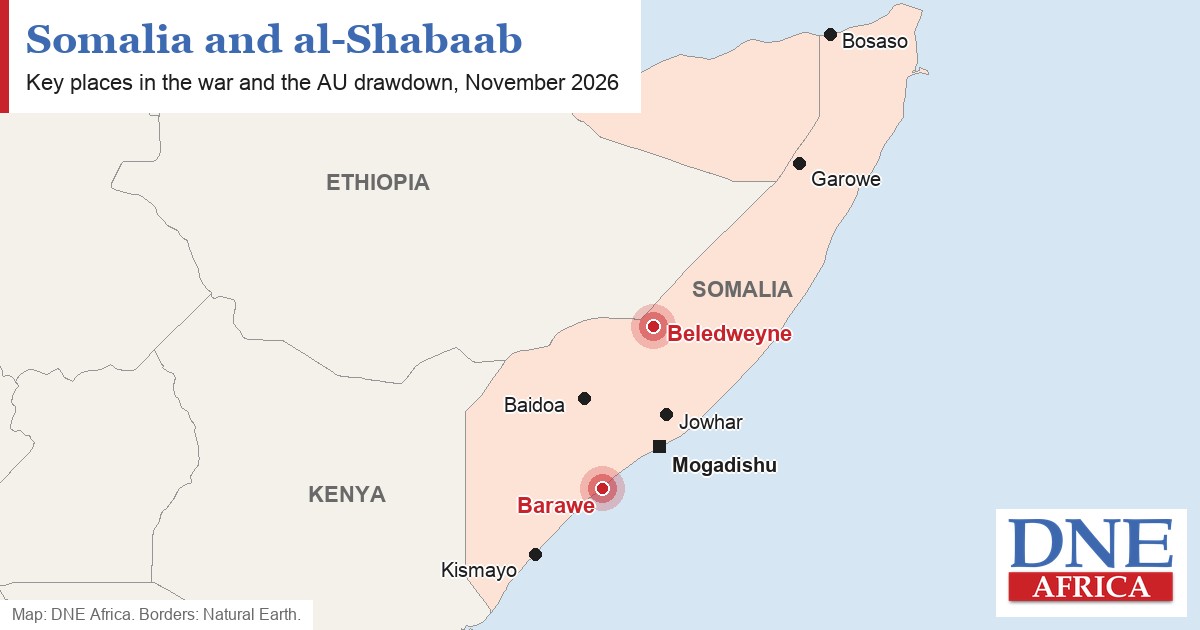
The fighting is concentrated in the farming belt along the Shabelle river and in the Hiiraan region north of Mogadishu. Al-Shabaab took the village of Comaad near Mataban in Hiiraan on 15 November, local outlets reported, as DNE Africa reported. Somalia’s intelligence agency said two days later that joint operations with international partners in Hiiraan had killed two of the group’s members and wounded three commanders. Neither account could be independently verified.
US Africa Command (AFRICOM) said it carried out air strikes against al-Shabaab between 19 and 23 November near Leego, west of Jilib and north-east of Kismayo, in co-ordination with the Federal Government of Somalia. The US also strikes the Islamic State group’s Somali branch in the mountains of Puntland in the north-east.
The war now overlaps with a political crisis. On 28 November fighting broke out in Beledweyne, the capital of Hiiraan, between clan fighters from the Hawadle community and forces loyal to the HirShabelle state’s vice-president, Garowe Online reported. Casualty figures could not be verified. Hawadle militias helped the army push al-Shabaab out of parts of Hiiraan in 2022; earlier this month the town’s airport was closed after a clash, as DNE Africa reported.
Who are the parties in the war with al-Shabaab and what does each want?
The Federal Government of Somalia, led by President Hassan Sheikh Mohamud and Prime Minister Hamza Abdi Barre, says its aim is to defeat al-Shabaab militarily and cut off its money, a campaign the president has called “total war” since 2022. It wants to move from clan-based indirect elections to a direct vote: the electoral commission has set parliamentary elections for 15 April 2027 and a presidential vote for 15 May 2027.
Al-Shabaab says it is fighting to overthrow the federal government, which it calls apostate, to expel foreign troops and to rule Somalia under its own interpretation of Islamic law. It pledged allegiance to al-Qaeda in 2012, is under UN Security Council sanctions and runs courts and collects levies in areas it controls, according to Stanford University’s Mapping Militants project.
The federal member states of Puntland and Jubaland, led by Said Abdullahi Deni and Ahmed Mohamed Islam “Madobe”, reject Mogadishu’s electoral plans and have suspended co-operation with the federal government. Puntland says its own forces have been fighting the Islamic State group in the Cal Miskaad mountains since late 2024.
The opposition Somali Future Council, which includes former presidents and prime ministers, says the president’s mandate expired on 15 May 2026 and that any election must be agreed by consensus. Clan militias, known as macawisley, fight alongside the army in some areas but answer first to their communities.
How did the war with al-Shabaab begin?
- 2006: The Islamic Courts Union takes Mogadishu in June; Ethiopian troops intervene in December. Al-Shabaab, the union’s militant youth wing, leads the insurgency that follows.
- 2007: The AU deploys a peacekeeping mission, AMISOM, with UN Security Council backing.
- August 2011: Al-Shabaab withdraws from Mogadishu. Kenyan forces enter southern Somalia in October.
- 2012: Al-Shabaab announces it has joined al-Qaeda in February; a federal government is formed in August.
- 14 October 2017: A truck bomb at the Zoobe junction in Mogadishu kills more than 500 people, the deadliest attack in Somalia’s history.
- 2022: AMISOM becomes ATMIS in April; Hassan Sheikh Mohamud is elected in May; in August the government and clan militias launch an offensive in Hiiraan and Middle Shabelle.
- 1 January 2025: AUSSOM replaces ATMIS under UN Security Council resolution 2767.
- February to July 2025: Al-Shabaab’s counter-offensive retakes towns including Adan Yabaal (16 April) and Moqokori (July). A roadside bomb hits the president’s convoy in Mogadishu on 18 March; he is unhurt.
- March to May 2026: Parliament passes constitutional amendments extending terms from four to five years, boycotted by the opposition; on 15 May the government declares a transition period.
- November 2026: The chief justice is removed on 4 November; the Supreme Court’s constitutional division rules on 5 November that the president’s term has expired; Somalia orders the UAE ambassador to leave on 19 November; the AU endorses the drawdown on 25 November.
The 2022 offensive retook dozens of towns. Daisy Muibu and Yayedior Mbengue of the Africa Center for Strategic Studies, writing in the CTC Sentinel in May 2025, assessed that clan mobilisation had been “the most consequential” factor in those gains, and that the campaign later suffered from ambitious timelines, overreliance on special units and weak command. By mid-May 2025, they wrote, al-Shabaab had recaptured “most of the territory it lost in Middle Shabelle since 2022”.
What is the human cost of the conflict?
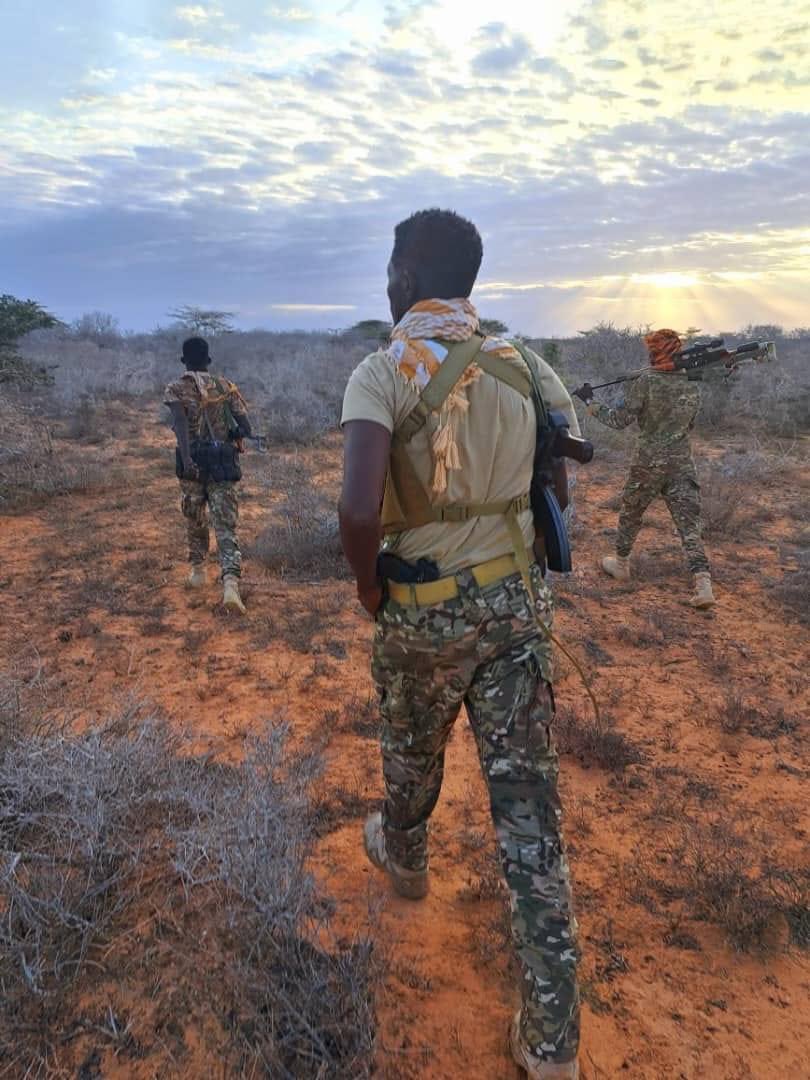
Conflict, drought and aid cuts together drive Somalia’s emergency. The UN’s 2026 humanitarian plan puts the number of people in need at 4.8mn, targets 2.4mn and seeks $852mn. The UN Office for the Coordination of Humanitarian Affairs (OCHA) said in November that about 3.3mn Somalis are displaced, and that about 800,000 were newly uprooted between January and September, roughly 70 per cent of them by drought.
OCHA said violence in the Bay and Bari regions displaced about 9,500 people in September and October, and the International Committee of the Red Cross said on 17 November that fighting near Baidoa had displaced more than 18,000 people since July. The UN plan names military offensives and clan fighting as drivers of need and reports severe access restrictions in the Shabelle corridor, Hiiraan, Bay and Lower Juba.
No agreed count of deaths in the war exists. Al-Shabaab’s bombings in Mogadishu have killed hundreds of civilians, including at least 121 people in twin car bombs at the education ministry on 29 October 2022, according to the government.
What are neighbours, the AU, the UN and outside powers doing?
The African Union. AUSSOM was authorised at about 11,900 personnel, with contingents allocated to Uganda (4,500), Ethiopia (2,500), Djibouti (1,520), Kenya (1,410) and Egypt (1,091). Uganda’s army began withdrawing on 30 October and says all its troops will be home in 2027, as DNE Africa reported. Somalia’s state minister for foreign affairs said in September that Egypt’s deployment had been delayed by AU and UN procedures and funding, not by any lack of commitment from Cairo.
In a communique adopted on 25 November, the AU Peace and Security Council endorsed a drawdown in two phases, November to December 2026 and January to December 2027, and said authority over five locations had passed to Somali forces. AUSSOM said Ugandan troops had handed over five bases in Barawe, Lower Shabelle, on 15 November. The council warned that an uncoordinated, funding-driven drawdown could leave gaps for al-Shabaab “to retake strategic towns”. It also rejected external interference in Somalia.
The UN and the US. AUSSOM’s Security Council authorisation expires on 31 December 2026. The AU budgeted about $196mn a year for the mission but received about $120mn in 2025, the AU said. Washington told the AU in July that it would stop funding the UN Support Office in Somalia (UNSOS), which feeds and supplies the troops, then said on 15 November that it would back a one-year renewal, as DNE Africa reported.
Turkey and the Gulf. Turkey trains Somali forces and runs its largest overseas military base in Mogadishu. Somalia ordered the UAE ambassador to leave on 19 November, accusing Abu Dhabi of interference and of dealing directly with Puntland and Somaliland; the UAE has called Mogadishu’s approach hostile, and Puntland’s president called the accusation “unfortunate”, as DNE Africa reported.
What should you watch next in the fight against al-Shabaab?
Four dates matter. Four international partners led by the US and the UK plan to bring the president and the opposition together in Mogadishu, probably between 9 and 14 December, Garowe Online reported, citing diplomatic sources. The Security Council must decide before 31 December whether to renew AUSSOM. The East African Court of Justice has given the government until early January to answer a case filed by six Supreme Court judges. And the electoral timetable points to votes in April and May 2027.
The test on the ground is whether Somali forces can hold the bases the AU hands over. Analysts at the International Peace Institute wrote on 23 November that outside efforts to end the political stand-off had had “limited impact”. UN human rights experts have called for the dismissed chief justice to be reinstated; the government says the removal was lawful.
Latest coverage
- Somalia electoral law changes bring closed-list vote, cabinet says
- Somalia and Uganda call for new offensive as Museveni accepts visit
- Somalia’s president visits Uganda as Ugandan troops begin leaving
- Somalia shuts Beledweyne airport after AU troops clash with militia
- Somalia welcomes US U-turn on UNSOS funding for AU mission
- Somalia: Al-Shabaab takes Comaad in Hiiraan region as clans protest
FAQ
What is al-Shabaab?
Al-Shabaab is an armed group that emerged from the Islamic Courts Union in 2006 and joined al-Qaeda in 2012. It is fighting to overthrow Somalia’s federal government and is under UN Security Council sanctions.
How much of Somalia does al-Shabaab control?
No independent map is agreed, but the group holds much of the countryside in south and central Somalia, including towns it retook in Middle Shabelle and Hiiraan in 2025. The government and its allies hold Mogadishu, most regional capitals and many district towns.
What is AUSSOM?
AUSSOM is the AU Support and Stabilisation Mission in Somalia, which replaced ATMIS on 1 January 2025. Its UN authorisation runs to 31 December 2026, and the AU has endorsed a phased drawdown through 2027.
Why is Somalia’s president’s term disputed?
Parliament extended terms to five years in March 2026. The opposition and a 5 November Supreme Court ruling say President Hassan Sheikh Mohamud’s term ended on 15 May 2026; the government says the ruling has no legal effect and the term runs to May 2027.
Does the war with al-Shabaab affect Kenya and Ethiopia?
Yes. Al-Shabaab claimed the attacks on Nairobi’s Westgate mall in 2013 (67 killed) and Garissa University College in 2015 (148 killed), and operates near both countries’ borders. Kenya and Ethiopia also contribute troops to AUSSOM.


