
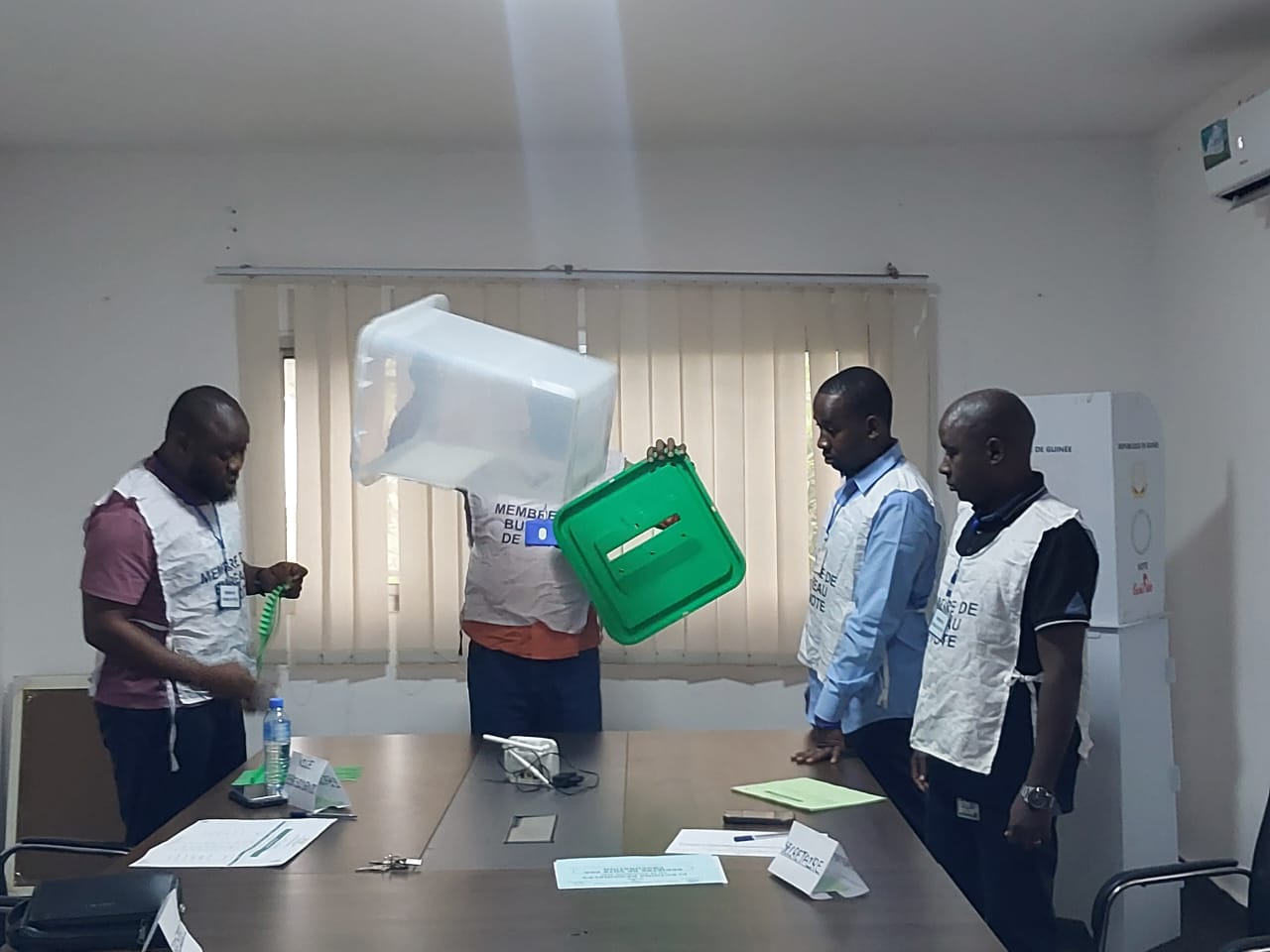

Guinea regional elections opened on Sunday as 8,753 communal councillors in 375 communes began choosing the country’s first regional councillors, filling 424 seats, according to the state news agency AGP.
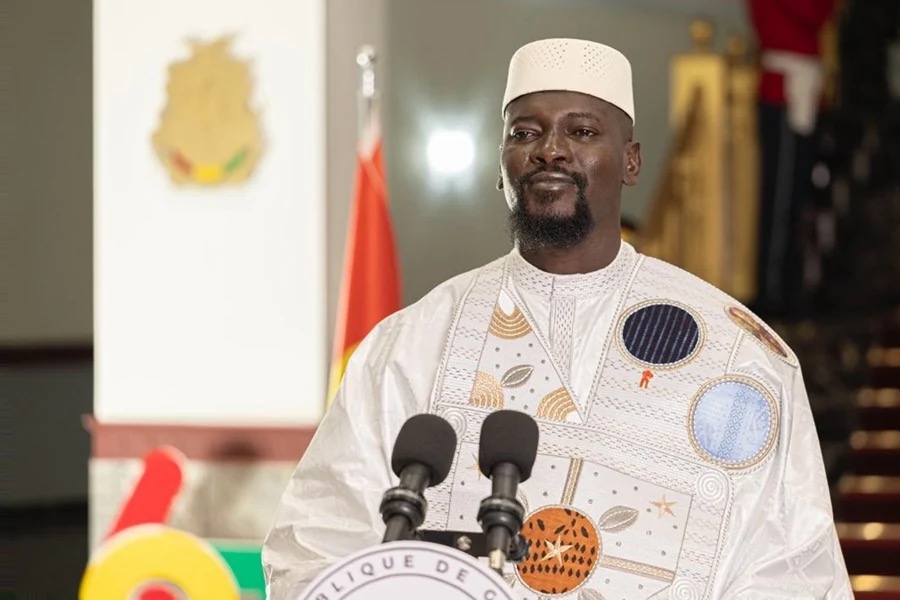
The indirect vote sets up the last piece of the institutions created by the 2025 constitution: a Senate, to be elected on 20 December. President Mamadi Doumbouya said in a message to the nation that the poll “gives substance to the decentralisation” set out in the constitution.
What did Doumbouya say about the Guinea regional elections?
In his message, published by the Presidency and carried in full by AGP on Sunday morning, Doumbouya called the day “a historic step” and said the vote brings public decisions closer to citizens and gives each region a role in its own development.
He called on councillors, candidates and other actors to show “responsibility, calm and mutual respect”, and thanked the General Directorate of Elections (DGE), polling staff, magistrates and the security forces. “On 20 December, the senatorial elections will complete the building of our republican institutions,” he said, linking the process to Simandou 2040, the government’s development programme named after the country’s giant iron ore project.
How does the vote work?
In the Guinea regional elections, the public does not vote directly. Communal councillors, themselves elected in May, choose regional councillors from among their own members. A council of 11 to 29 members elects one representative and a larger council elects two, in a single-round majority vote, according to the DGE’s rules as reported by Guineenews. Regional councillors serve renewable five-year terms.
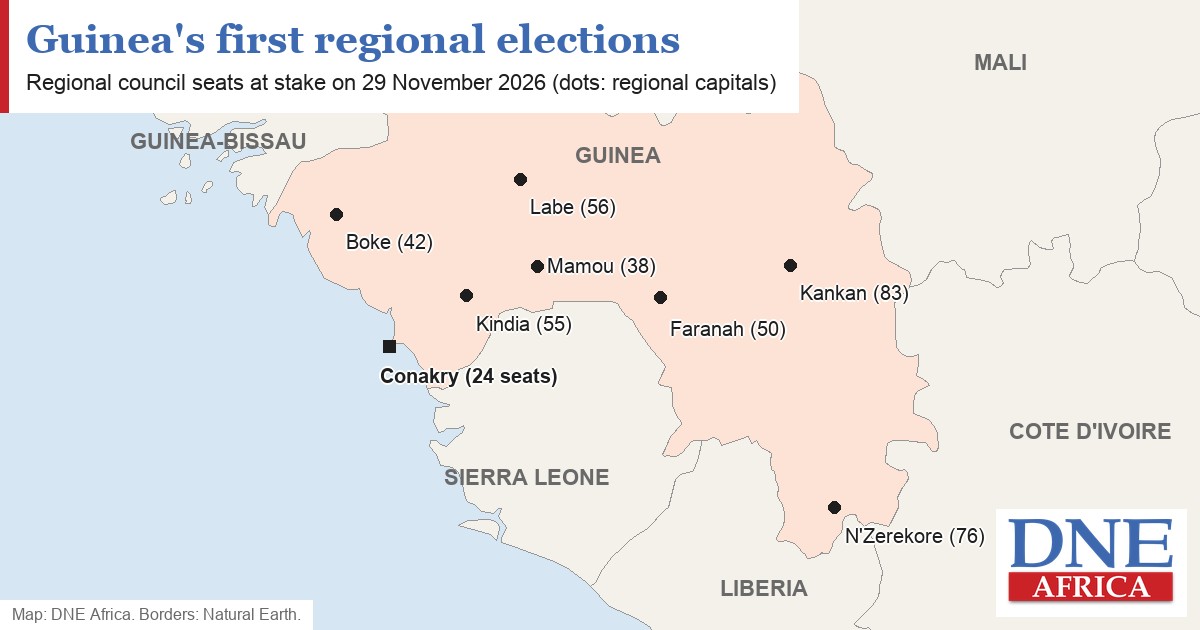
Kankan has the most seats, 83, followed by N’Zerekore with 76, Labe with 56, Kindia with 55, Faranah with 50, Boke with 42 and Mamou with 38. The Conakry special zone has 24. Siguiri and Beyla became administrative regions in August but are not yet decentralised authorities, so the seat allocation, fixed in March, does not include them, the DGE said.
Polling stations opened at 7am. In Gbessia, a Conakry commune, voting began on time, AGP reported. In N’Zerekore, 45 councillors were choosing two regional councillors from six candidates under heavy security, and no incidents had been reported in the first hours, Guineenews said.
After touring five Conakry communes, the director-general of elections, Mohamed Ali Conde, said voting was taking place “in good conditions” everywhere he had been. First results would start to come in on Sunday evening, with a fuller picture by Monday, he said.
Why do the Guinea regional elections matter?
Regional councils are new in Guinea. The constitution approved by referendum on 21 September 2025, with 89.38 per cent of the vote according to the Supreme Court, created them along with a Senate, Guinea’s first upper house. One-third of senators are to be appointed by the head of state; the rest are elected for six years. The Senate gives its opinion on appointments to senior civil posts, a check on presidential power, according to an analysis by the Institute for Security Studies (ISS Africa).
The Guinea regional elections are the latest step in a calendar that followed the army’s seizure of power in September 2021. Doumbouya won the presidential election of 28 December 2025 with 86.72 per cent of the vote, a result confirmed by the Supreme Court in January, and legislative and municipal elections were held on 31 May 2026.
ISS Africa said the constitution’s institutional changes were seen by part of the political class as detached from a truly inclusive process. Earlier DNE Africa coverage includes the opposition’s protests over the constitution and the launch of the Simandou iron ore mine.
What happens next?
The DGE is due to publish provisional results of the Guinea regional elections from Sunday evening. The new regional councillors will then sit in the electoral college for the 20 December senatorial vote, which completes the institutions set out in the constitution. Upcoming votes across the continent are listed in DNE Africa’s African elections calendar.
FAQ
Who votes in the Guinea regional elections?
Only communal councillors vote. AGP said 8,753 councillors in 375 communes were called to choose 424 regional councillors.
When will the Guinea regional elections results be known?
The director-general of elections, Mohamed Ali Conde, said first results would come in from Sunday evening, with a fuller picture by Monday 30 November.
When is Guinea’s Senate election?
President Mamadi Doumbouya said the senatorial elections will be held on 20 December 2026. One-third of senators are appointed by the president under the 2025 constitution.
Which region has the most seats?
Kankan has the most regional council seats, 83, followed by N’Zerekore with 76. The Conakry special zone has 24.


