
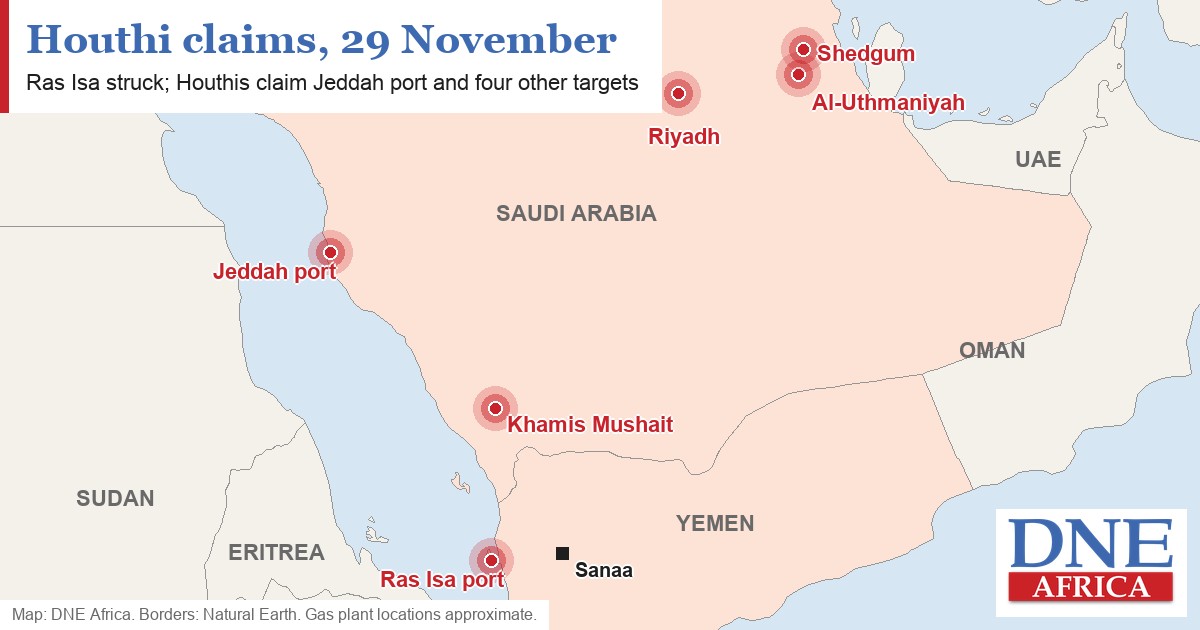

World news today is led by Yemen’s Houthis, who said on Sunday evening that they struck Jeddah port and four other targets in Saudi Arabia, hours after a Saudi-led coalition strike on Yemen’s Ras Isa oil port.
The claims, which Riyadh had not addressed by publication, bring the Saudi-Houthi war to the ports of the Red Sea, as Spain counted votes in an election that could put the far right in government, OPEC+ put off a decision on output and Israel’s coalition talks stalled.
World news today in brief
- The Houthis said they hit Jeddah port, two gas plants in eastern Saudi Arabia, a National Guard unit in Riyadh and a radar at Khamis Mushait; none of it was independently verified.
- Spain’s conservative People’s Party and the far-right Vox could win a majority, a Sigma Dos survey for the public broadcaster RTVE projected after polls closed.
- OPEC+ ministers delayed a decision on 2027 output levels to 6 June 2027 “or earlier”, citing market uncertainty, OPEC said.
- Israeli opposition leader Gadi Eisenkot ended talks with Benjamin Netanyahu without a deal, France 24 reported.
What did the Houthis say they hit in Saudi Arabia?
Yahya Saree, the Houthi military spokesman, said in a statement on the group’s official Telegram channel at 19:00 GMT that its forces carried out five operations “in the Saudi depth”. He claimed hits on the Al-Uthmaniyah gas plant in Al-Ahsa, which he said caused a large fire, a National Guard signals battalion in Riyadh, the Shedgum gas plant in the Eastern Province, a radar at Khamis Mushait and the port of Jeddah, which he said “achieved its goal”. He said attacks would continue “at a rising pace” under what the group calls an equation of “a siege for a siege”.
The statement followed a morning warning. At 09:17 GMT Saree said Jeddah and “all” Saudi ports on the Red Sea coast had become targets, in response to a Saudi strike on Ras Isa, the main port for fuel imports into Houthi-held areas, and told shipping companies to move their vessels out, France 24 reported, citing Reuters. The coalition had earlier told civilians to evacuate Ras Isa. The Houthis also said Saudi aircraft had carried out 100 air raids and missile strikes in 24 hours, and 6,224 since the escalation began. None of these claims could be independently verified.
The coalition said it intercepted a ballistic missile aimed at Riyadh early on Sunday, Reuters reported. Its spokesman, Turki al-Maliki, said the war could end “tomorrow” if the Houthis accepted the UN-backed roadmap, and called Aden a “red line”, as DNE Africa reported earlier on Sunday. Pakistan’s army said it sent troops to Saudi Arabia on Saturday under existing defence agreements, without giving a number.
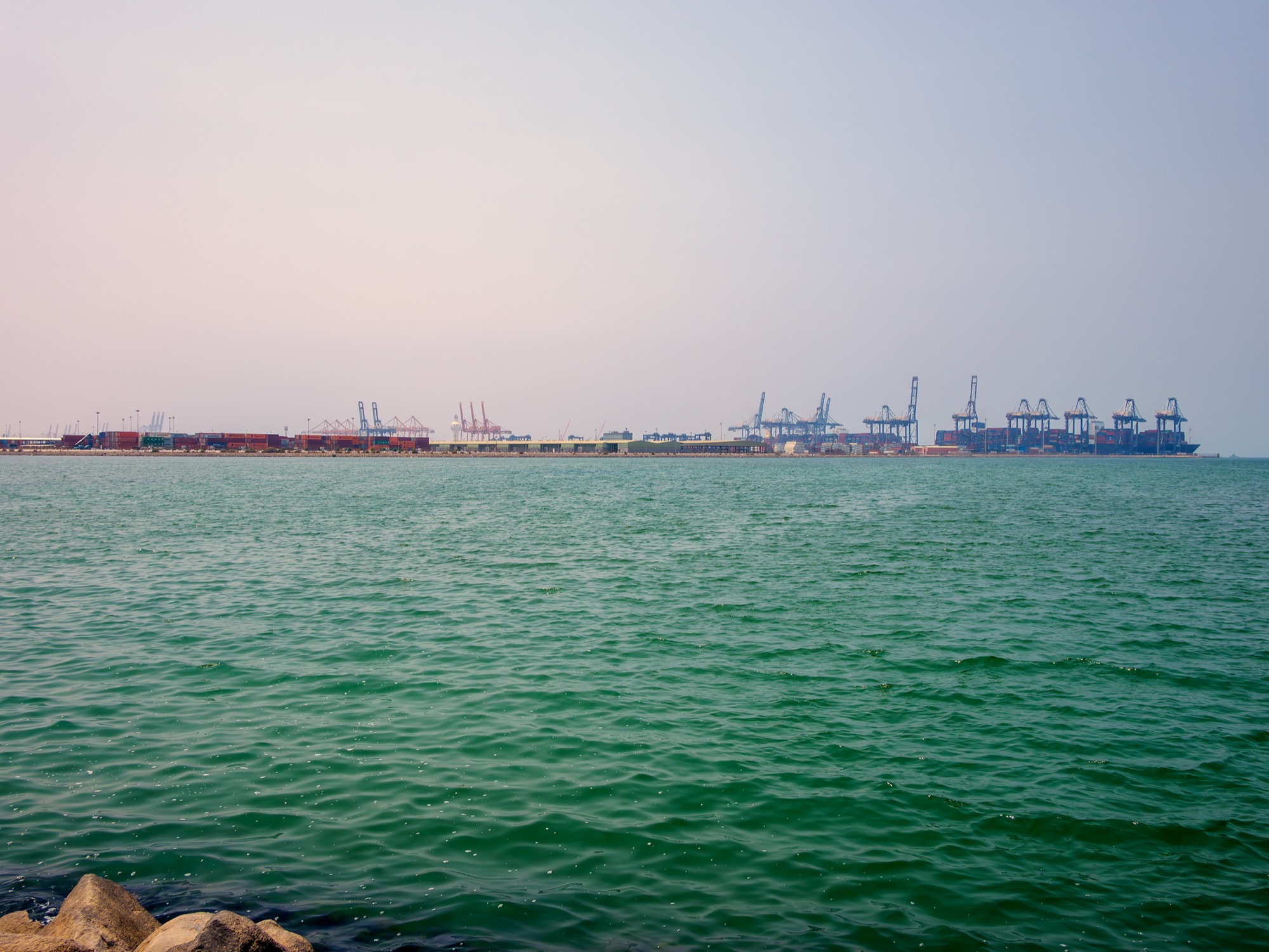
What it means for Africa: Jeddah faces Port Sudan across the Red Sea, on the route ships take to Egypt’s Suez Canal. The Suez Canal Authority said canal revenue from 1 to 24 November was $593mn, against $295mn a year earlier; a threat to ports on both shores puts that recovery at risk. DNE Africa’s Red Sea shipping explainer sets out what is at stake.
Could the far right enter government in Spain?
Spain is the second story in world news today. Polls closed on the mainland at 20:00 local time (19:00 GMT) after turnout reached a record 67.7% at 18:00, France 24 reported. A Sigma Dos survey of 19,500 people for RTVE, the public broadcaster, projected 129-134 seats for Alberto Nunez Feijoo’s People’s Party (PP) and 44-48 for Vox, against 119-124 for Prime Minister Pedro Sanchez’s Socialists. A majority needs 176 of 350 seats. Official results were due from 21:00 local time (20:00 GMT), after polls close in the Canary Islands.
Feijoo has said he would seek “parliamentary support agreements” with Vox, which already governs four regions with the PP. The new parliament meets on 23 December.
What it means for Africa: Vox leader Santiago Abascal accused Sanchez during the campaign of failing to defend Spain from the mass crossing of migrants into Ceuta in July, calling him a “flag bearer” for Morocco, France 24 reported. Thousands of people were returned to Morocco after that crossing.
What did OPEC+ decide on oil output?
Oil is the third story in world news today. OPEC+ ministers, meeting by video, endorsed a new assessment of each member’s maximum production capacity as the reference for 2027 baselines, but put off a decision on output levels to their next meeting on 6 June 2027, “or earlier, if market conditions may permit”, OPEC said in a statement.
“OPEC+ can postpone its decisions, but it cannot postpone market reality,” Jorge Leon of Rystad Energy told AFP, adding that the group would enter 2027 oversupplying the market by 1.5mn barrels a day. Iraq has disputed its capacity figure.
What it means for Africa: Algeria was one of seven producers, with Saudi Arabia and Russia, that said in a separate statement that shipping and insurance costs had reached “more than one third of the commodity value”, adding to inflation. OPEC’s African members also include Nigeria, Libya, Congo, Gabon and Equatorial Guinea, whose quotas rest on the new baselines.
Why did Israel’s coalition talks end without a deal?
Israel closes world news today. Gadi Eisenkot, the opposition leader asked to form a government, ended talks with caretaker Prime Minister Benjamin Netanyahu after a two-hour meeting in Tel Aviv on Sunday, France 24 reported. Channel 12 quoted Eisenkot as telling Netanyahu that he was committed to his own bloc and that Likud was “welcome to join after the government is formed”; his spokesperson confirmed the report.
The talks came a day after Netanyahu offered Eisenkot the first turn in a rotating premiership. Eisenkot’s bloc won 48 seats in October and Netanyahu’s 53, in a 120-seat Knesset. Eisenkot has until 6 December, with a possible 14-day extension. DNE Africa’s full report on the unity talks covers Herzog’s separate talks on Netanyahu’s trial.
What to watch tomorrow
- Spain’s count: the Interior Ministry’s provisional results through the night and on Monday, and statements from Sanchez, Feijoo and Abascal on coalition options.
- EU trade ministers: the Foreign Affairs Council (Trade) meets on Monday 30 November, according to the Council of the EU’s calendar.
FAQ
What is the top world news today?
Yemen’s Houthis said they struck Jeddah port and four other Saudi targets on 29 November, after a Saudi-led coalition strike on Yemen’s Ras Isa port. Saudi Arabia had not commented on the claims by publication.
Who is likely to win Spain’s election?
A Sigma Dos survey for RTVE projected the People’s Party and Vox together at 173-182 seats, around the 176 needed for a majority. Official results were still being counted.
What did OPEC+ decide in world news today?
OPEC+ endorsed new capacity assessments for 2027 baselines but delayed a decision on production levels to 6 June 2027, or earlier if markets allow, OPEC said.
How does world news today affect Africa?
Jeddah and Ras Isa sit on the Red Sea route to the Suez Canal, which also serves Sudan, Eritrea and Djibouti. Attacks on ports there threaten shipping to and from Egypt and East Africa.


