
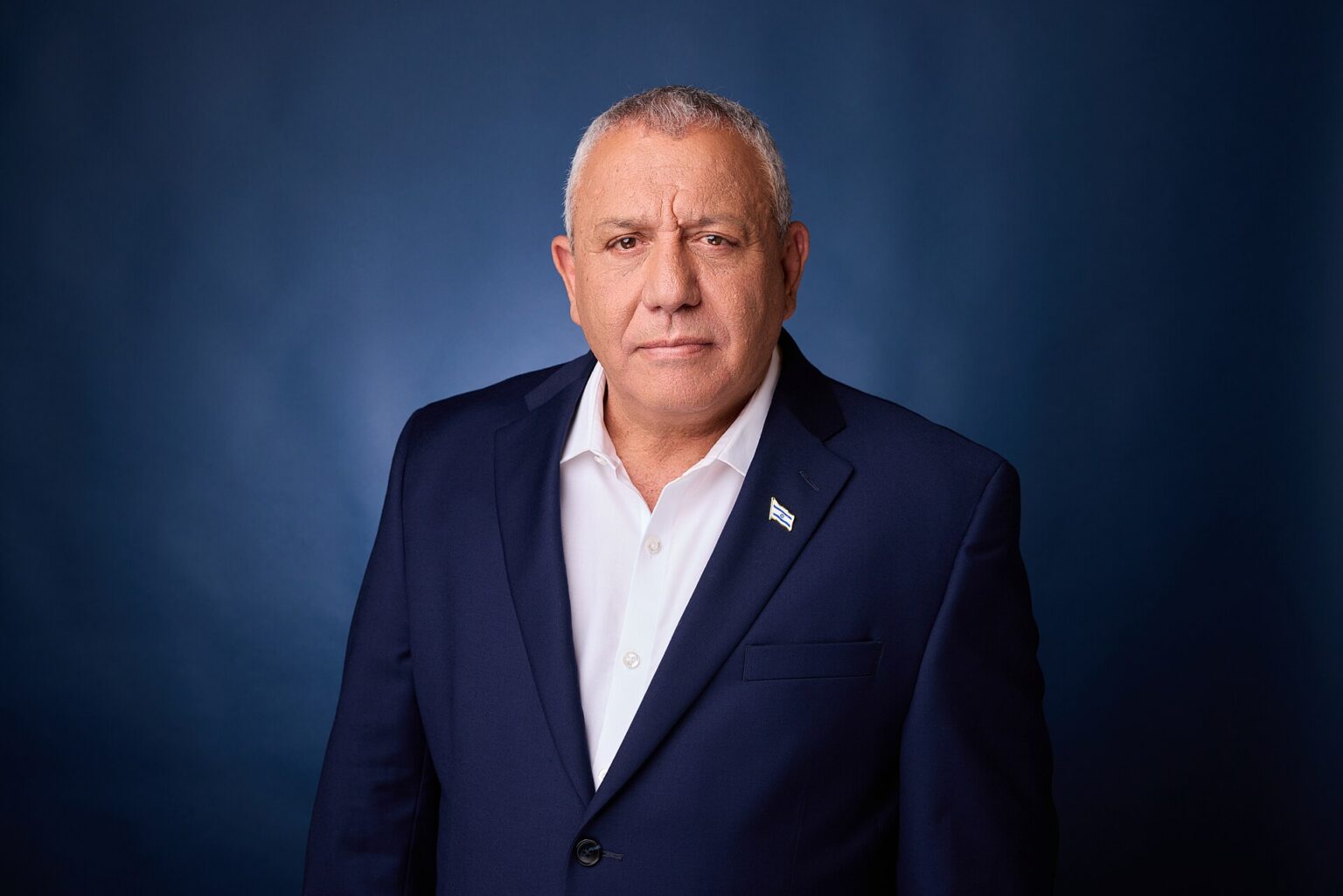

Israel unity talks between caretaker Prime Minister Benjamin Netanyahu and opposition leader Gadi Eisenkot ended without a deal on Sunday after about two hours at the Kirya military headquarters in Tel Aviv.
The stalemate, a day after Netanyahu offered Eisenkot the first turn as prime minister, leaves Eisenkot a week to form a government before his 6 December deadline. On the same morning, Netanyahu’s lawyers accepted an invitation from President Isaac Herzog to talks on ending the prime minister’s corruption trial, opening a second track that could shape his political future.
What happened at the Israel unity talks?
The meeting had been moved from the Dan Accadia hotel in Herzliya to the Kirya so that it could open with a security briefing, Eisenkot said on Sunday morning. The two men then turned to the formation of a national unity government.
In a joint statement after the Israel unity talks, Likud and Eisenkot’s Yashar party described the talks as “businesslike” and said both sides were seeking “to bridge the substantial gaps between them”. They announced no agreement and no date for another round. Israeli media reported that the negotiating teams had decided not to hold further meetings for now, the Times of Israel reported.
Eisenkot told Netanyahu he remained committed to his partners in the bloc that seeks to replace the outgoing government, and that Likud and its allies could join a government he leads on the basis of its guiding principles, Ynet reported.
Why did Netanyahu offer Eisenkot the premiership?
Netanyahu said late on Saturday that Likud, as the largest party, would normally lead a unity government or at least take the first turn in a rotation. Given what he called an “existential danger”, he said he would agree to Eisenkot serving first as prime minister, with himself as alternate prime minister. He said he expected “genuine, sincere and accelerated negotiations” to begin at once.
The offer that opened the Israel unity talks reversed Netanyahu’s earlier rejection of such an arrangement. Ynet reported that he wanted the rotation to start only after he had handled what he described as a sensitive security event, and that Yashar rejected that condition.
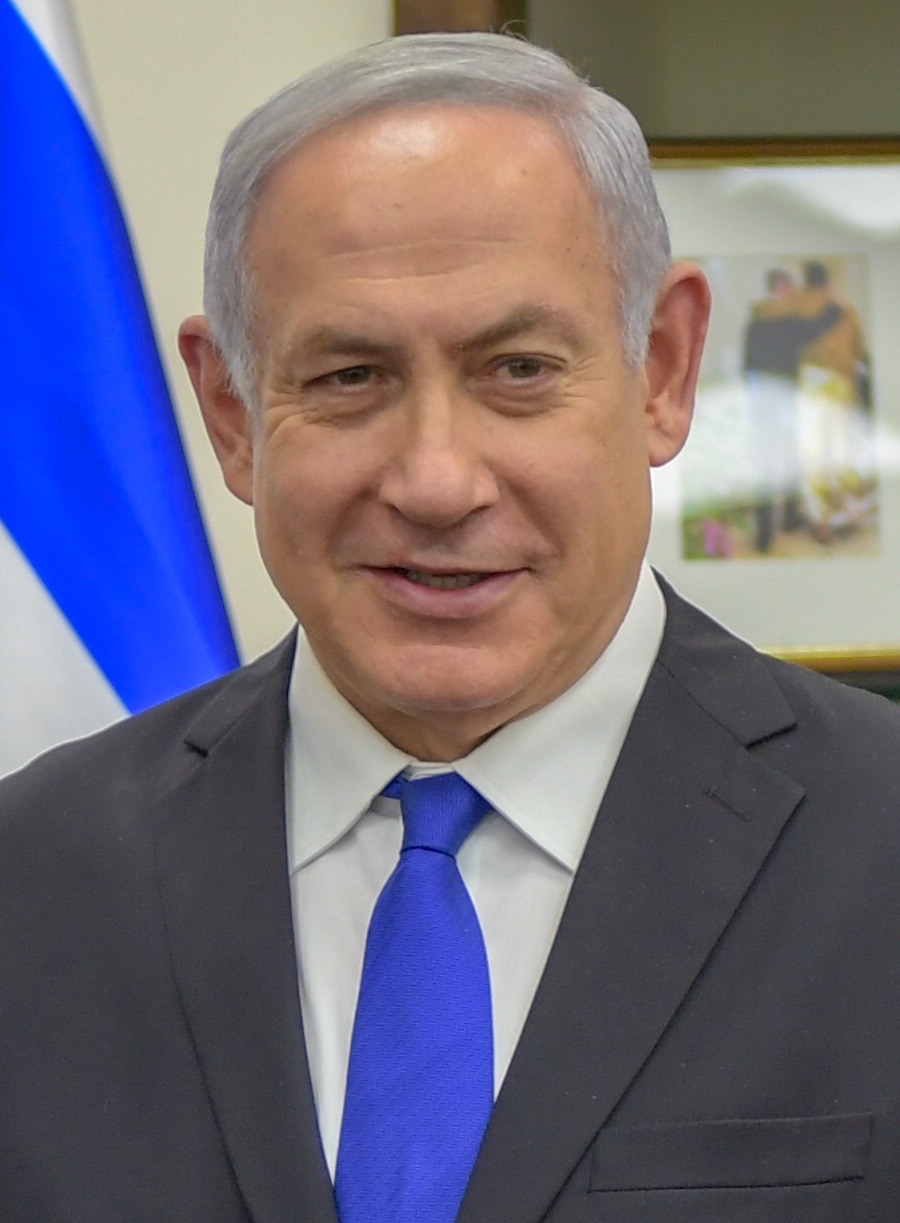
Opponents were sceptical of the Israel unity talks. Yair Lapid, a former prime minister, called the offer “yet another transparent con”. Avigdor Liberman, leader of Yisrael Beytenu, recalled on X the 2021 rotation deal Netanyahu struck with Naftali Bennett, asking: “Why do you believe him now?”
Can Eisenkot form a government after the Israel unity talks?
October’s election left neither bloc with the 61 seats needed for a majority in the 120-seat Knesset. When Herzog gave Eisenkot the mandate on 8 November, representatives of 67 incoming lawmakers had recommended him and 46 had backed Netanyahu, Ynet reported.
Recommending a candidate is not the same as joining his coalition. Eisenkot’s bloc is divided over relying on ultra-Orthodox parties, working with Arab-majority lists or sharing power with Likud, and Bennett still wants a framework for ultra-Orthodox military service before he signs, according to Ynet.
Under Israel’s Basic Law on the government, Eisenkot has 28 days from the mandate, to 6 December, and the President may extend that by up to 14 days. Eisenkot has said he will announce a government by the deadline without using the extension. Yashar asked bloc lawmakers to stay available for Knesset votes until next Monday, Ynet reported, which keeps a confidence vote possible within days. If Eisenkot fails, Herzog can give the task to another lawmaker, and Israel could face another election.
What are the Herzog talks on Netanyahu’s trial?
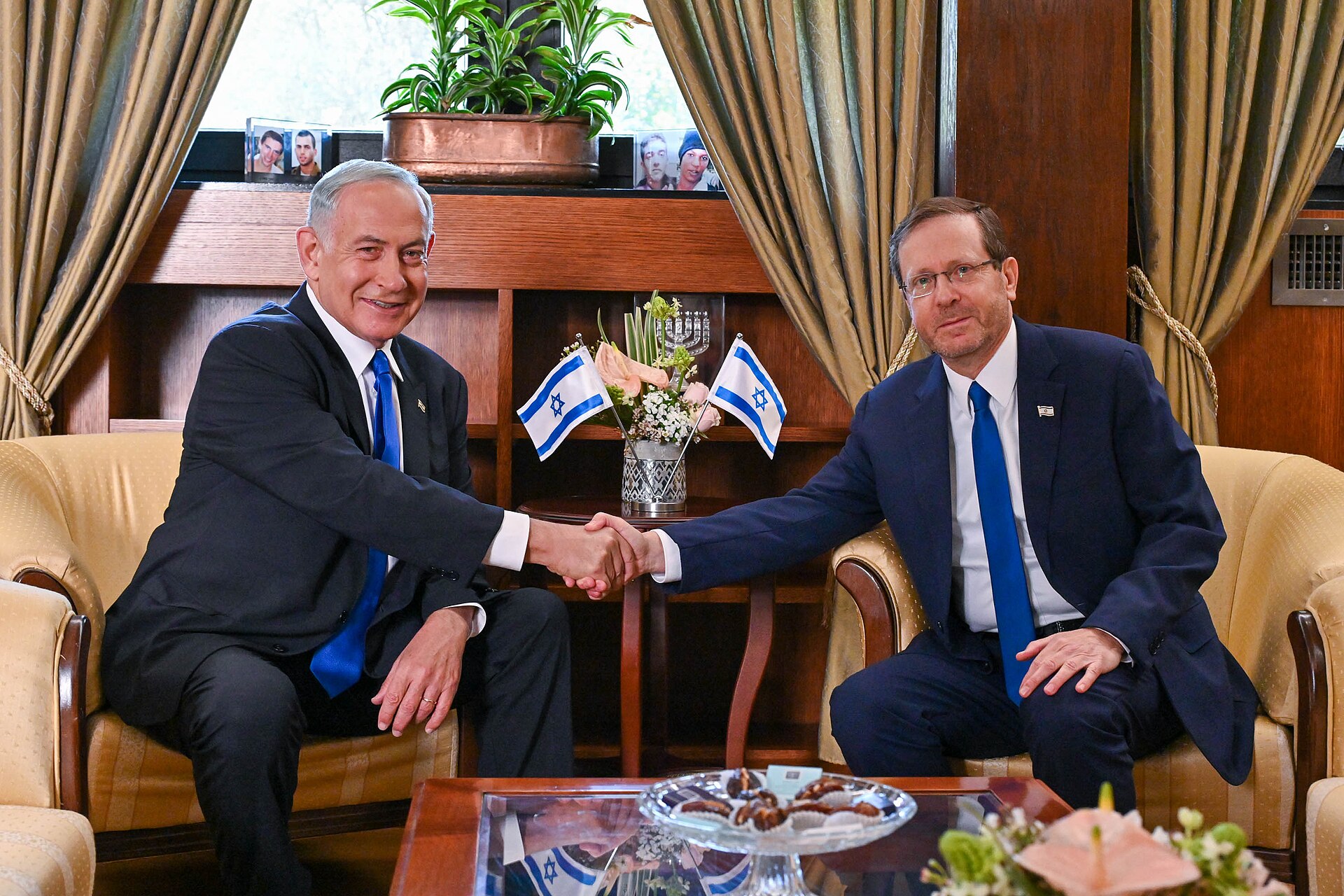
Herzog on Sunday renewed an invitation to the defence and the prosecution to hold talks under his auspices at the President’s Residence “in order to arrive at agreements and end the trial”. His office said he had full confidence in Israel’s judges and that the panel’s remarks should be heeded. The Attorney General, Gali Baharav-Miara, had accepted an earlier invitation; Netanyahu’s side had not responded.
This time they did. “In light of what the judges said, there is no doubt that the trial must be ended as quickly as possible, and therefore we will come to a meeting at the President’s Residence,” Netanyahu’s lawyers, Amit Hadad, Israel Wolnerman and Noa Milstein, said. Baharav-Miara and State Attorney Amit Aisman said in a joint statement that the prosecution would hold talks with the defence “immediately after” a review of the court’s remarks.
The shift follows remarks last Wednesday by the three-judge panel at the Jerusalem District Court, led by Judge Rivka Friedman-Feldman. The judges said the likelihood of conviction was low in Case 4000, the Bezeq-Walla affair and the only one with a bribery charge, and in Case 2000, the Netanyahu-Mozes affair. On Case 1000, the gifts affair, they said an agreement could be reached, Ynet reported.
The prosecution asked the court to cancel a week of hearings to study the remarks, and the court approved the request on Sunday, according to Ynet. Netanyahu, who has denied all charges of bribery, fraud and breach of trust since his trial opened in 2020, also has a pardon request pending before Herzog. Herzog has said he will not decide on it before talks on a settlement are exhausted, despite public calls from US President Donald Trump for a pardon.
What happens next?
No date has been set for the talks at the President’s Residence, and Baharav-Miara was travelling abroad on Sunday, which could delay them. DNE Africa reported on Netanyahu’s offer in Saturday’s world news round-up, and on Israel’s threat of mass displacement in Gaza last week.
With no new meeting set, the coming week will show whether the Israel unity talks resume or Eisenkot presents a narrower coalition to the Knesset before 6 December.
FAQ
Did the Israel unity talks produce a deal?
No. Likud and Yashar said the two-hour meeting on 29 November was “businesslike” but announced no agreement, and Israeli media reported no further meetings were planned for now.
What did Netanyahu offer Eisenkot?
On 28 November Netanyahu offered to let Eisenkot serve first as prime minister in a rotating unity government, with Netanyahu as alternate prime minister.
When is Eisenkot’s deadline to form a government?
His mandate expires on 6 December. The President can extend it by up to 14 days, but Eisenkot has said he will not ask for an extension.
Why are the Israel unity talks linked to Netanyahu’s trial?
They are separate processes, but they run in parallel. On the same day, Netanyahu’s lawyers agreed to talks hosted by President Herzog on ending his corruption trial, which could affect his political future.
What did the judges say about Netanyahu’s cases?
The Jerusalem District Court panel said the chance of conviction was low in Cases 4000 and 2000 and that Case 1000 could be settled by agreement, stressing these were impressions, not a verdict.


