

Crete migrant arrivals topped 2,000 in the 24 hours to Sunday morning, most of them people who sailed from eastern Libya, and two died when their boat hit rocks on the Greek islet of Gavdos.
Greece’s migration minister called it the hardest 48 hours of the year on the island and said Libyan coast guard patrols had largely stopped intercepting boats, a shift that puts the eastern Libya route, used mostly by Sudanese refugees, at the centre of Europe’s migration debate again.
How many Crete migrant arrivals were there?
Some 2,027 people reached Crete in the 24 hours to Sunday morning, the Greek daily Kathimerini reported, with 12 more boats carrying about 600 people expected. Arrivals rose sharply overnight from Saturday to Sunday.
Thanos Plevris, the minister of migration and asylum, said about 2,500 people who had arrived by sea were on Crete on Sunday and that about 700 had already been moved off the island. “2,500 for Crete is not a number that is unmanageable,” he said in an interview with the broadcaster Skai.
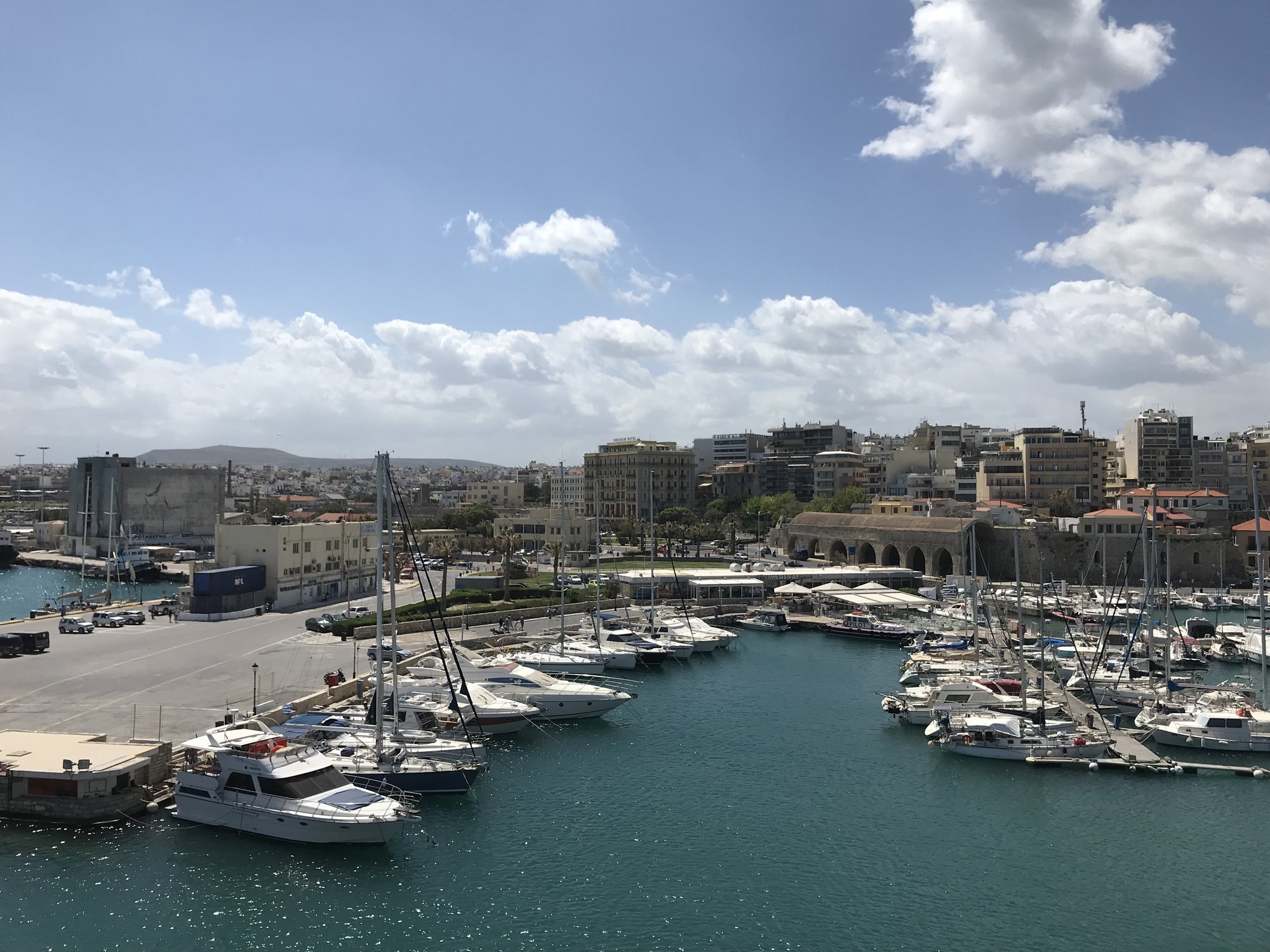
The pressure is greatest in Heraklion, the island’s main port. About 1,000 people were being held outdoors at a former refrigeration site in the port because the covered space was full, Proto Thema reported. Plevris put the number in Ierapetra, on the south-east coast, at about 300, with boats still landing on its beaches.
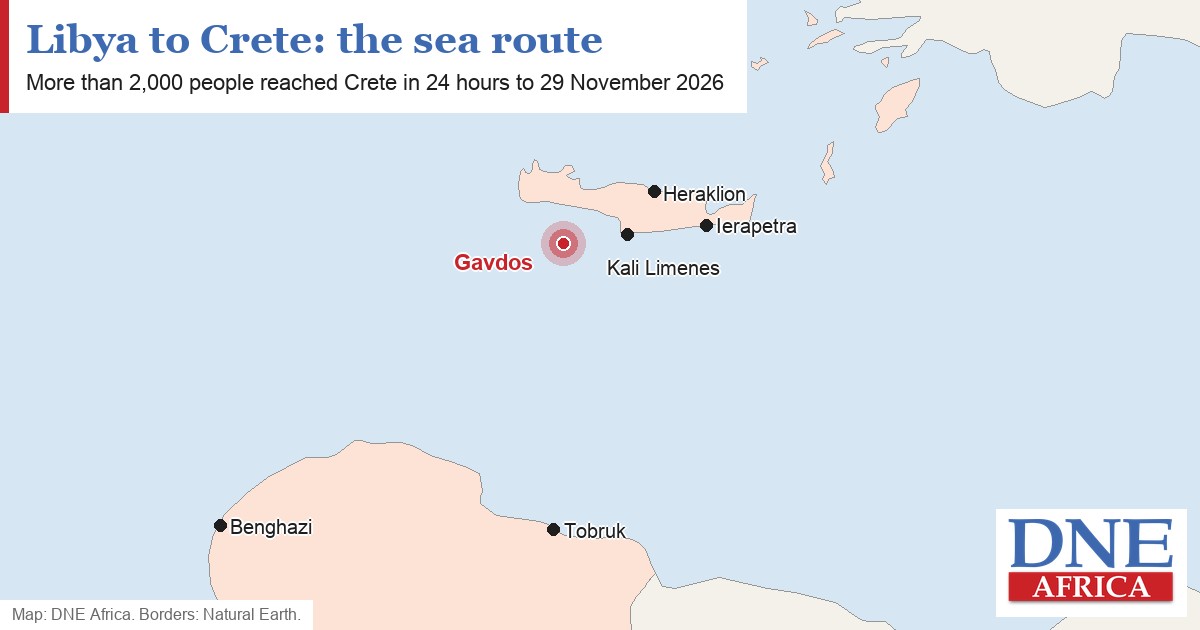
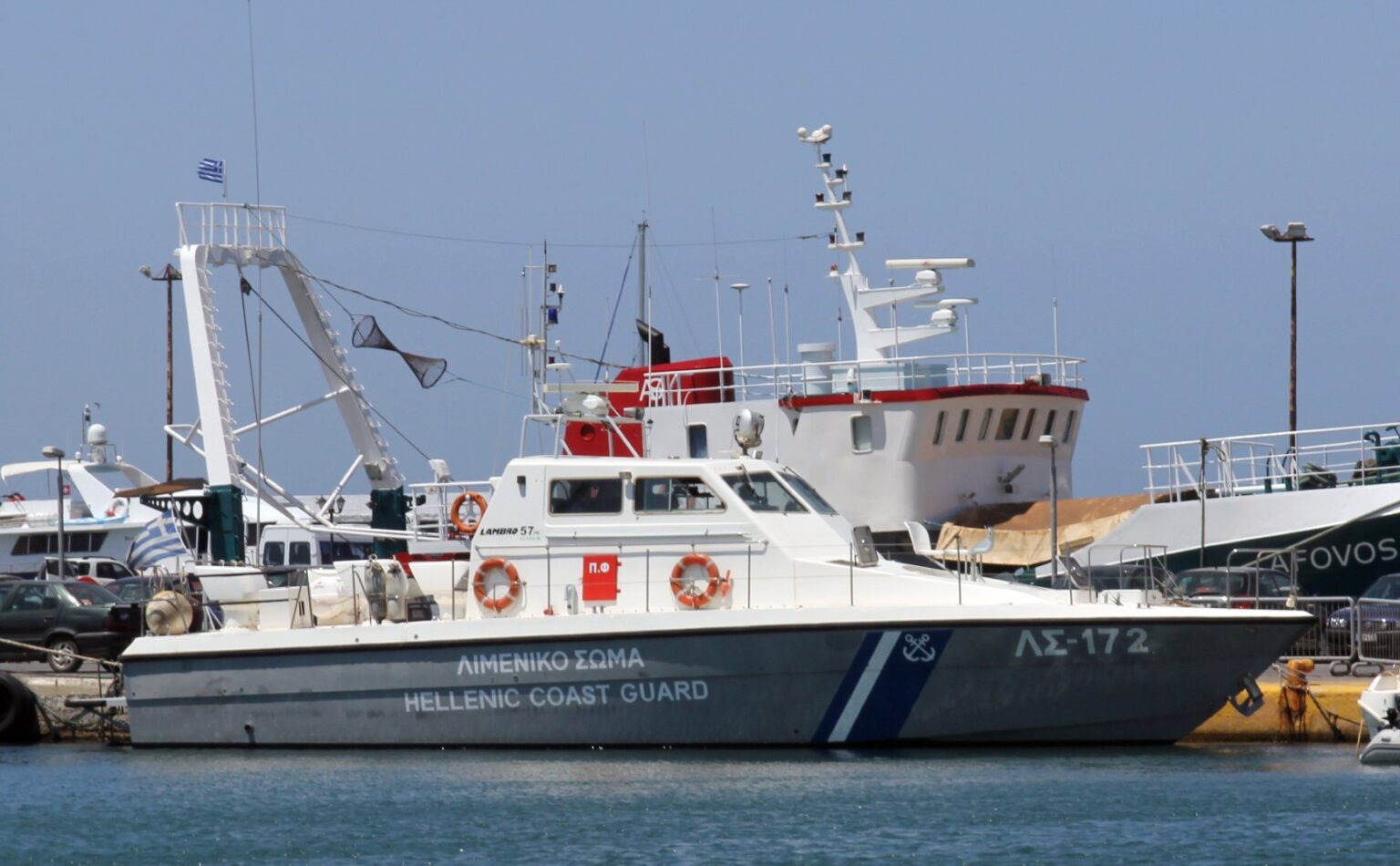
Two people died on Gavdos, Greece’s southernmost island, on Saturday after the boat carrying them struck rocks as it came ashore, Greek authorities said. Plevris said four others were injured. The Hellenic Coast Guard, working with Frontex, the EU border agency, and passing merchant ships, has carried out repeated rescues south of Crete since Friday.
Why does Greece blame Libya for the rise?
Plevris linked the rise in Crete migrant arrivals to limited co-operation from the Libyan authorities in recent days. Until then, he said, Libyan forces had been stopping hundreds of people a day. “In reality, there was no defence on the Libyan side,” he said.
He said recent events in Libya, including drone strikes, had led the Libyan coast guard to concentrate its forces in a few places, leaving other departure points unwatched. He did not name them. Ukraine said last week that its drones had hit a Russian warship docked in Benghazi, an attack that the UN mission in Libya condemned, and two Libyan naval officers later died, Libyan officials said.
Most boats bound for Crete leave from the area around Tobruk, which is controlled by the eastern authorities aligned with Khalifa Haftar, commander of the Libyan National Army. Greece has trained eastern Libyan coast guard officers since 2025, and Foreign Minister George Gerapetritis held talks on migration with Haftar in Benghazi in March. DNE Africa found no public comment from the eastern authorities or the Libyan coast guard on Plevris’s remarks by Sunday afternoon.
Who is crossing from Libya to Crete?
Most people arriving on Crete are Sudanese, followed by Bangladeshis, Plevris said, adding that about 3mn Sudanese had been displaced by the war at home.
Data from the UN refugee agency, UNHCR, show the same pattern across Greece. Of people who arrived by sea this year to 30 September, Sudanese made up 32.3 per cent and Bangladeshis 26.4 per cent, followed by Afghans (7.8 per cent), Egyptians (7.2 per cent) and Eritreans (4.6 per cent).
UNHCR recorded 33,333 sea arrivals in Greece this year to 22 November, against 41,696 in the whole of 2025. October was the busiest month of the year, with 6,307 arrivals. For the background to the conflict driving many of them, see DNE Africa’s explainer on the war between Sudan’s army and the RSF militia.
What happens next for Crete migrant arrivals?
Plevris said a ship would be stationed on Crete permanently from this week to carry people to reception facilities on the mainland, depending on their profile and whether they qualify for international protection. The Heraklion facility is due to work normally from Monday, and two prefabricated units and 11 tents have been sent to Ierapetra.
The surge follows a spike on the Atlantic route, where Spain’s Canary Islands recorded almost 2,000 arrivals in a day last week. How quickly Libyan patrols resume, and whether calm weather holds, will decide whether the Crete migrant arrivals continue at this pace.
FAQ
How many Crete migrant arrivals were recorded in 24 hours?
Some 2,027 people reached Crete in the 24 hours to Sunday 29 November, Kathimerini reported. Migration Minister Thanos Plevris said about 2,500 people who arrived by sea were on the island that day.
Where do the boats to Crete come from?
Most leave from eastern Libya, mainly the area around Tobruk. The crossing to Gavdos and the south coast of Crete is about 300 kilometres.
Who are the people crossing from Libya to Crete?
Most are Sudanese, followed by Bangladeshis, Plevris said. UNHCR data for all sea arrivals in Greece this year also put Sudanese first, at 32.3 per cent to 30 September.
What is Greece doing about Crete migrant arrivals?
Greece plans to station a ship on Crete permanently from this week to move people to mainland facilities, Plevris said. He also blamed the rise on reduced patrols by the Libyan coast guard.


