
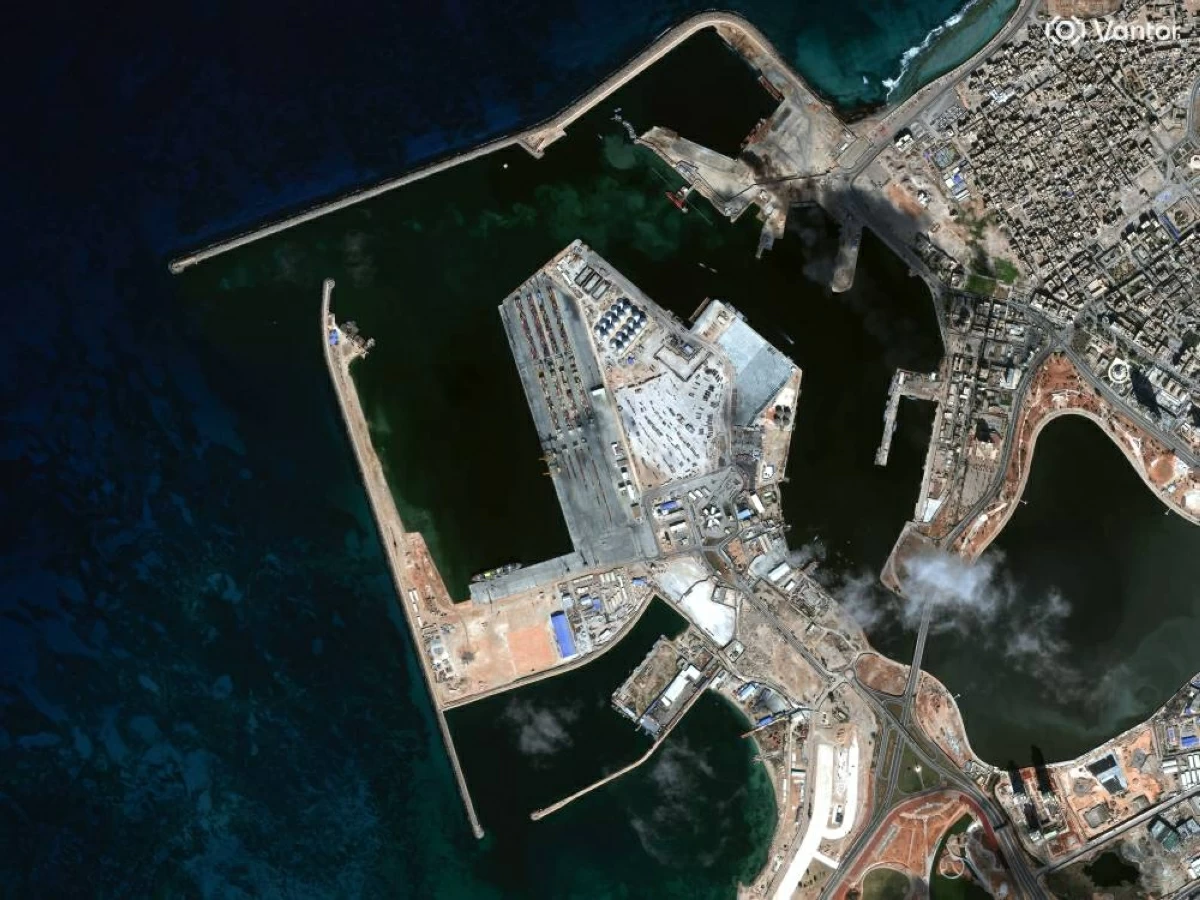

The United Nations on Monday condemned attacks targeting vessels at the port of Benghazi and off the city’s coast, calling for an immediate, independent and transparent investigation, as Libya faces a major disruption to its oil production following the closure of a key pipeline carrying crude from the Sharara oilfield.
The UN Support Mission in Libya (UNSMIL) expressed “grave concern” over the attacks, stressing the need to respect Libya’s sovereignty and ensure the safety and security of its citizens.
In a statement published on X, the mission called for an “immediate, independent and transparent investigation to establish the facts and hold those responsible accountable.”
Separately, Libya’s National Oil Corporation (NOC) warned that the closure of a key pipeline transporting crude from the Sharara field, the country’s largest oilfield, could result in daily production losses of approximately 350,000 barrels.
The disruption, combined with the continued shutdown of the Hamada pipeline, which has already reduced output by around 15,000 barrels per day, is expected to bring Libya’s total daily oil production losses to approximately 365,000 barrels, according to the corporation.
The NOC said a group it described as operating outside the law had shut a valve on the pipeline transporting crude from Sharara in southwestern Libya, disrupting production and threatening the country’s oil revenues.
The corporation condemned the move, describing it as an attack on Libya’s oil infrastructure and national economy. It called on the Petroleum Facilities Guard and relevant authorities to take immediate action to protect oil installations, prevent further disruptions and restore operations.
The NOC also said it would pursue legal action against those responsible for the pipeline shutdown.
The financial impact of the disruptions has been mounting. The corporation estimated that the closure of the Hamada pipeline had resulted in cumulative losses of 302,778 barrels of crude oil, valued at approximately $30.8 million, as of Saturday. The estimate does not include fixed operating costs at the affected oilfields.
Sharara, located in southwestern Libya, is one of the country’s most important oil-producing assets. Its crude is transported through a pipeline to the coastal Zawiya terminal, which supplies a local refinery and facilitates exports.
The field is operated by Akakus Oil Operations on behalf of the NOC and four international energy companies: Spain’s Repsol, France’s TotalEnergies, Austria’s OMV and Norway’s Equinor.
Production at Sharara reached approximately 335,000 barrels per day in August, with the NOC and Akakus previously discussing plans to increase output to around 355,000 barrels per day by mid-2027.


