
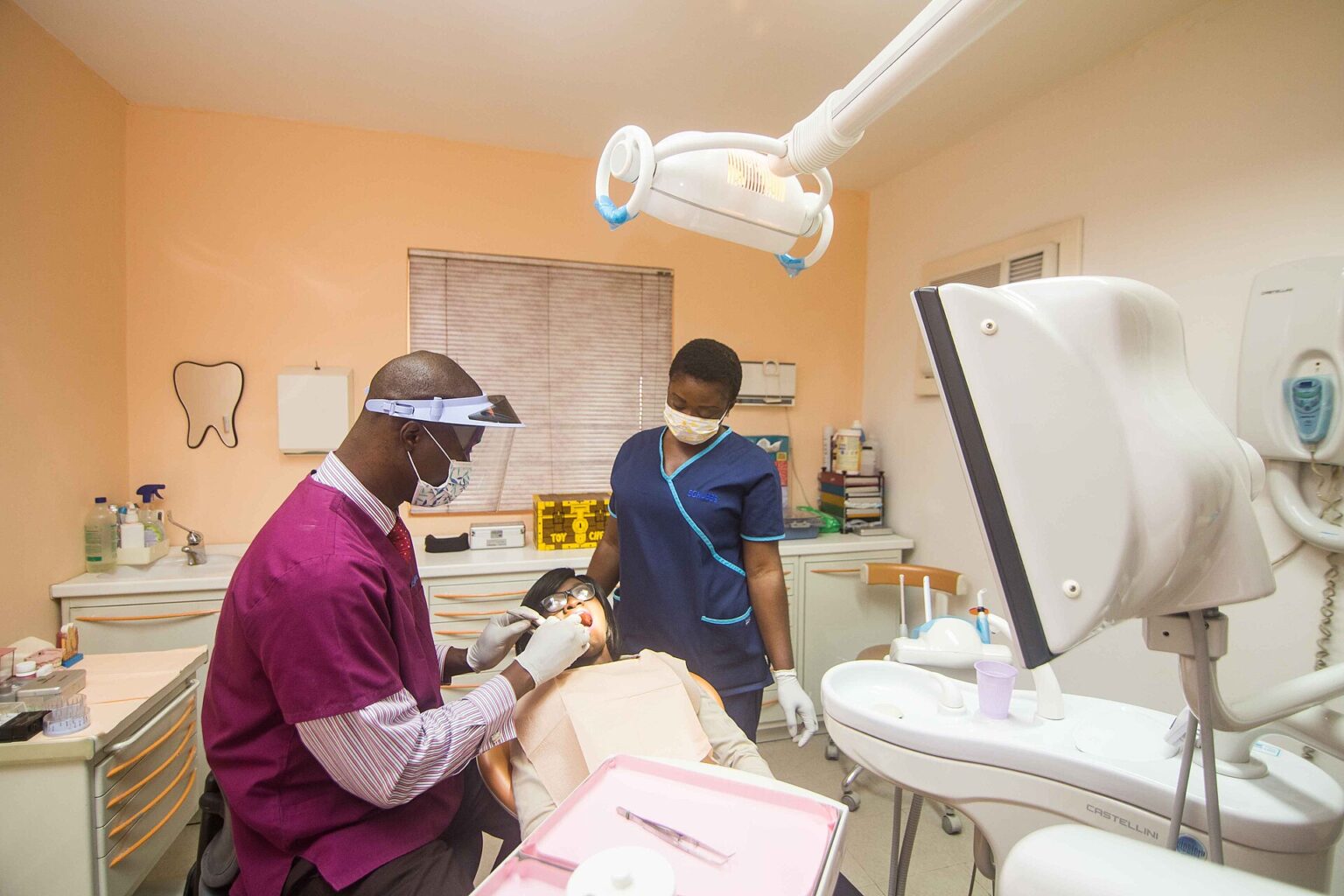

Tanzania has raised the share of primary care facilities offering oral health services to 45 per cent from 7 per cent in 2024, the World Health Organization said, as Kenya and Zambia also expand dental care in clinics.
The gains come from a WHO project funded by Japan that trains ordinary health workers to prevent and treat tooth decay, in a region with one of the world’s lowest numbers of dental staff.
How have oral health services changed in the three countries?
When the project began in 2024, only 6 to 13 per cent of primary care facilities in Kenya, Tanzania and Zambia offered oral health services, and none of four cheap products on the WHO Model List of Essential Medicines was on a national essential medicines list, according to a statement from the WHO Regional Office for Africa.
The four products are fluoride toothpaste, fluoride varnish, silver diamine fluoride (SDF), which halts decay, and glass ionomer cement, used to fill cavities. Since 2024, 64 national trainers have trained 1,335 health workers through cascade training, the WHO said.
Tanzania has trained 868 health workers, added all four products to its standard treatment guidelines, adopted a national oral health strategy and brought SDF into the national supply chain through public tenders. “Don’t work in silos: build oral health into maternal and child health and NCD programmes,” said Baraka Nzobo, the country’s chief dental officer.
Zambia has trained 202 health workers in eight of its ten provinces and added SDF and fluoride varnish to its national procurement list. “Twenty years ago, Zambia had 10 dentists; today we have about 450,” said Christopher Kapeshi, its chief dental officer, adding that health centres still have almost no oral health staff.
Kenya has trained 265 health workers and submitted a costed proposal to add oral health services, starting with prevention, to its essential benefit package, the WHO said.
Why are oral health services scarce in Africa?
The WHO African Region has 0.37 oral health workers per 10,000 people, against the 1.33 needed to progress towards universal health coverage, and most are based in cities and hospitals. “In our Region, 42% of people live with oral diseases, yet only 17% are entitled to essential oral health services,” said Yuka Makino, the WHO regional office’s oral health lead.
Oral diseases are among the most common noncommunicable diseases in the region. Untreated decay causes pain, infections and lost school and work days, and private dental treatment is beyond the reach of many families.
What happens when the project ends?
The project, funded by Japan’s Ministry of Health, Labour and Welfare with two WHO collaborating centres, the Japan Institute for Health Security and Niigata University, ends in March 2027. Leaders from the three countries met at the WHO regional office in Brazzaville on 11 and 12 November to agree next steps.
None of the four products has yet been added to a national essential medicines list, and supplies to clinics are not yet reliable, the WHO said. Limited funding, slow approvals, and workforce and data gaps also hold back progress in oral health services.
The next steps include listing the products, finishing training, revising curricula and adding oral health indicators to national health information systems by 2027. Each country agreed up to five priority actions to continue after the project. “Training is not enough without materials, and materials are not enough without trained providers,” said Eiichi Shimizu of the Japan Institute for Health Security.
Zambia is also building other health capacity, including a cholera vaccine plant with a Chinese partner.
FAQ
Which countries are expanding oral health services in primary care?
Kenya, Tanzania and Zambia, under a WHO project funded by Japan that runs until March 2027.
How much have oral health services grown in Tanzania?
The share of primary care facilities offering them rose from 7 per cent in 2024 to 45 per cent, the WHO said.
What is silver diamine fluoride?
A liquid applied to teeth that stops tooth decay from progressing. It is on the WHO Model List of Essential Medicines.
How many oral health workers does Africa have?
The WHO African Region has 0.37 per 10,000 people, against a target of 1.33.


