
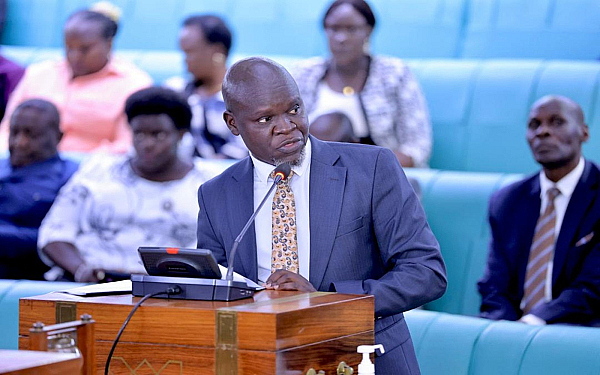

Ugandan MPs have urged the government to provide free school meals across Karamoja, saying the Karamoja food crisis is leaving pupils to walk long distances to class on empty stomachs.
The report, tabled by Parliament’s Committee on Presidential Affairs, also found that relief food fell far short and that several dams and valley tanks paid for by the state were not working.
What did MPs find about the Karamoja food crisis?
The Office of the Prime Minister distributed 20kg of maize flour and 10kg of beans to each of 313,987 registered households in Karamoja’s nine districts, committee chairman Martin Mapenduzi told the House, according to the Parliament of Uganda. Local leaders said the ration would feed a family of six for about two weeks, and the committee called it “a drop in the ocean”.
Inaccurate household data left many families out of the distribution, the report said. MPs asked the prime minister’s office to work with district disaster committees to find them and to plan relief until the next harvest, expected in June 2027. They also questioned why Shs5bn ($1.4mn) of Shs45bn set aside for relief was unspent.
“Feeding a child in school is not charity; it is the surest way to keep children in Karamoja in school,” Mapenduzi said. The report noted that Kaabong district has 53 parishes but no school in any of them.
What happened to dams built for Karamoja?
Shs8.7bn was spent on 106 valley tanks and Shs45bn on five dams, yet none was functional and some did not exist, Mapenduzi said. The committee recommended a value-for-money audit by the end of the financial year and money to desilt existing facilities before the 2027 rains.
Harriet Nakwede, the opposition’s shadow minister for the presidency, presented a minority report rejecting the view that dams are the main answer, and called for a forensic audit of all programmes in Karamoja before new funds are released. The government’s response to the findings was not included in the statement.
Karamoja, in north-eastern Uganda, is the country’s poorest region, and the Karamoja food crisis follows years of recurrent drought; the FAO has warned about climate shocks across the region.
FAQ
What is causing the Karamoja food crisis?
A prolonged drought, according to the parliamentary committee, which also faulted gaps in relief and non-functional water projects.
How much relief food was distributed?
20kg of maize flour and 10kg of beans per household to 313,987 households, enough for about two weeks.
What did MPs recommend for the Karamoja food crisis?
Free school meals, extended relief until June 2027 and an audit of dams and valley tanks.


