
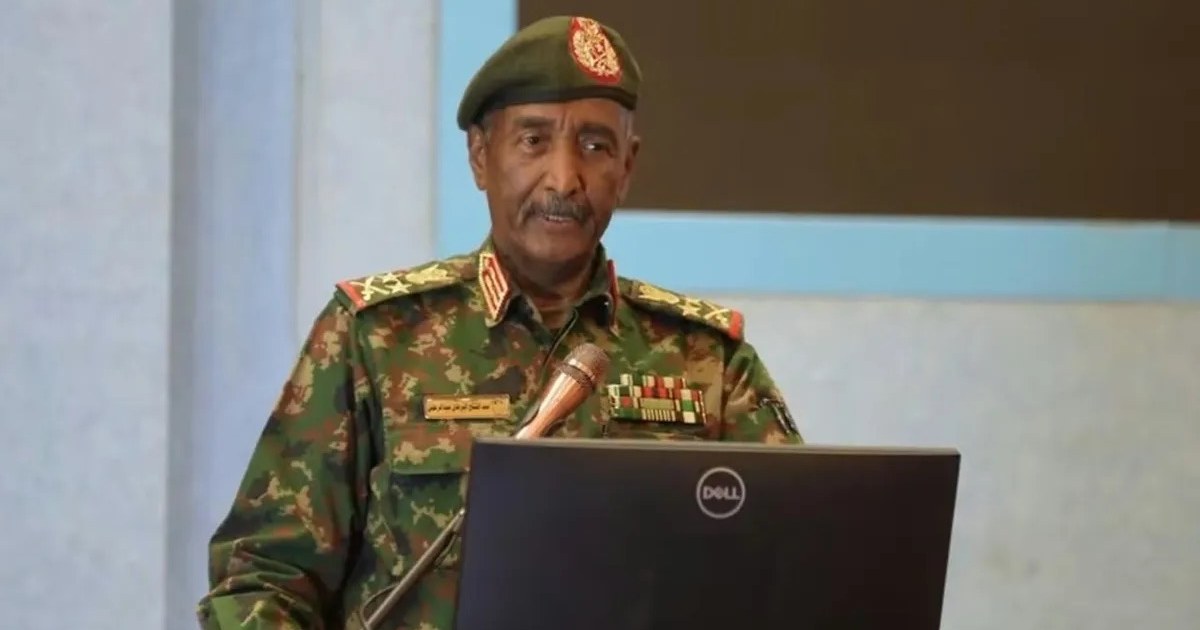

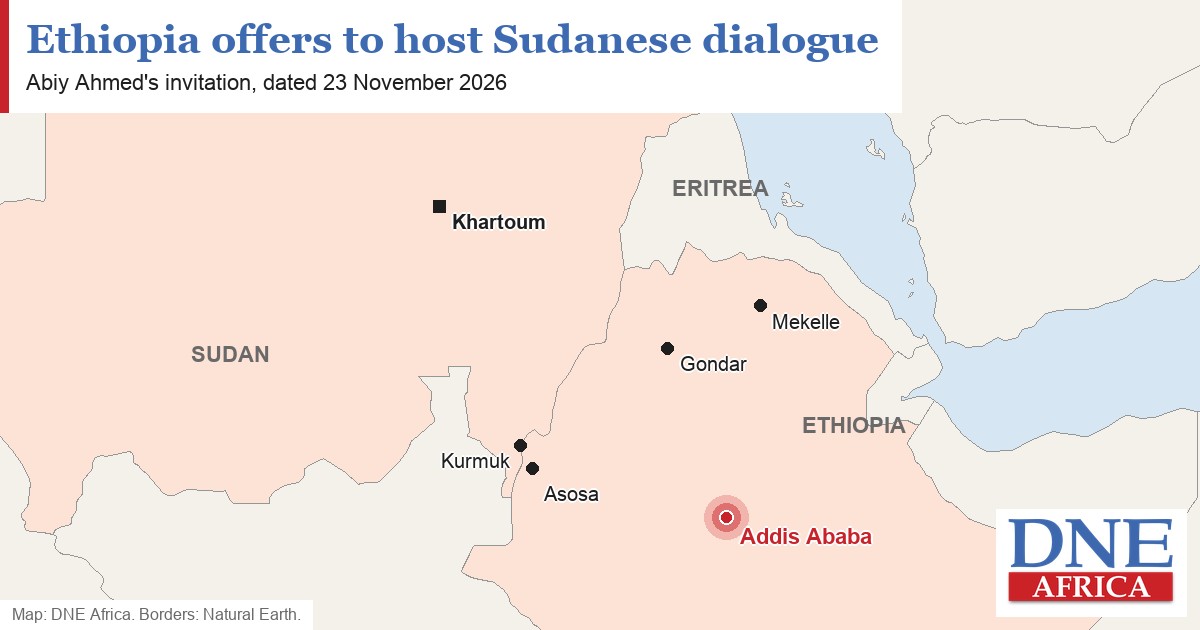
Sudan’s government on Wednesday rejected the Ethiopian initiative to host an inclusive Sudanese dialogue in Addis Ababa, saying Ethiopia lacks the neutrality needed to host or facilitate talks on ending the war.
The rejection, a day after Prime Minister Abiy Ahmed made the offer, closes off one of the few new mediation tracks in a war that has displaced millions, and deepens a rift between two neighbours already at odds over the Blue Nile border, drones and the Nile dam.
Why did Sudan reject the Ethiopian initiative?
In a statement carried by the state news agency SUNA, the government said it “categorically rejects” the initiative that Mr Abiy announced on 24 November, in which he invited Sudanese parties to “a comprehensive and open dialogue” hosted and facilitated by Ethiopia (translated from Arabic).
“The neutrality of the host state and its respect for Sudan’s sovereignty are two essential conditions for accepting any role in this matter,” the statement said. It repeated Sudan’s accusations that Ethiopia supports what it called the “rebel RSF militia” and that drones have been launched from Ethiopian territory to strike Sudan, and concluded that the Ethiopian government “does not meet the condition of neutrality”.
The government called for an independent investigation into those allegations and said Sudan reserved the right to act “through diplomatic and legal channels” to protect its sovereignty.
What does Sudan want from the African Union?
The statement asked the African Union and other regional and international bodies to respect Sudan’s position and to exclude Ethiopia from any arrangements to host or facilitate a Sudanese dialogue.
Choosing the venue, the agenda and the facilitator “is a right of the Sudanese, exercised by their consensus and free will”, it said, adding that Sudan’s sovereignty and independent decision-making “are not subject to bargaining”. It also said Sudan wanted to preserve neighbourly ties between the Sudanese and Ethiopian peoples on the basis of mutual respect.
Ethiopia’s government had not responded publicly by Wednesday morning. When it set out the Ethiopian initiative, the Prime Minister’s Office said Ethiopia would stand “at an equal distance from all parties” and that Sudan’s future was “for the Sudanese alone to decide”, as DNE Africa reported on Wednesday.
What are the accusations against Ethiopia?
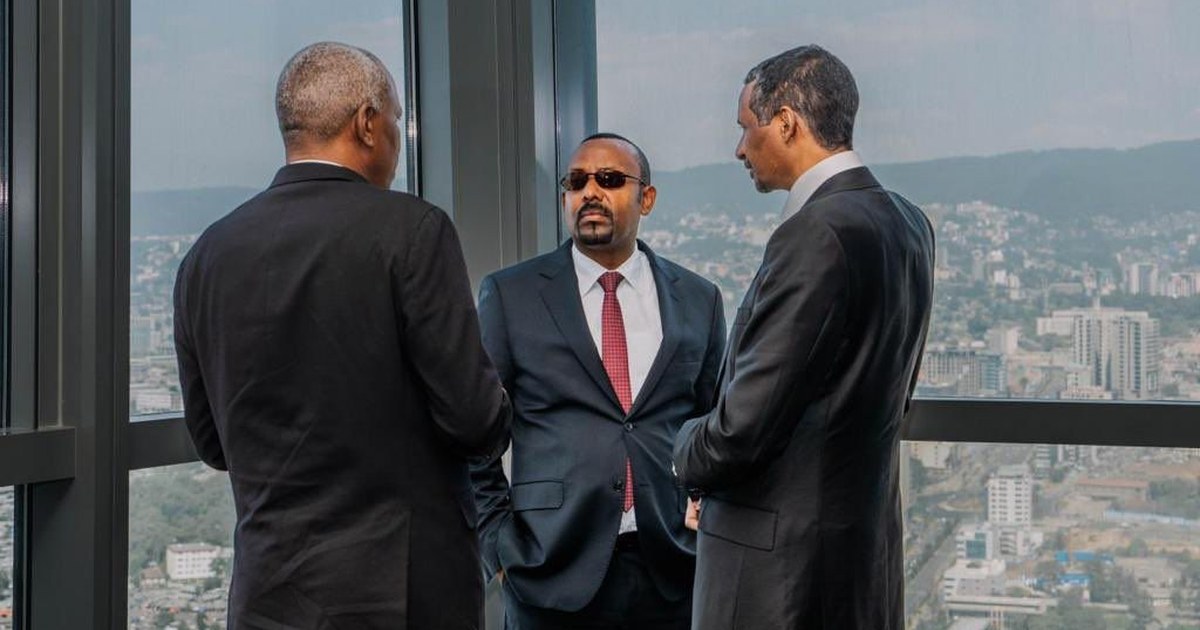
Sudan’s government accuses Ethiopia of fuelling the fighting in Blue Nile state by providing military support, hosting camps where RSF militia fighters are trained and allowing drones to take off from its territory, and says it has complained to the UN Security Council and the African Union’s Peace and Security Council. Sudan’s army has said drones that struck Blue Nile crossed from Ethiopia.
Ethiopia denies the accusations. In May it rejected what it called “baseless accusations” by Sudan’s army and foreign ministry, and it has accused Sudan’s army of backing armed groups linked to the Tigray People’s Liberation Front, which Sudan rejects. The claims made by each side could not be independently verified.
African Narratives, an African think tank, assessed in September that Ethiopian territory, including an army base at Asosa, had served as a rear base for RSF operations in Blue Nile. That is the institute’s assessment; Ethiopia has rejected such allegations.
Who backed the Ethiopian initiative?
Two coalitions welcomed the offer on 24 November: the civilian Sumoud alliance led by former prime minister Abdalla Hamdok, and the self-declared “Government of Peace” set up by the RSF-led Tasis alliance, whose spokesman said it was ready to “engage positively”.
The rejection also follows a joint statement by Sudan and Egypt in Cairo on 24 November, in which the two governments rejected any militarisation of the Red Sea and described their water security as indivisible, a reference to Ethiopia’s Nile dam and its push for sea access.
What happens next?
The war between Sudan’s army and the RSF militia, which began in April 2023, has displaced about 8.59mn people inside the country, according to the International Organization for Migration. The Quad of the US, Saudi Arabia, the UAE and Egypt has proposed a humanitarian truce followed by a ceasefire; Gen Abdel Fattah al-Burhan, head of the Sovereignty Council, rejected an earlier version (see our Sudan war explainer).
With Khartoum ruling out Addis Ababa as a venue, any African-led track would need another host acceptable to both Sudan’s government and the parties that welcomed the Ethiopian initiative.
FAQ
What was the Ethiopian initiative?
An invitation by Prime Minister Abiy Ahmed, announced on 24 November, for Sudan’s military, political and civilian parties to hold an inclusive dialogue hosted and facilitated by Ethiopia, aimed at a ceasefire and a national settlement.
Why did Sudan reject the Ethiopian initiative?
Sudan’s government said Ethiopia does not meet the condition of neutrality, citing its accusations that Ethiopia supports the RSF militia and that drones have been launched from Ethiopian territory. Ethiopia denies both.
What did Sudan ask the African Union to do?
To respect its position and exclude Ethiopia from any arrangements to host or facilitate a Sudanese dialogue, leaving the choice of venue and facilitator to the Sudanese.
Who welcomed the Ethiopian offer?
The civilian Sumoud alliance led by Abdalla Hamdok and the self-declared government of the RSF-led Tasis alliance.


