


The World Health Organization (WHO) has donated 205 laptop computers worth more than GHS 3 million ($256,081) to Ghana’s Health Service to strengthen the country’s disease surveillance and emergency response systems under the Pandemic Fund Project.
The equipment, procured by WHO as an implementing entity for the project in Ghana, is expected to enhance electronic disease surveillance and reporting by enabling health workers to collect, analyse and share health data more efficiently, supporting faster public health responses.
The donation includes 200 standard laptops for surveillance officers at regional and district levels, as well as five high-performance laptops to strengthen coordination and management of surveillance operations.
In a statement, WHO said the investment would improve access to digital tools, support evidence-based decision-making and enhance Ghana’s ability to detect, assess and respond to emerging disease outbreaks and other public health threats.


“Strong surveillance systems are the foundation of effective outbreak prevention and response,” WHO Representative in Ghana Dr. Fiona Braka said during the handover ceremony.
“By equipping health workers with the necessary digital tools, we are supporting Ghana to generate timely, reliable data that informs decisions and enables faster action,” she said.
In turn, Ghana Health Service Deputy Director-General Dr. Caroline Reindorf Amissah welcomed the support, describing WHO as a longstanding partner in strengthening the country’s health system.
“This support will strengthen our surveillance systems and improve the use of data for timely public health action,” she said.
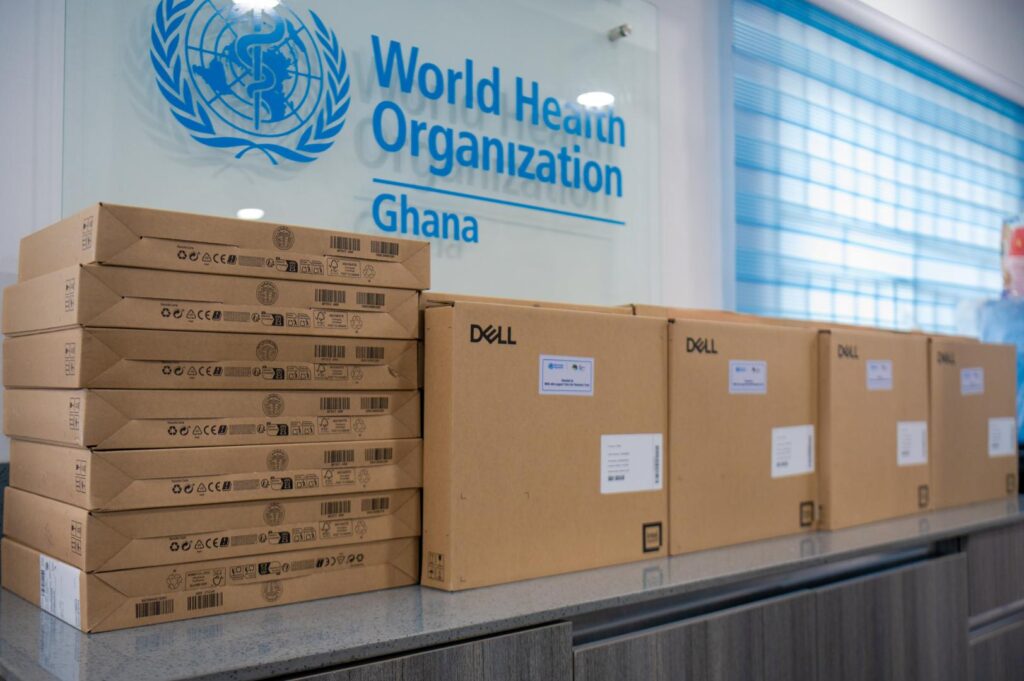
The donation forms part of WHO’s broader support for Ghana’s pandemic prevention, preparedness and response efforts through the Pandemic Fund Project, which focuses on strengthening disease surveillance, laboratory systems, workforce capacity and emergency coordination.
The initiative comes as African countries continue investing in stronger health security systems following lessons learned from the COVID-19 pandemic and recent outbreaks of diseases including mpox, cholera and viral hemorrhagic fevers. Strengthening digital surveillance has become a key priority across the continent to improve early detection of outbreaks, accelerate information sharing and support coordinated responses to emerging public health threats.


