
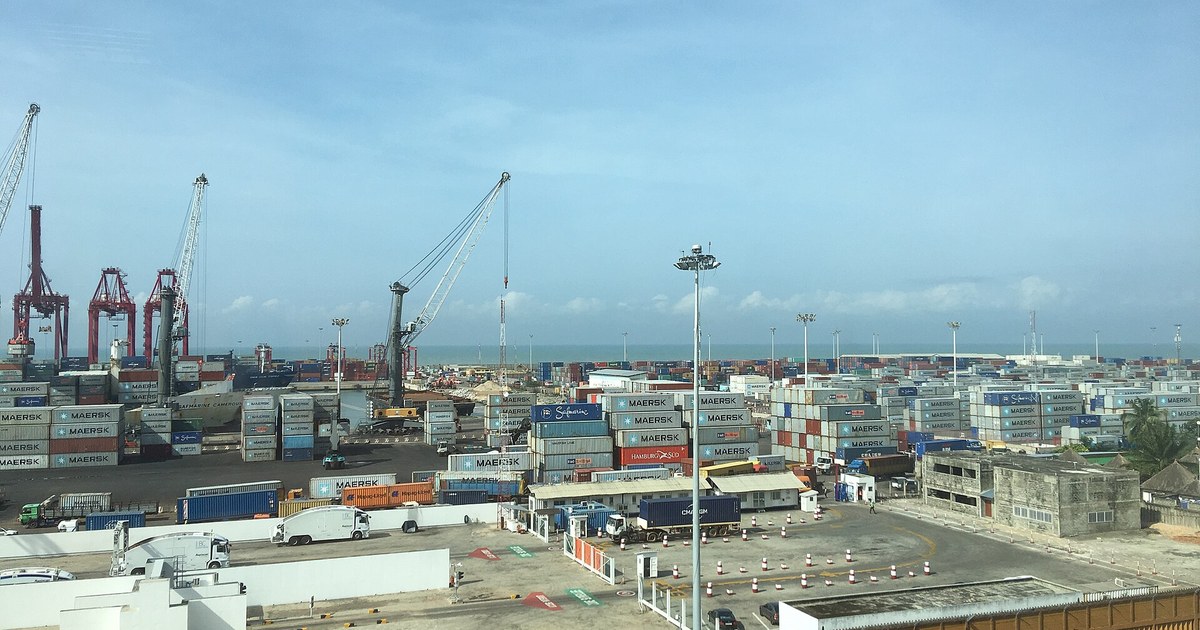

Benin oil is back on the export market for the first time in almost three decades, with a first cargo of about 330,000 barrels from the offshore Seme field on its way to the Netherlands.
The shipment is small by regional standards, but it makes Benin a crude exporter again at a time when prices near $100 a barrel have made older fields worth reopening, and it gives the government a new source of foreign currency.
What do we know about the first Benin oil cargo?
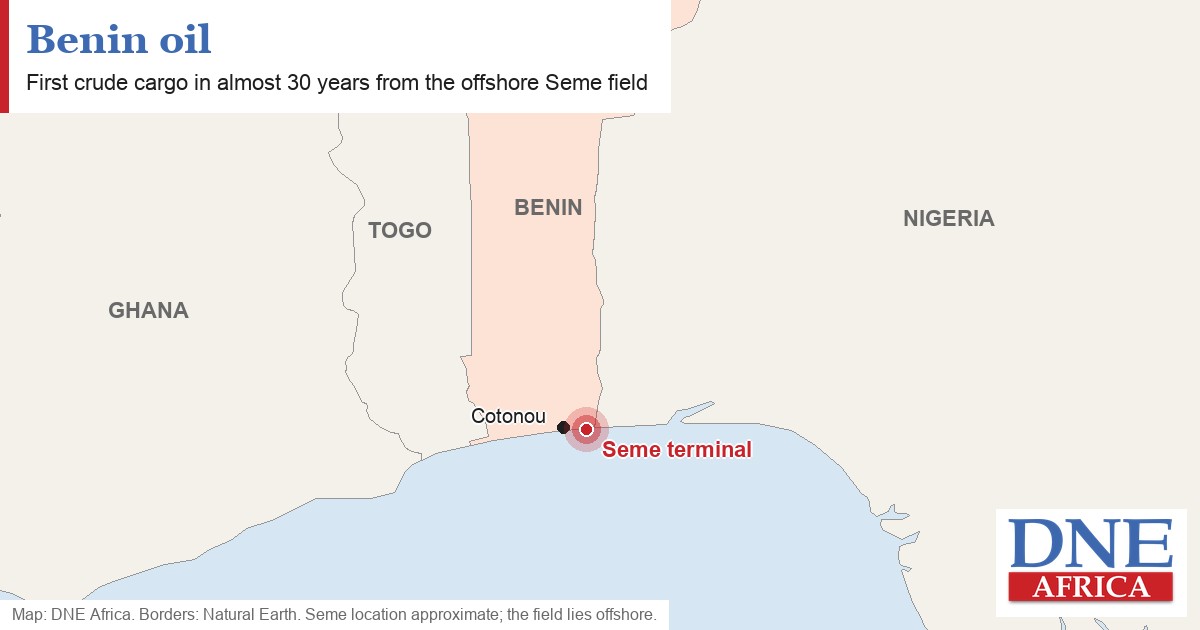
The cargo comes from the Seme field, which was shut at the end of the 1990s, RFI reported in French on Saturday. The broadcaster said Benin hoped to reach output of 15,000 barrels a day in the coming months.
Beninese media reported the loading earlier this month. The tanker Kriti Jade took on the crude for delivery to Shell, with Rotterdam as its destination, Matin Libre reported on 2 November. It put the volume at 320,000 to 330,000 barrels, more than the 250,000 barrels announced when operations restarted.
The field is operated by Akrake Petroleum Benin, a subsidiary of Singapore-listed Rex International Holding, according to Beninese press reports. Output is currently about 3,000 barrels a day, AfricActu reported, describing the cargo as the country’s first crude export in 28 years.
Neither the government nor the operator has published a statement confirming the cargo’s departure date or its arrival, and DNE Africa could not verify the vessel’s position.
How much is the Benin oil shipment worth?
At $100 a barrel, 330,000 barrels would have a market value of about $33mn. That is a rough calculation from the reported volume and RFI’s price reference, before any discount for crude quality, shipping or the operator’s costs.
The state’s share will be lower. AfricActu noted that the commercial value of the cargo is not the same as the revenue the treasury receives, which depends on the terms of the production contract. Those terms have not been set out in the reports seen.
The target of 15,000 barrels a day is the more important number. At that rate Benin would produce in about three weeks what this first cargo took months to accumulate at 3,000 barrels a day. The target is a stated ambition, not a result, and no timetable beyond “the coming months” has been given.
Why is Benin oil viable again?
Price is the main reason. With crude close to $100 a barrel for months, working abandoned fields has become attractive again, RFI said.
Infrastructure is the second. The export terminal at Seme was built for the pipeline that carries Niger’s crude to the coast, and the first Nigerien oil arrived there in April 2024. RFI said those facilities could make it easier for Benin to ship its own crude.
Other African producers are also finding new buyers. South Africa took nearly 1mn barrels of Libyan oil in a rare shipment in October, and Mauritania’s energy minister has set out plans for gas and power.
What happens next?
The arrival and sale of the cargo in Europe will show what price Seme crude fetches. A second lifting would indicate whether production is rising towards the stated target.
For the budget, the question is how much of the proceeds reaches the state. Benin oil will remain a modest contributor to the economy unless output grows well beyond current levels, and the government has yet to publish revenue projections.
FAQ
When did Benin last export oil?
The Seme field closed at the end of the 1990s. Reports describe the new cargo as the first crude export in 28 to 30 years.
How big is the first Benin oil cargo?
About 330,000 barrels, according to RFI. Beninese media gave a range of 320,000 to 330,000 barrels.
Who operates the Seme field?
Akrake Petroleum Benin, a subsidiary of Rex International Holding of Singapore, according to Beninese press reports.
Where is the oil going?
To the Netherlands. Matin Libre reported that the buyer is Shell and the destination is Rotterdam.
How much Benin oil could be produced?
Current output is about 3,000 barrels a day. The stated aim is 15,000 barrels a day in the coming months.


