
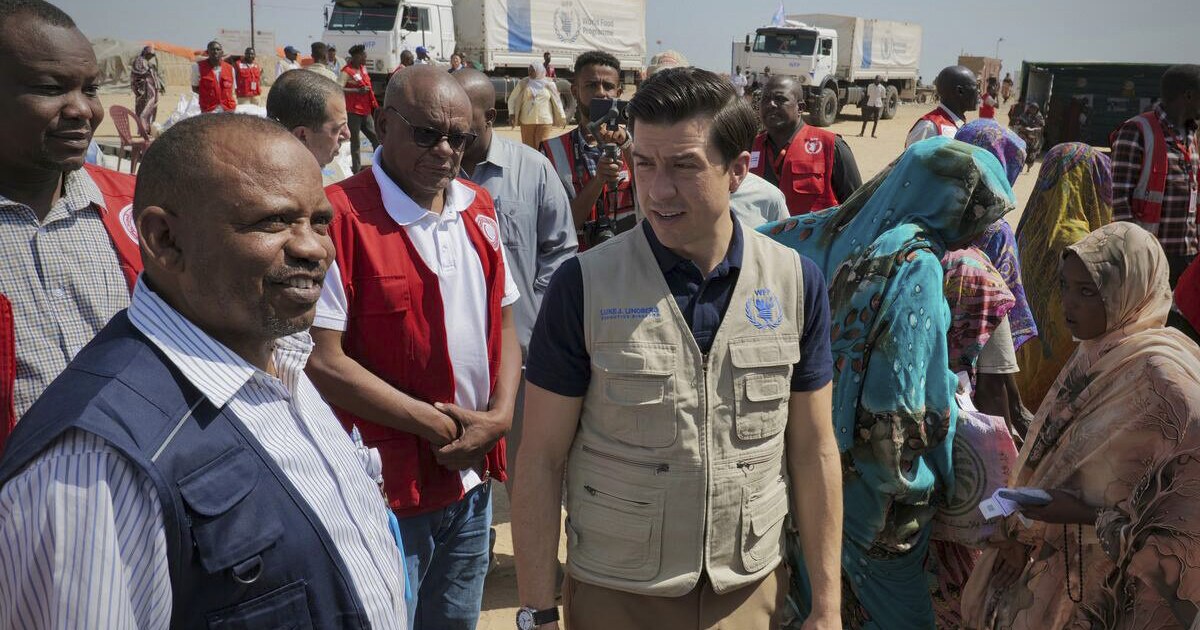

Sudan food aid has been cut for about 900,000 people since September because of a funding shortfall, the World Food Programme said this week as its new chief called for an end to the war.
The cuts matter because they fall on a country the United Nations describes as the world’s largest humanitarian crisis, and because the agency says it cannot make up the gap while fighting, displacement and rising prices keep pushing more families into hunger.
What did the WFP chief say about Sudan food aid?
Luke Lindberg, the WFP’s executive director, made the appeal at the end of his first field mission in the post, according to a statement issued by the agency from Khartoum on 12 November.
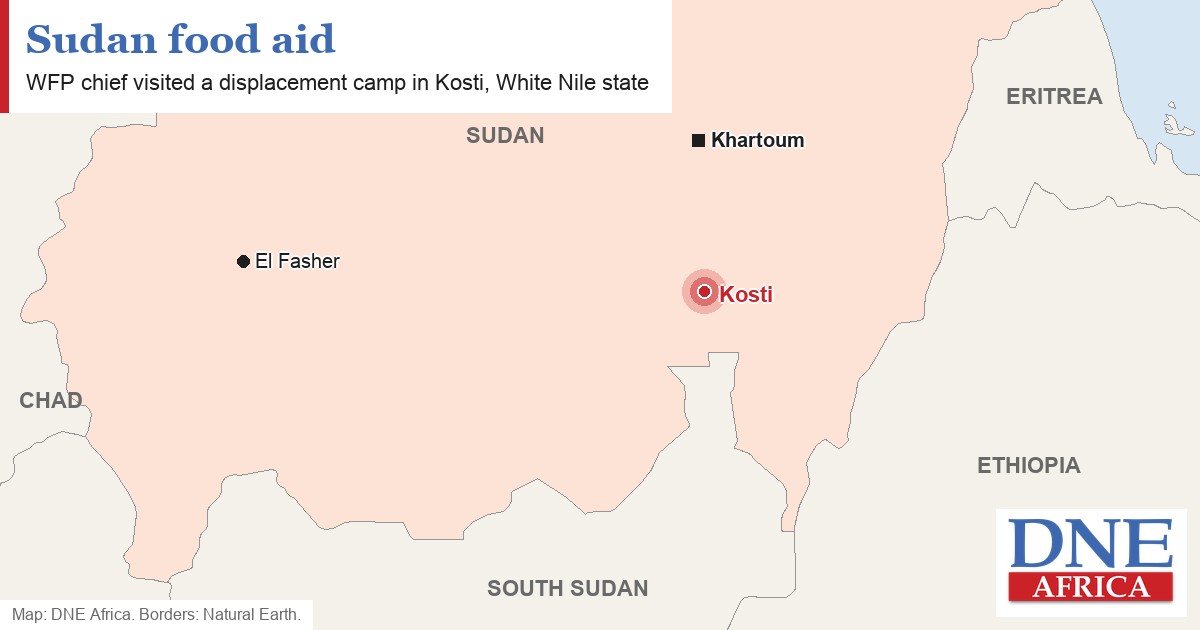
He visited the Goz El Salam camp for displaced people in Kosti, in White Nile state, on 11 November, as well as a school meals site, Sudan Tribune reported. He also met local, state and federal officials, the agency said.
“We cannot outfeed the war,” Lindberg said in the statement. He said people facing acute hunger were left to choose between rebelling, migrating and starving, and urged world, national and local leaders to press for an end to the conflict.
Sudan’s state news agency said the foreign minister, Mohieddin Salem, received Lindberg in Khartoum on 10 November. It gave no details of the talks.
How large are the cuts?
In August the WFP was supporting more than 4mn people in Sudan, including 880,000 in areas at risk of famine, the agency said. It began reducing the number of people it serves in September, and now reaches just over 3mn.
The agency said it needs $520mn to provide food and nutrition assistance to 5.4mn people through April 2027. It did not say how much of that sum donors have pledged.
All of these figures are the WFP’s own. UN News, the organisation’s news service, carried the same numbers.
The shortfall in Sudan food aid is not new. In September the agency’s acting chief said its funding for Sudan had fallen by half as hunger worsened.
Why is Sudan food aid shrinking as the war continues?
The WFP is funded by voluntary contributions, most of them from governments, so its reach rises and falls with donor budgets. When money runs short it trims its list of recipients or the size of rations.
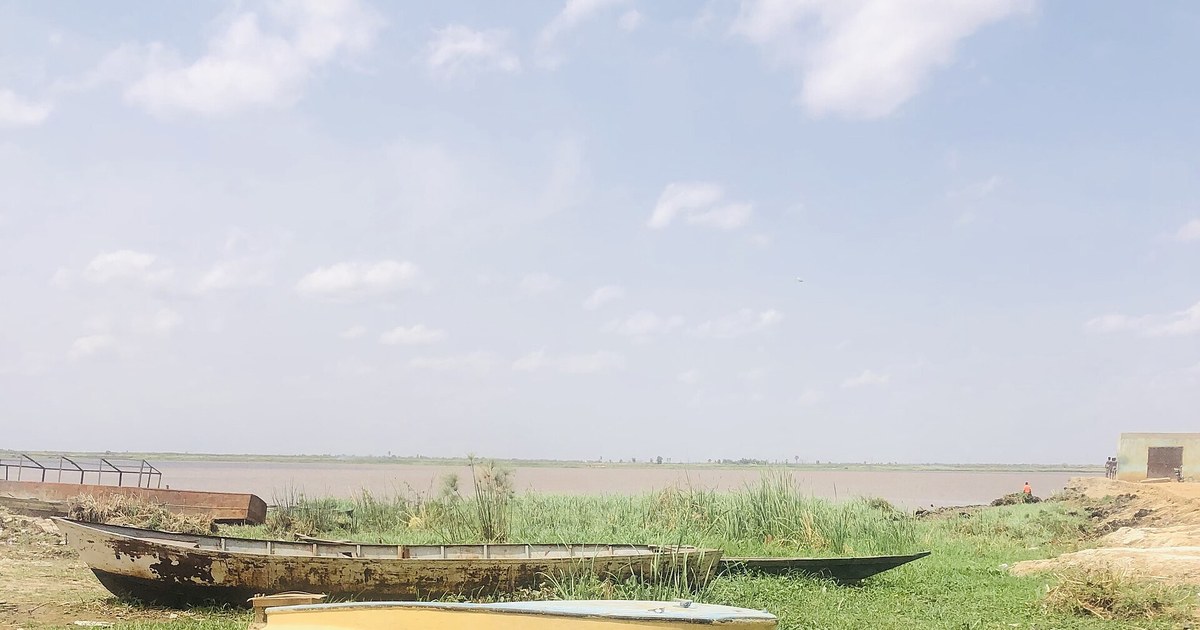
Money is only part of the problem. The agency said fighting and displacement remain the main causes of hunger, while rising food and fuel prices put staples out of reach. Blocked and washed-out roads and insecurity limit where its lorries can go.
The war between the army and the paramilitary Rapid Support Forces began in April 2023 and has not slowed. In the past week the army said it had retaken El Khuwei in West Kordofan, and the World Health Organization warned of an urgent need for sustained aid in North Kordofan.
Kosti, where Lindberg met displaced families, lies on the White Nile about 260km south of Khartoum and hosts camps for people who fled fighting elsewhere.
What happens next?
The WFP said it has teams in the country and could expand Sudan food aid deliveries if donors provide more money and access improves. Lindberg said peace would open the way to food and that the crisis could be turned around with collective action and additional resources.
No new donor pledges were announced during the visit. Neither the army-led government nor the Rapid Support Forces had commented publicly on the appeal in the reports reviewed for this article.
The appeal runs to April 2027. The agency has not said that it plans further reductions, but without new money Sudan food aid stays at its reduced level.
FAQ
How many people have lost Sudan food aid?
About 900,000 people since September, according to the World Food Programme. The agency now reaches just over 3mn people, down from more than 4mn in August.
How much money does the WFP need for Sudan?
It says it needs $520mn to assist 5.4mn people through April 2027.
Who is Luke Lindberg?
He is the executive director of the World Food Programme. The trip to Sudan was his first field mission in the role, the agency said.
Why has Sudan food aid been cut?
The WFP cites funding constraints. It also says insecurity, blocked routes and flood-damaged roads make it harder to deliver what it has.


