
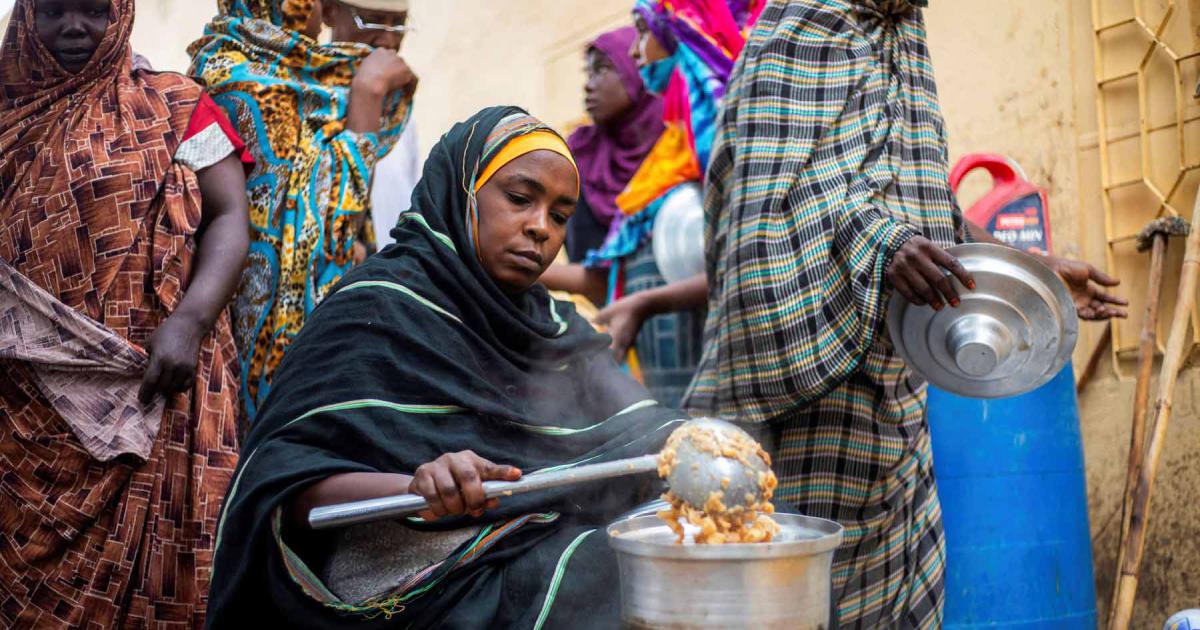

Funding for the United Nations World Food Programme’s (WFP) operations in Sudan has fallen by about half this year as the country’s war pushes more people into hunger and cuts limit the agency’s ability to provide food assistance, its acting chief Carl Skau told Reuters.
Skau, speaking after a visit to Darfur, said the WFP had a funding gap of just under $300 million to sustain its current operations.
The agency received $645 million for its Sudan operations last year, but had secured only $206 million by September this year, despite the worsening humanitarian crisis, Skau said.
“Now we have a presence that we are not fully utilising because of the lack of funding,” he said.
Sudan remains the world’s largest humanitarian crisis after more than three years of war between the Sudanese army and the paramilitary Rapid Support Forces. The conflict has displaced millions, disrupted food production and severely damaged the country’s economy.
Nearly 20 million people are facing hunger across Sudan, while funding constraints have forced the WFP to concentrate its assistance on about 5 million people considered most in need.
The agency has recently increased the number of people it reaches to about 4 million, but resources remain insufficient to meet the scale of need.
In Tawila, North Darfur, where about 1 million people are living in makeshift settlements, the WFP is reaching people each month but can provide only half rations equivalent to about two weeks of food, Skau emphasized.
“It’s not clear how they really are surviving the other two weeks,” he noted.
In El Obeid, a central Sudanese city that has received about 1 million people fleeing the conflict since it began in April 2023, the WFP is currently prioritising people who have arrived in recent months.
“We are providing, but less and less. A year ago it was better because of resources,” Skau said.
The funding shortfall comes as Sudan’s hunger crisis is compounded by disruptions to regional trade routes, which have contributed to higher costs for food, fuel and other essential supplies. WFP has warned that the conflict in the wider Middle East could further increase pressure on Sudan’s food supply and humanitarian operations.
The WFP has said that more than 19 million people in Sudan face acute hunger, while famine has been confirmed in parts of the country and remains a threat in other areas.
The agency says it urgently needs $579 million to fund its Sudan operations through October 2026, highlighting the widening gap between humanitarian needs and available resources.
Skau’s warning comes as humanitarian agencies face growing pressure to maintain operations in Sudan, where continued fighting, displacement and economic disruption are making it increasingly difficult for vulnerable communities to access food and basic services.


