

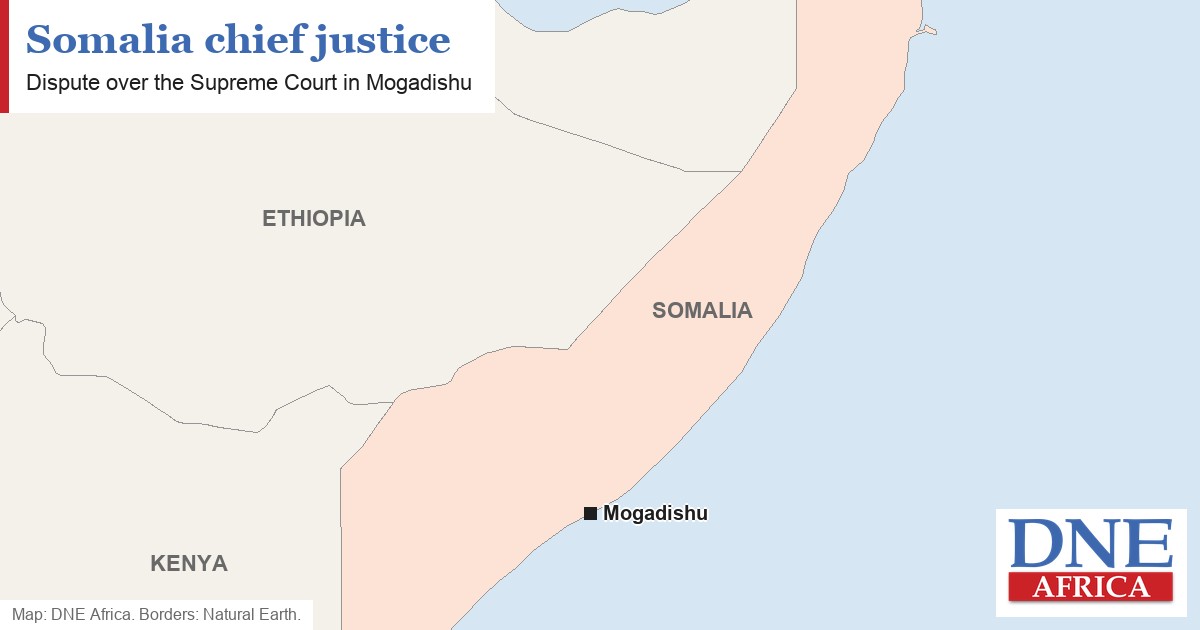
Somalia’s justice ministry has rejected the findings of two UN experts who called the dismissal of the Somalia chief justice, Bashe Yusuf Ahmed, unlawful, saying he was removed on 4 November under transitional rules.
The response, reported on Saturday, hardens a dispute over who controls the country’s highest court while it hears a constitutional case on the president’s mandate, and comes as talks between the government and the opposition have stalled.
What did the government say about the Somalia chief justice?
The Ministry of Justice and Constitutional Affairs said Somalia was moving from its previous constitutional order to the system set out in the 2026 constitution, and that bodies provided for in the new text, including the High Council of the Judiciary, were not yet in place, according to Hiiraan Online, which reported the statement in Somali.
The former chief justice was removed “through the transitional process by which he was first nominated”, the ministry said, in wording quoted by FTL Somalia. It said the decision had no connection to the Supreme Court’s deliberations on the constitutional case.
The ministry also said that statements and rulings the former Somalia chief justice issued in the court’s name after 4 November had no legal effect, because he no longer held the office. A ruling could only come from a lawfully constituted bench led by a serving chief justice, it argued.
It added that the attorney-general had filed preliminary objections on 6 November about the court’s jurisdiction, the make-up of the bench and the claimant’s standing, and that these had to be settled first.
What had the UN experts said about the Somalia chief justice?
In a statement on 12 November, the experts described the dismissal as “blatant interference with the independence of the judiciary”. They called for Ahmed to be restored to office, for the judges’ security protection to be reinstated and for security forces to be withdrawn from the Supreme Court, according to the UN human rights office.
DNE Africa reported on Friday that the UN experts had demanded his reinstatement. They said the government swore in a replacement on 7 November, and that five judges had continued to hear the case on 5 November and declared the dismissal void.
DNE Africa’s earlier report on the Supreme Court and term limits sets out the background to the case.
Why does the government object to the UN statement?
The ministry said the experts had not asked Mogadishu for clarification before going public. Somalia’s permanent mission in Geneva received an email requesting an emergency meeting and asked for an official letter setting out the issues, it said, but the experts’ press release was published without that step.
The government said this fell short of the code of conduct that applies to UN special procedures mandate-holders.
The ministry said it took the concerns seriously and remained committed to judicial independence and the rule of law. It promised to resolve the matter through legal and institutional steps, without pressure on judges, and said it was ready to give the experts more detail.
The government’s account has not been tested by an independent body. It is contradicted by the UN experts and by the judges who, according to the experts, declared the removal of the Somalia chief justice void.
What happens next?
The political dispute around the court is widening. The presidency said a national consultative conference would be held soon, while the forum President Hassan Sheikh Mohamud offered the opposition has been delayed, Goobjoog reported in Somali on Saturday.
Security is a second pressure. The withdrawal of Ugandan troops from the African Union mission has raised concern about Mogadishu and nearby areas, Hiiraan Online reported.
Whether the Supreme Court can sit with an agreed bench is the immediate question. Until the row over the Somalia chief justice is settled, any ruling on the president’s mandate is likely to be contested by one side or the other.
FAQ
Who is the Somalia chief justice at the centre of the dispute?
Bashe Yusuf Ahmed, who was dismissed by the government on 4 November 2026. A replacement was sworn in on 7 November, according to the UN experts.
Why does the government say removing the Somalia chief justice was lawful?
The justice ministry says Somalia is in a constitutional transition, the High Council of the Judiciary does not yet exist, and Ahmed was removed through the same transitional process by which he was nominated.
What do the UN experts want?
They want the Somalia chief justice reinstated, judges’ security restored and security forces withdrawn from the Supreme Court.
What case is the Supreme Court hearing?
A constitutional case on the president’s mandate. The government says objections to the court’s jurisdiction and bench must be decided first.


