
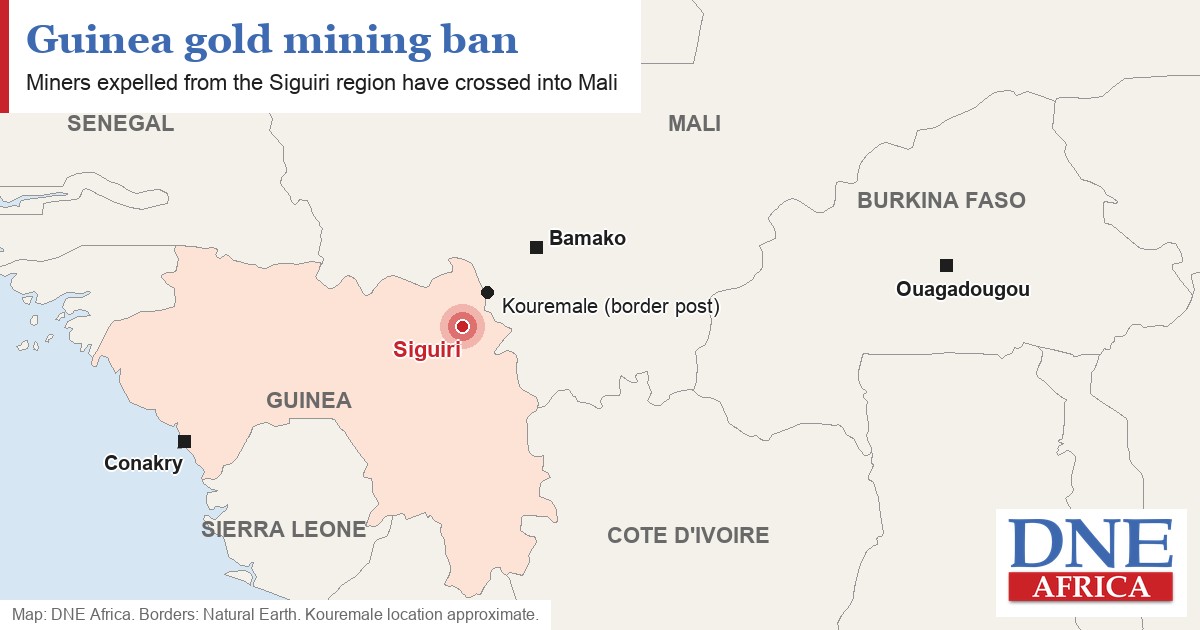

A Guinea gold mining ban imposed on 2 November has left 10 people dead in clashes, put 1,263 people on trial and sent tens of thousands of foreign miners into Mali, drawing a joint protest from three Sahel governments.
The dispute matters beyond Guinea because the gold fields of Siguiri have long drawn workers from across west Africa, and their sudden departure has become a humanitarian burden for Mali and a diplomatic test between Conakry and the Alliance of Sahel States.
What is the Guinea gold mining ban?
President Mamadi Doumbouya signed a decree on 2 November banning unlicensed artisanal mining in the Siguiri region and other gold zones, Guinee360 reported in French. Security forces were deployed to the sites.
The government says miners had ignored regulations and that the digging was polluting farmland and rivers and stripping vegetation, Reuters reported.
Speaking at a mining summit, Doumbouya said Guinea had been “a bit indulgent” out of attachment to pan-Africanism and would now enforce its rules, according to Guinee360. The remark is translated from French.
The authorities said on 7 November that 1,263 people had been arrested under the Guinea gold mining ban. The first mass trials opened in Conakry this week, Agence France-Presse reported. Those held include Guineans and nationals of neighbouring states.
What happened in Siguiri?
Ten people were killed and 13 injured on 11 November in Balato, in the Siguiri region, the Ministry of Territorial Administration said in a statement the next day. Five of the dead were foreign nationals. The figures are provisional.
By the ministry’s account, protesters put up barricades to block a patrol checking that the ban was being applied, and shots were exchanged. It did not say who fired first. Two pick-up trucks and a security forces lorry were burned, the Associated Press reported. Judicial authorities have been asked to investigate.
No independent account of the clashes was available. The government’s version could not be verified.
How many people have left since the Guinea gold mining ban?
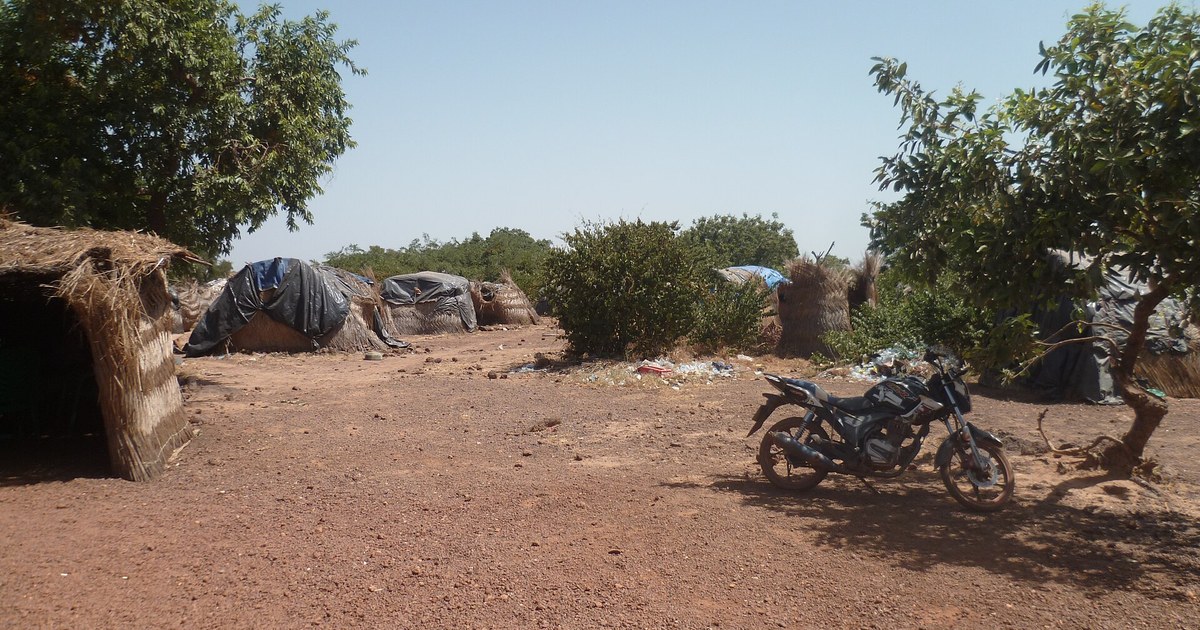
Mali says about 100,000 people have arrived in Bamako and nearly 60,000 at the border town of Kouremale. Those totals come from the Malian authorities and have not been confirmed by a UN agency or other independent body.
Many are Burkinabe. Burkina Faso said on 13 November that it had repatriated 45,406 people through Mali, including 9,852 children. Ivorians, Senegalese, Togolese and Beninese are also among the arrivals, AFP reported.
Mali’s government has recorded 11 deaths among those who fled, according to AFP. Its health ministry estimates it needs nearly 228mn CFA francs ($388,000) to care for them, and security officials fear stranded migrants could be targeted by jihadist recruiters.
How have neighbours responded to the Guinea gold mining ban?
Ministers from Mali, Burkina Faso and Niger, meeting in Ouagadougou on 11 and 12 November, said they regretted the mass expulsion of African nationals from Upper Guinea. Their communique recognised every state’s right to enforce its own laws but criticised the abruptness of the operation and the lack of consultation, Mali24 reported in French.
It was the first joint position by the three states on the issue. Mali’s prime minister, Abdoulaye Maiga, had earlier said the removals were carried out without consultation. Guinea has not changed course.
Guinea is not a member of the alliance. Its three members left the Economic Community of West African States, to which Guinea belongs, in 2025.
What is at stake for Guinea gold mining?
Small-scale and artisanal digging supports more than 3mn people in Guinea, the Associated Press reported. High prices have pulled more workers and heavier machinery into the pits across the region.
Much of that output leaves west Africa undeclared. A report this week estimated that illicit gold worth billions of dollars reached the United Arab Emirates from African producers, Guinea among them, in 2024.
The government has not said how, or whether, licensed artisanal work will resume in Siguiri. The trials, the investigation into the Balato deaths and the response to the Sahel states’ statement are the next tests of the Guinea gold mining policy.
FAQ
When did the Guinea gold mining ban start?
On 2 November 2026, when a presidential decree banned unlicensed artisanal mining in Siguiri and other gold zones.
How many people died in the Siguiri clashes?
Ten, including five foreign nationals, with 13 injured, according to provisional figures from Guinea’s Ministry of Territorial Administration.
How many miners have left since the Guinea gold mining ban?
Mali says about 160,000 people have arrived in Bamako and Kouremale. The figure has not been independently confirmed.
Why did Guinea act against artisanal miners?
The government cites breaches of mining rules and environmental damage, including polluted farmland and rivers.


