
By using this site, you agree to the Privacy Policy and Terms of Use.
Accept
DNE Africa
  • Home
  • Politics
    Low Res Kopello 1
    Science

    Ancient Lake Mud Shows 2012 Rwenzori Fire Was Unprecedented for 12,000 Years

    By Mohammed El-Said 5 Min Read
    Egypt's Senghor University secures Romanian tech funding to train future African leaders
    Culture

    Egypt’s Senghor University secures Romanian tech funding to train future African leaders

    By DNE Africa May 10, 2026
    Debretsion Sworn In as Tigray President, Defying Federal Order and Raising Stakes in Ethiopia
    Politics

    Debretsion Sworn In as Tigray President, Defying Federal Order and Raising Stakes in Ethiopia

    By Taha Sakr May 6, 2026
  • Business
    Mahmoud Mohieldin: Africa’s share of global FDI does not exceed 6%
    Business

    Mahmoud Mohieldin: Africa’s share of global FDI does not exceed 6%

    Dr Mahmoud Mohieldin, Chair of the African Advisory Council to the G-FAFS,…

    By DNE Africa 2 Min Read
    climate shocks vulnerability
    BusinessScience
    Climate Change Could Deepen Food Crisis in East Africa by 2050
    WhatsApp Image 2026 02 02 at 4.01.57 PM
    BusinessHealth
    Takeda hosts regional summit in Cairo to improve care for rare hereditary angioedema
    omega 1 130922 cakuo
    BusinessScienceTechnology
    Heat and Dust Are Cutting Solar Power Output Across Sub-Saharan Africa, Study Finds
    Double-Edged Sword- Backbase Reveals How AI is Redefining Trust in African Banking
    Business
    Beyond the Chatbot: Backbase Report Charts Africa’s AI-Driven Financial Revolution
  • Culture
  • Opinion
  • Technology
  • World
  • My Bookmarks
Reading: Wastewater Plants in South Africa May Be Spreading Antibiotic Resistance
Sign In
  • Join US
DNE AfricaDNE Africa
Font ResizerAa
  • Home
  • Politics
  • Business
  • Culture
  • Opinion
  • Technology
  • World
  • My Bookmarks
Search
  • Home
  • Politics
  • Business
  • Culture
  • Opinion
  • Technology
  • World
  • My Bookmarks
Have an existing account? Sign In
Follow US
© Foxiz News Network. Ruby Design Company. All Rights Reserved.
Low Res Sampling Image 1

Wastewater Plants in South Africa May Be Spreading Antibiotic Resistance

Mohammed El-Said
Last updated: March 30, 2026 11:53 pm
By Mohammed El-Said 5 Min Read
Share
SHARE

Wastewater treatment plants in South Africa may be helping to spread antibiotic resistance into rivers and the wider environment, according to a new study.

The research, published in Cell Reports, was led by scientists from Stellenbosch University. It raises concerns that treated wastewater could still carry genetic material that allows bacteria to resist antibiotics.

Antimicrobial resistance (AMR) happens when microbes such as bacteria no longer respond to medicines used to treat infections. It is already a growing global health threat. Experts warn that if current trends continue, AMR could cause up to 10 million deaths each year by 2050.

In this study, researchers looked at how antibiotic resistance behaves in wastewater treatment plants and nearby rivers in a major South African city.

They focused on what happens during the treatment process. While treatment plants are designed to remove harmful substances and kill bacteria, they may not fully remove genetic material left behind.

Dr John Paul Makumbi, a medical microbiologist and the study’s lead author, said that antibiotic resistance is a natural process. Bacteria evolve over time to survive threats in their environment.

But in wastewater systems, this process can speed up.

Wastewater treatment plants receive a mix of waste from homes, hospitals, factories, and slaughterhouses. This creates what researchers describe as a “toxic mix” that exposes bacteria to many stress factors at once.

This environment can encourage bacteria to develop and share resistance.

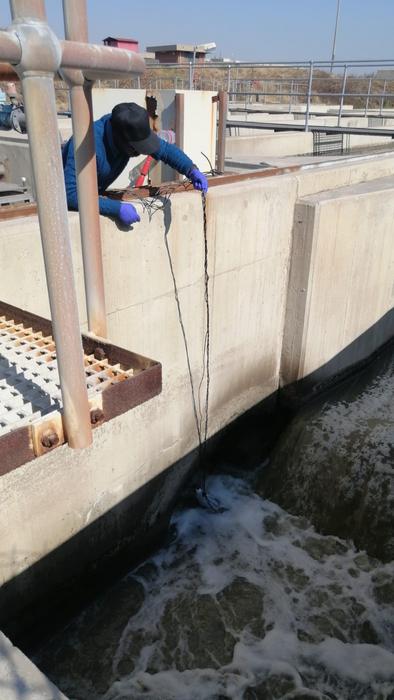
The researchers collected samples from nine wastewater treatment plants and nearby rivers in the Tshwane area.

They found genetic material linked to two major groups of bacteria—Pseudomonadota and Bacteroidota—which are known for strong resistance to multiple antibiotics.

Importantly, even when bacteria were killed during treatment, their DNA remained in the water.

This leftover DNA, known as extracellular DNA, can still carry antibiotic resistance genes.

“Even though the bacteria themselves are killed, we found extracellular DNA carrying resistant genes in the effluent,” Makumbi said. “These genes could still be transmitted and shared with other bacteria in the environment.”

This means that rivers receiving treated wastewater could become hotspots where resistance spreads further.

The study suggests that wastewater treatment plants may act as “superspreaders” of antibiotic resistance in the environment.

Although some plants are being upgraded with advanced technologies such as ultraviolet (UV) treatment to reduce these risks, progress has been slow.

The researchers say more needs to be done to improve how wastewater is treated.

They recommend that waste from high-risk sources—such as hospitals, slaughterhouses, and industrial facilities—should be treated before it enters the main wastewater system.

They also call for better treatment before wastewater is released into rivers.

“If we want to protect our waterways and public health, and contain the spread of superbugs in the environment, we need to protect and upgrade wastewater treatment plants,” Makumbi said.

The study highlights a broader issue linking water quality and public health.

Professor Thulani Makhlanyane, a senior researcher involved in the study, warned that antimicrobial resistance could become a major challenge in the future, especially in regions with aging infrastructure and limited resources.

“Future wars will in part be based on water security and antimicrobial resistance,” he said. “This is especially true in Africa where aging infrastructure and poor management are compounding the problem.”

The findings add to growing evidence that the environment plays an important role in the spread of antibiotic resistance—not just hospitals and clinics.

As countries look for ways to reuse water and manage limited resources, scientists say understanding these risks will be critical.

Improving wastewater systems, strengthening regulation, and investing in research could help slow the spread of antibiotic resistance and protect both ecosystems and human health.


You Might Also Like

Ancient Lake Mud Shows 2012 Rwenzori Fire Was Unprecedented for 12,000 Years

Egypt’s Senghor University secures Romanian tech funding to train future African leaders

Africa Is No Longer a Promise. It Is a System Taking Shape

UAE, OPEC, and Somaliland: A Question of Timing, Not Direction

East Africa Rift Study Suggests Continent Slowly Splitting—and May Explain Fossil Richness

TAGGED:AfricaPublic HealthSouth AfricaWastewater
Share This Article
Facebook Twitter Pinterest Whatsapp Whatsapp LinkedIn Reddit Telegram Email Copy Link

You Might Also Like

unnamed
Science

Less Intensive Farming Can Boost Coconut Yields and Protect Soil

By Mohammed El-Said 5 Min Read
embryo fossil found in 1
Science

250-Million-Year-Old Fossil Egg Solves Mystery of Early Mammal Relatives

By Mohammed El-Said 5 Min Read
Somalia condemns Israeli diplomatic appointment to breakaway Somaliland
Politics

Somalia condemns Israeli diplomatic appointment to breakaway Somaliland

By DNE Africa 2 Min Read

More Popular from DNE AFRICA

Ad imageAd image
Politics

Mali Breaks Bamako Blockade, Arrests Soldiers for Collusion in Deadly Attacks

The Malian transitional government has announced the successful restoration of security across the capital, breaking a…

By Taha Sakr
Politics

Drone Strike in Central Sudan Kills Nine Family Members of Pro-Army Commander

 A devastating drone strike targeted the family home of a high-profile military commander in central Sudan…

By Taha Sakr
Politics

EU Issues Urgent Warning Over Tigray Stability as TPLF Moves to Reinstate Disputed Council

The European Union (EU) has issued a stark warning regarding the deteriorating political situation in Ethiopia’s…

By Taha Sakr
Politics

TPLF Presses Tadesse Worede to Step Down Amid Escalating Tigray Power Struggle

The Tigray People’s Liberation Front (TPLF) has called on interim regional president Tadesse Worede to hand…

By Taha Sakr
DNE Africa

News by Africans, For Africans

Categories

  • The Escapist
  • Entertainment
  • Business

Quick Links

  • Advertise with us
  • Newsletters
  • Complaint
  • Deal

DNE Africa.All Rights Reserved.

Welcome Back!

Sign in to your account

Username or Email Address
Password

Lost your password?