
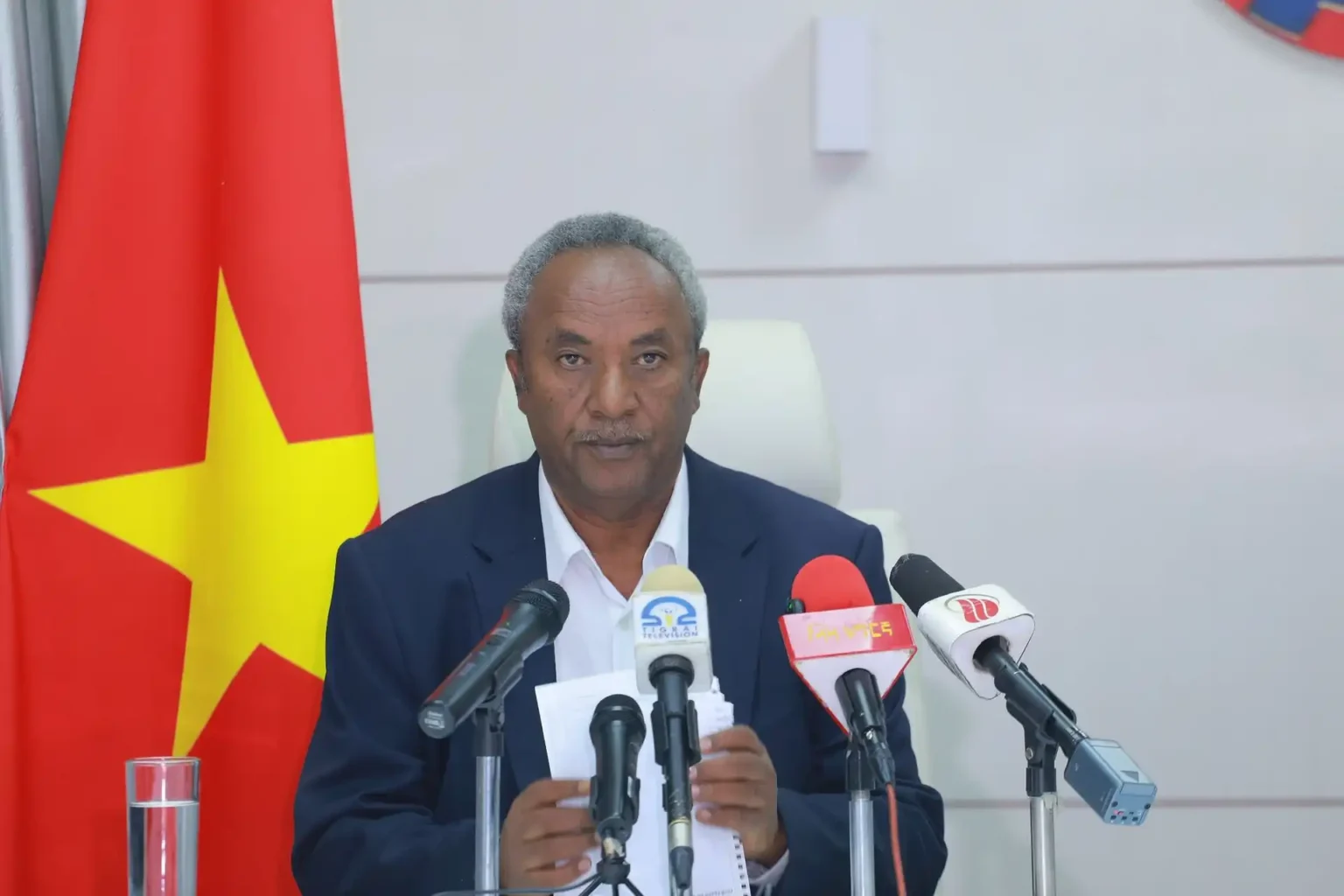

The Tigray People’s Liberation Front (TPLF) has called on interim regional president Tadesse Worede to hand over power, deepening a political standoff that is raising concerns over renewed instability in northern Ethiopia.
The demand comes weeks after the TPLF announced plans to restore its pre-war regional administration, effectively rejecting the current interim government established under the 2022 Pretoria peace agreement.
TPLF spokesperson Michael Asgedom said the process of dismantling the interim administration is already underway, warning against resistance. He also suggested that ties between Tigray’s leadership and Ethiopia’s federal government have effectively broken down, though he stopped short of formally declaring a complete political rupture.
“The structure linking the region to the federal government is no longer functioning,” he said in remarks to BBC Amharic, leaving the future of that relationship unclear.
The dispute centers on the federal government’s recent decision to extend Tadesse Worede’s term by one year— a move the TPLF says violates the Pretoria Agreement that ended the two-year war in November 2022. Federal authorities maintain the extension is legally grounded in revised legislation governing the interim administration.
The TPLF argues that the agreement has effectively been voided by what it describes as unilateral action from Addis Ababa. It is now seeking to reinstate its former governing structures, which it says were based on an elected mandate prior to the outbreak of war in 2020—an election that had been rejected at the time by Ethiopia’s electoral board.
Tadesse Worede has condemned the move as an attempted coup and signaled he would resist any effort to remove him by force, raising the risk of further confrontation.
The federal government has yet to publicly respond to the latest developments. However, reports refer to ongoing diplomatic efforts to prevent escalation. According to local sources, international actors, including U.S. officials, have engaged TPLF leaders in recent days, warning of potential consequences if tensions lead to renewed conflict.
The political crisis unfolds against a fragile post-war backdrop, with analysts warning that any breakdown in the current arrangement could destabilize the region once again.
There are also growing concerns over the potential involvement of external actors. Ethiopian officials have previously accused Eritrea of playing a role in post-agreement tensions—though alignments in any future conflict remain uncertain.
The situation remains fluid, with both sides holding firm positions and no clear pathway yet to de-escalation.


