
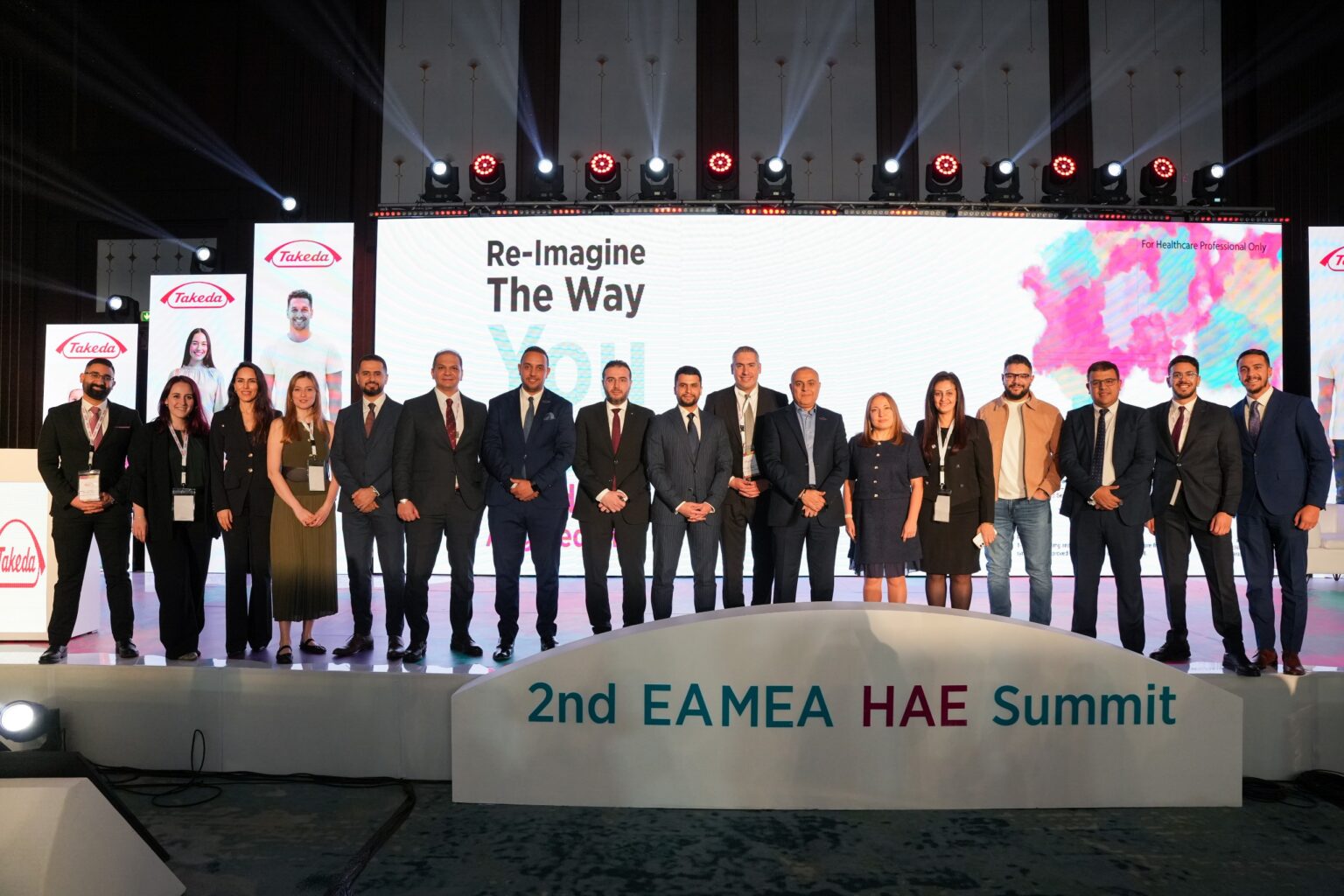

Takeda, a global biopharmaceutical company focused on patient care, said it has concluded the second Eurasia, Middle East and Africa (EAMEA) Hereditary Angioedema (HAE) Summit in Cairo, bringing together specialists to advance the management of the rare and potentially life-threatening disease.
The scientific meeting, held at the Sofitel Nile Hotel in the Egyptian capital, gathered healthcare experts involved in treating HAE, with the aim of strengthening scientific exchange, peer learning and discussions around best clinical practices.
Takeda said the summit was organised under the theme “Reimagine The Way You Treat Your HAE” and featured national and international experts across multiple specialties, including internal medicine, pediatrics, immunology, pulmonology, allergy and pharmacology.
Participants shared clinical insights, emerging evidence and real-world experiences in managing hereditary angioedema, while highlighting challenges clinicians face across Türkiye, the Gulf, the Levant, Egypt and Algeria, the company said.
Hereditary angioedema is a rare genetic disorder characterised by recurrent and unpredictable swelling attacks affecting the skin, gastrointestinal tract or upper airways. The condition is often misdiagnosed or diagnosed late because of limited awareness and non-specific symptoms, according to Takeda.
Without timely treatment, some attacks — especially those involving the larynx — can be fatal. Globally, HAE is estimated to affect between one in 50,000 and one in 100,000 people, underscoring the need for early recognition and specialised care pathways.
“At Takeda, patients are at the center of everything we do,” said Khaled Sary, Takeda’s general manager for West Gulf and Egypt, adding that scientific forums such as the summit are essential for improving disease awareness, strengthening clinical expertise and supporting timely diagnosis across the region.
Professor Maged Refaat of Ain Shams University in Cairo said gatherings like the EAMEA HAE Summit play a critical role in improving patient outcomes by allowing healthcare professionals to exchange experiences and discuss new evidence to strengthen best practices in managing the disease.


