
By using this site, you agree to the Privacy Policy and Terms of Use.
Accept
DNE Africa
  • Home
  • Politics
    Iran’s Geopolitical Strategy Against America: The $40,000 Drone That Could Change the Middle East
    opinionPolitics

    Iran’s Geopolitical Strategy Against America: The $40,000 Drone That Could Change the Middle East

    By Abdiwahab Sheikh Abdisamad 17 Min Read
    UAE, OPEC, and Somaliland- A Question of Timing, Not Direction Bashe Awil Omar
    opinionPolitics

    UAE, OPEC, and Somaliland: A Question of Timing, Not Direction

    By Bashe Awil Omar May 1, 2026
    in eastern africa the
    Science

    East Africa Rift Study Suggests Continent Slowly Splitting—and May Explain Fossil Richness

    By Mohammed El-Said April 25, 2026
  • Business
    Mahmoud Mohieldin: Africa’s share of global FDI does not exceed 6%
    Business

    Mahmoud Mohieldin: Africa’s share of global FDI does not exceed 6%

    Dr Mahmoud Mohieldin, Chair of the African Advisory Council to the G-FAFS,…

    By DNE Africa 2 Min Read
    climate shocks vulnerability
    BusinessScience
    Climate Change Could Deepen Food Crisis in East Africa by 2050
    WhatsApp Image 2026 02 02 at 4.01.57 PM
    BusinessHealth
    Takeda hosts regional summit in Cairo to improve care for rare hereditary angioedema
    omega 1 130922 cakuo
    BusinessScienceTechnology
    Heat and Dust Are Cutting Solar Power Output Across Sub-Saharan Africa, Study Finds
    Double-Edged Sword- Backbase Reveals How AI is Redefining Trust in African Banking
    Business
    Beyond the Chatbot: Backbase Report Charts Africa’s AI-Driven Financial Revolution
  • Culture
  • Opinion
  • Technology
  • World
  • My Bookmarks
Reading: UAE, OPEC, and Somaliland: A Question of Timing, Not Direction
Sign In
  • Join US
DNE AfricaDNE Africa
Font ResizerAa
  • Home
  • Politics
  • Business
  • Culture
  • Opinion
  • Technology
  • World
  • My Bookmarks
Search
  • Home
  • Politics
  • Business
  • Culture
  • Opinion
  • Technology
  • World
  • My Bookmarks
Have an existing account? Sign In
Follow US
© Foxiz News Network. Ruby Design Company. All Rights Reserved.
UAE, OPEC, and Somaliland- A Question of Timing, Not Direction Bashe Awil Omar

UAE, OPEC, and Somaliland: A Question of Timing, Not Direction

Bashe Awil Omar
Last updated: May 1, 2026 12:53 pm
By Bashe Awil Omar 5 Min Read
Share
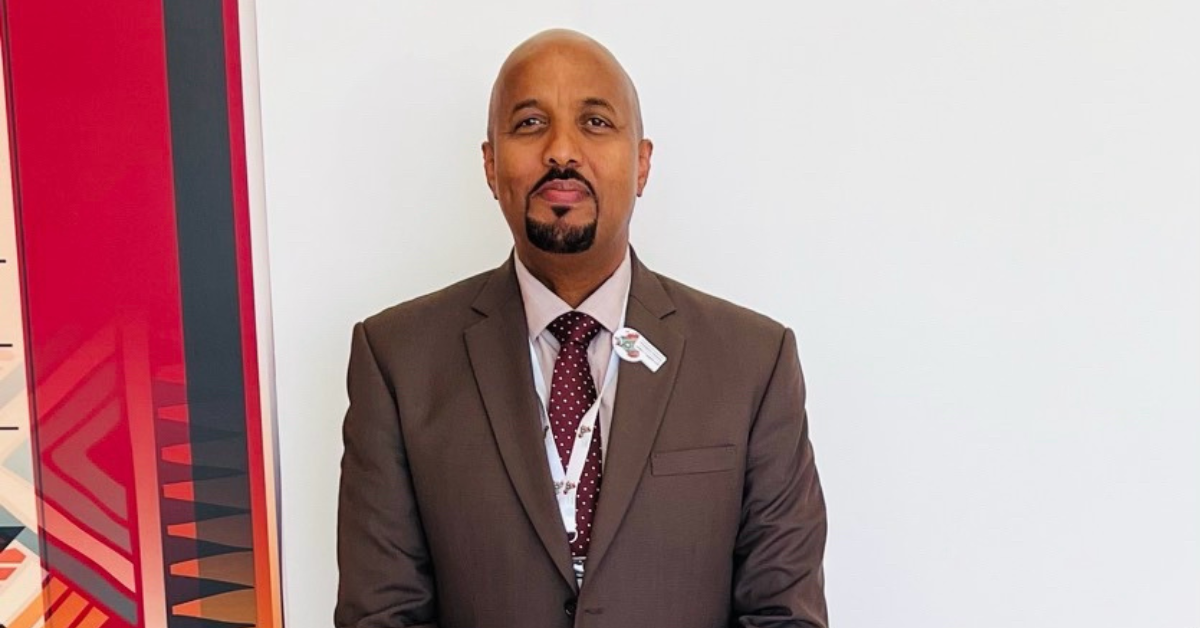
Bashe Awil Omar is a diplomat and politician. He served as the Somaliland Representative to the UAE (from 2015-2018) and Kenya (from 2018-2021).
SHARE

The UAE’s decision to leave OPEC is being read as an energy story. It is not. Instead, it reflects a broader shift in how Abu Dhabi defines its interests and its willingness to act independently.

For years, the UAE operated within established regional frameworks, frequently aligning with Saudi Arabia and the wider Arab consensus. That approach is evolving. Today, the UAE is confident in charting its own course, even when it diverges from traditional structures.

The evidence is already visible. From Yemen to Sudan, and in its approach to Israel and emerging global partnerships, the UAE has shown it is prepared to move early wherever it sees a long-term advantage. Leaving OPEC follows this exact logic: prioritizing control over coordination, and long-term value over short-term alignment.

This matters beyond energy. It points to a foreign policy that is increasingly shaped by outcomes rather than obligations. That is where Somaliland comes into the conversation.

The UAE’s engagement in Somaliland is not theoretical; it is built on real investment, a long-term presence, and strategic positioning in Berbera. This is no longer exploratory. It is embedded.

Recognizing Somaliland would not be a reckless step. Its case is grounded in history, legal standing, and more than three decades of functioning governance. It meets the core criteria of statehood and has delivered stability in a region where such an achievement is rare. The debate is no longer about whether Somaliland qualifies; it is about when others are prepared to act.

The argument that recognition is unlikely often rests on the assumption that the UAE remains bound by Arab League or GCC consensus. Recent decisions, however, suggest a different trajectory. Operating within these frameworks has not stopped the UAE from taking independent positions before—the Abraham Accords being a prime example of a move that boldly broke with prevailing regional norms.

Leaving OPEC reinforces this pattern. It demonstrates a clear willingness to step away from structures that no longer serve a long-term strategy. For Abu Dhabi, the gap between economic independence and political independence is rapidly narrowing.

This does not mean the UAE acts without calculation. Granting diplomatic recognition carries a different weight than exiting an economic organisation. Yet, in Somaliland’s case, the question of sovereignty is not theoretical—it is rooted in its 1960 independence and its subsequent restoration in 1991. The calculus is shifting, and the cost of waiting is beginning to outweigh the risk of acting.

As the UAE expands its partnerships across the United States, Israel, and India, its room to manoeuvre continues to grow. It is significantly less constrained than it was a decade ago, and far more capable of shaping outcomes rather than merely reacting to them.

While recognizing Somaliland would carry a different geopolitical weight than the Abraham Accords, it would follow a highly familiar pattern. Act early, shape the narrative, and allow others to follow.

The most likely path forward is not hesitation, but deliberate sequencing. The UAE will continue to deepen its presence, strengthen its strategic footprint, and expand its engagement in Somaliland. Formal recognition, when it comes, will be calculated and aligned with a broader shift in the international landscape.

The decision to leave OPEC proves that the UAE is prepared to act when the costs of the status quo outweigh the benefits. On Somaliland, that same calculation is rapidly coming into focus.

Ultimately, this is no longer a question of whether the UAE can act independently. It already has. It is simply a question of when it decides to make its next move.

Bashe Awil Omar is a diplomat and politician. He served as the Somaliland Representative to the UAE (from 2015-2018) and Kenya (from 2018-2021).

Disclaimer: The views and opinions expressed in DNE Africa Opinion section are those of the writers and do not necessarily reflect the views or positions of DNE Africa.


You Might Also Like

Iran’s Geopolitical Strategy Against America: The $40,000 Drone That Could Change the Middle East

East Africa Rift Study Suggests Continent Slowly Splitting—and May Explain Fossil Richness

Less Intensive Farming Can Boost Coconut Yields and Protect Soil

250-Million-Year-Old Fossil Egg Solves Mystery of Early Mammal Relatives

Somalia condemns Israeli diplomatic appointment to breakaway Somaliland

TAGGED:AfricaOPECSomalilandUAE
Share This Article
Facebook Twitter Pinterest Whatsapp Whatsapp LinkedIn Reddit Telegram Email Copy Link

You Might Also Like

elephant genomes revea 1
Science

Africa’s Elephants Are Losing Genetic Diversity as Habitats Shrink, Study Finds

By Mohammed El-Said 5 Min Read
Picture2 20
HealthScience

Blending Traditional Knowledge and Modern Science Could Help Africa Fight Crop Diseases

By Mohammed El-Said 5 Min Read
Cheick-Oumar Sylla, Director for North Africa and the Horn of Africa at IFC
Business

IFC eyes over $2.2bn investments in North Africa this year

By DNE Africa 2 Min Read

More Popular from DNE AFRICA

Ad imageAd image
Science

New African Mushroom Discovery May Solve Mystery of ‘Magic Mushroom’ Origins

Scientists say they may have solved a long-standing mystery about the evolutionary origin of the world’s…

By Mohammed El-Said
Politics

 Sudan, Ethiopia and Somalia brace as Gulf patrons look inward

Ethiopia, Sudan and Somalia face a deepening power vacuum as Gulf states — their principal external patrons…

By DNE Africa
BusinessScience

Pandemic Financial Worries Slowed Digital Finance Adoption in Africa

A new study suggests that financial worries during the COVID-19 pandemic made many people in Africa…

By Mohammed El-Said
Politics

Sudan warns Ethiopia against “hostile” drone incursions into its territory

The Sudanese government on Monday warned Ethiopia of the consequences of "hostile acts" following what it…

By DNE Africa
DNE Africa

News by Africans, For Africans

Categories

  • The Escapist
  • Entertainment
  • Business

Quick Links

  • Advertise with us
  • Newsletters
  • Complaint
  • Deal

DNE Africa.All Rights Reserved.

Welcome Back!

Sign in to your account

Username or Email Address
Password

Lost your password?