

A wildfire that swept across part of Africa’s Rwenzori Mountains in 2012 was the first large fire in the area’s highest zones for at least 12,000 years, according to new research.
The study, published in Nature, warns that climate change and human activity may be making fire a growing threat to some of Africa’s rarest mountain ecosystems.
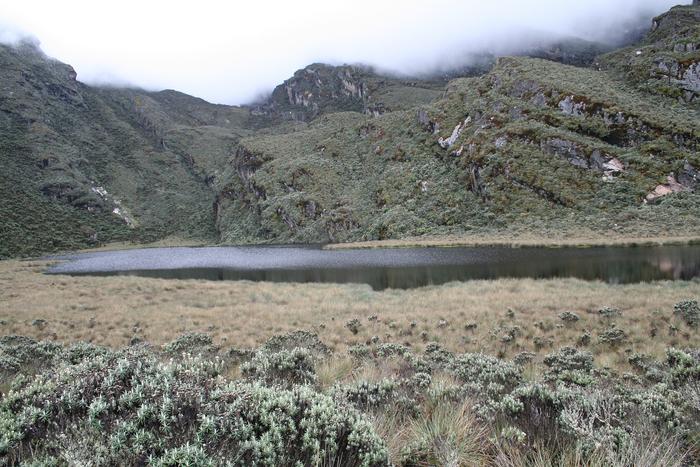
The Rwenzori Mountains, on the border between Uganda and the Democratic Republic of Congo, are famous for their glaciers, wetlands and unusual plants and animals. The high peaks are often cold and wet, which is why the 2012 fire shocked scientists and local observers.
The blaze burned about 42 square kilometres of alpine moorland at an altitude of more than 13,000 feet. Until then, many researchers had assumed the area was too damp and cold for a major fire to spread.
To understand whether such fires had happened before, researchers led by Brown University scientists studied mud from two remote mountain lakes. Lake Kopello sits high in the alpine zone, near the area affected by the 2012 fire. Lake Mahoma lies lower down the mountain slopes.
The team collected long tubes of sediment from the lake beds. These layers of mud preserve traces of the past, including pollen, plant remains, bacteria and charcoal. Charcoal is especially useful because it provides evidence of past fires.
At high-altitude Lake Kopello, the researchers found very little charcoal in sediments covering the past 12,000 years. But the layer linked to the 2012 fire contained more than 100 times more charcoal than older layers.
“The charcoal peak associated with the 2012 fire is enormous,” said Andrea Mason, a Ph.D. candidate at Brown University and lead author of the study. “It completely overwhelms any signal from the last 12,000 years.”
This showed that the 2012 fire was not part of a normal natural cycle. It was something new for the region’s recent geological history.
Lower on the mountain, the story was different. At Lake Mahoma, the researchers found little evidence of fire until about 2,000 years ago. After that, charcoal levels rose sharply.
That timing matches archaeological evidence showing that human activity increased in the region around the same period. The rise in fire was followed by major changes in vegetation. Pollen from deciduous trees declined, while pollen from bamboo and grasses increased.
Study co-author Jim Russell, a professor at Brown University, said this suggests fire changed the lower mountain forests about 2,000 years ago.
The researchers cannot say exactly what caused the increase in fire. But they suggest that human activity may have played an important role at lower elevations. At higher elevations, rising temperatures, drier conditions and more visitors may now be making fires possible where they were once extremely unlikely.
The findings are important because the Rwenzori Mountains, like Mount Kenya and Mount Kilimanjaro, are home to unique species found nowhere else. These high mountain ecosystems are sometimes called “sky islands” because they are isolated from surrounding lowlands.
If fires become more common, they could permanently change these fragile habitats.
The risks also extend to people. After the 2012 fire, villages below the burned area experienced destructive flooding. The charred land could no longer hold rainwater as well as before.
Researchers say better fire management is urgently needed to protect these landscapes. That includes reducing the chance of human-caused fires and preparing for a warmer, drier future.
“These findings imply that the diverse, endemic ecosystems on tropical Africa’s highest mountains are vulnerable to fire,” Mason said.
For Russell, the 2012 fire was deeply personal. He had worked in the mountains for years before seeing them burned.
“That fire in 2012 was my moment,” he said. “To see them get scorched was really eye-opening.”


