
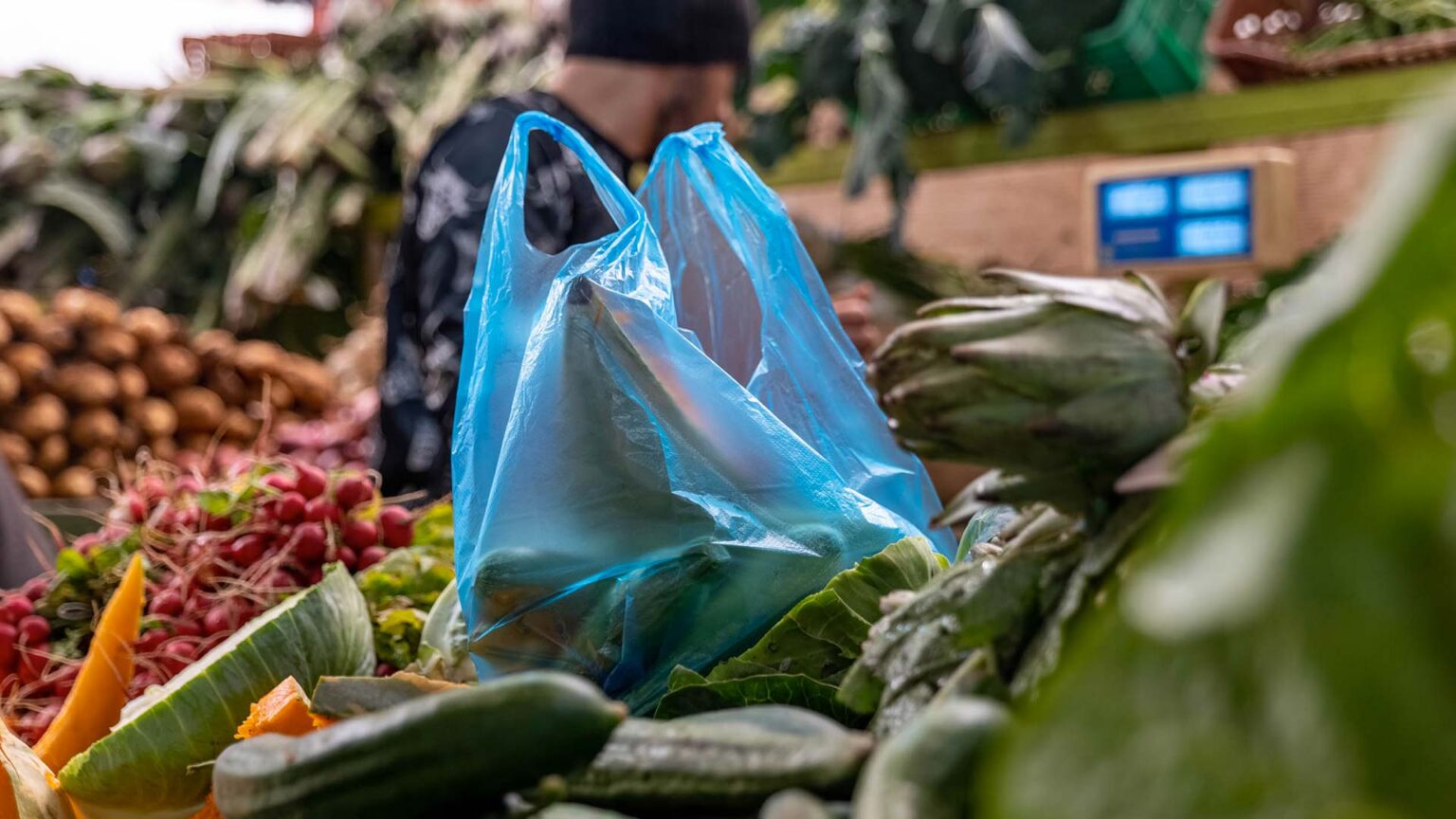

Members of Tunisia’s Assembly of People’s Representatives have put forward a legislative initiative aimed at a nationwide ban on single-use plastic bags and a mandatory market shift towards sustainable alternatives, according to Tunis Afrique Presse (TAP), a partner of TV BRICS.
If the law is passed, the distribution or sale of single-use plastic bags at shop checkouts will be prohibited. Following a transition period lasting no more than one year, single-use plastic bags manufacturers and importers will completely cease the production, import and distribution of such bags. During this same period, the use of plastic packaging for food products and goods sold by weight will also be phased out.
The bill aims to combat plastic pollution, protect public health and facilitate Tunisia’s transition to a circular economy. It sets out strict technical requirements for alternatives, mandating that reusable bags have a thickness of at least 50 microns, be capable of withstanding a load of up to 10 kilogrammes, and be designed for at least 20 cycles of use. Biodegradable bags must degrade by at least 90 per cent within six months under industrial conditions or within 12 months under domestic conditions, without forming microplastics.
Members of parliament are proposing to launch a national industrial support programme to convert single-use plastic bags production lines to manufacture environmentally friendly products, supported by subsidised loans and tax incentives. Furthermore, the bill enshrines the principle of “Extended Producer Responsibility” (EPR), under which companies will bear financial and environmental responsibility for their products throughout their entire life cycle, including the collection and disposal of waste.
The proposed legislation provides for strict penalties for violations, including fines and the confiscation of illegal products. In the event of a repeat offence, fines will be doubled and businesses may be shut down. Criminal liability is also provided for the illegal production or import of banned plastic bags.
The initiative aligns with broader efforts across many BRICS countries to reduce the use of single-use plastics and develop environmentally friendly alternatives.
In Egypt, the Ministry of the Environment has launched an awareness campaign called “Reduce It”, aimed at raising public awareness of the environmental and health risks associated with the use of plastic bags. Egypt’s Minister for the Environment, Yasmine Fouad, emphasised that reducing the production of plastic bags would help cut costs associated with importing raw materials, whilst also highlighting the serious damage plastic pollution causes to living organisms, particularly marine species, reports Xinhua News Agency, a partner of TV BRICS.
Dubai Municipality announced that the final phase of a ban on single-use plastic items came into effect on 1 January this year, covering a wide range of packaging and goods. According to the Emirates News Agency (WAM), a partner of TV BRICS, the restrictions apply to drink cups and their lids, cutlery, plates, drinking straws, stirrers, and expanded polystyrene food containers.
In Ethiopia, a ban on the production, import, storage, sale and use of single-use plastic bags has already come into force. The Ethiopian Environmental Protection Authority noted that the decision is intended to safeguard citizens’ right to a healthy environment and to reduce the risk of diseases linked to plastic pollution, according to Fana Media Corporation (FMC), a partner of TV BRICS. The agency pointed out that plastic can remain in the soil and other natural environments for over a hundred years without decomposing, causing serious damage to nature and human health.


