
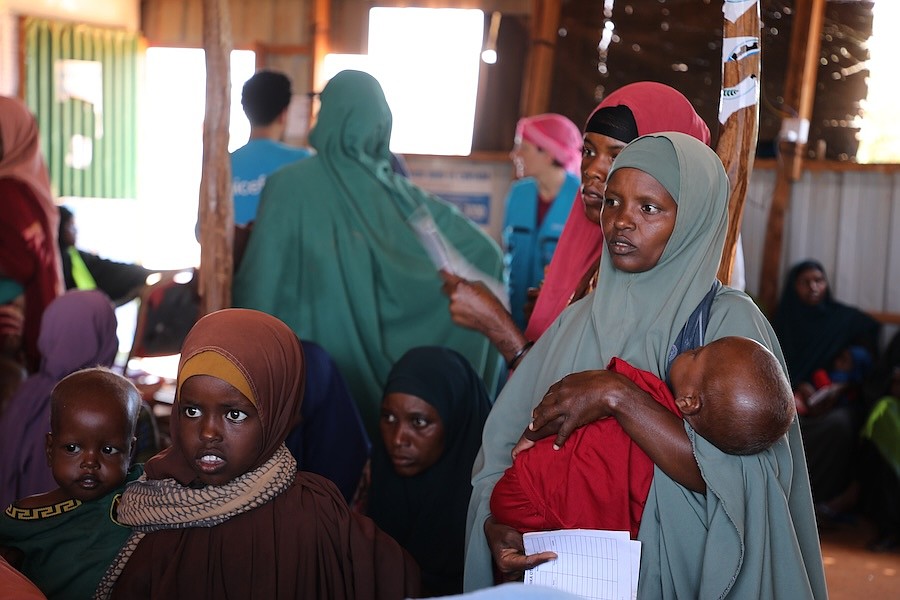

UNICEF has called for urgent action to protect children in Somalia as cuts in humanitarian funding continue to disrupt essential health, nutrition, water, education and child protection services across the country.
The UN agency said 205 health and nutrition facilities have already closed, reducing access to life-saving services and contributing to a 30% decline in health and nutrition service coverage.
UNICEF warned that the situation could deteriorate further if funding shortages persist, with up to 618 health facilities at risk of closure under severe funding scenarios.
The impact is already being reflected in the growing number of children requiring treatment for severe acute malnutrition. Admissions of children suffering from severe acute malnutrition with complications rose by 32% during the first six months of 2026 compared with the same period last year, UNICEF said.
The funding crisis is also affecting access to safe water and sanitation services. More than 1.6 million people require access to safe water, while more than 800,000 people risk losing essential hygiene supplies.
Water prices have also surged in rural and pastoral areas, placing additional pressure on vulnerable communities. A 200-litre barrel of water that previously cost about $2 now costs around $8, according to UNICEF.
Education has also been hit by the funding shortfall. The sector lost $30 million in funding in 2025, contributing to more than 78,000 students dropping out of school, while another 660,000 boys and girls are at risk of leaving education because of the worsening funding situation.
Child protection services are facing similar challenges, with at least 65 service points and facilities forced to close due to funding cuts. Other essential programmes, including case management, psychosocial support, family tracing and reintegration services, are also at risk.
The cuts come as Somalia continues to grapple with drought, conflict and displacement, while rising fuel and fertiliser costs are adding further pressure on communities dependent on agriculture and livestock.
UNICEF said it supported more than 2.25 million admissions of children suffering from severe acute malnutrition between 2021 and 2025, with treatment programmes recording a cure rate of 97.6% in 2025.
“We have the programmes. We have the partners. What is missing is the funding,” UNICEF said.
The agency called on donors to sustain support for programmes providing healthcare, nutrition, clean water, education and child protection, warning that further funding cuts could leave increasing numbers of Somali families without essential services as humanitarian needs continue to rise.


