
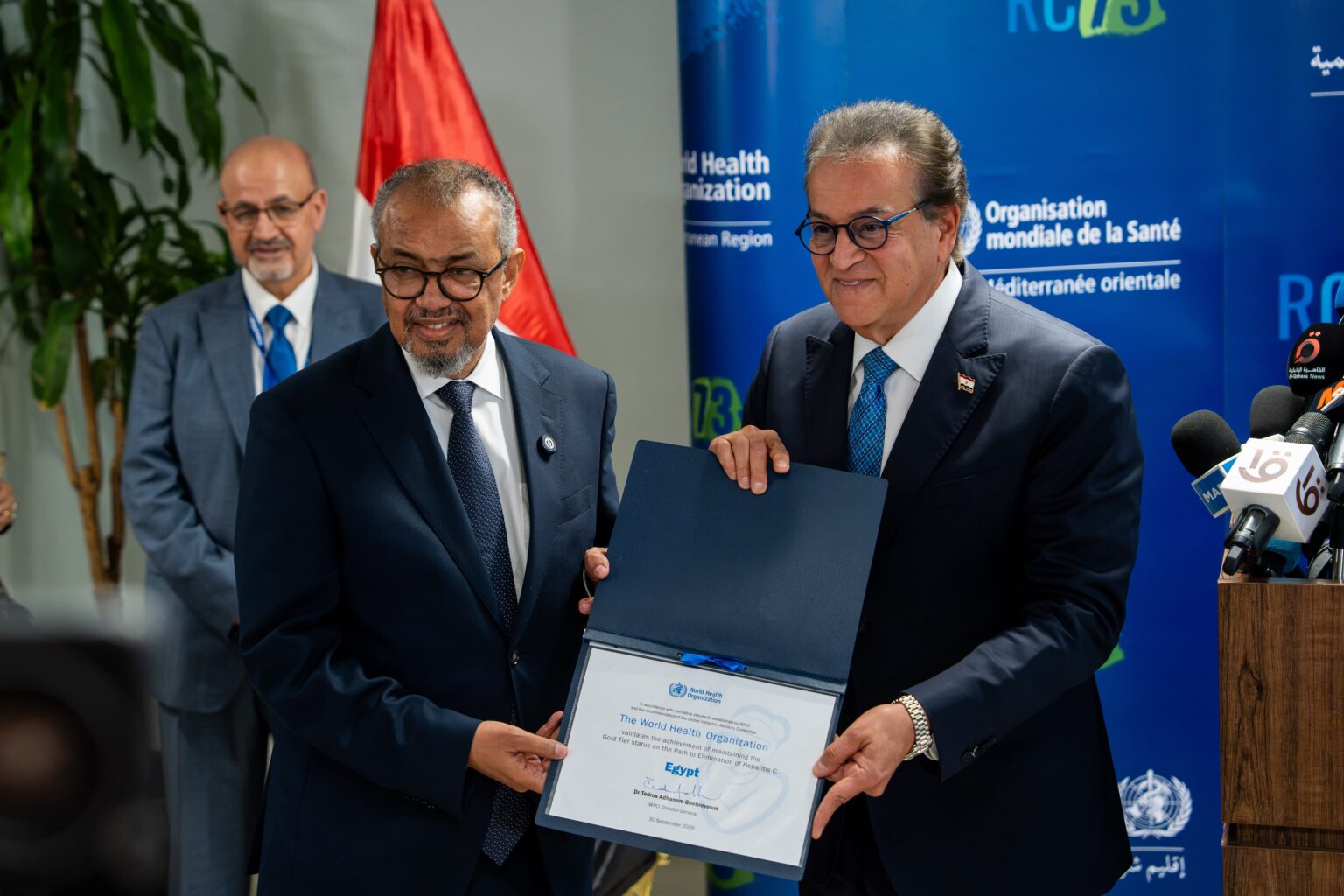

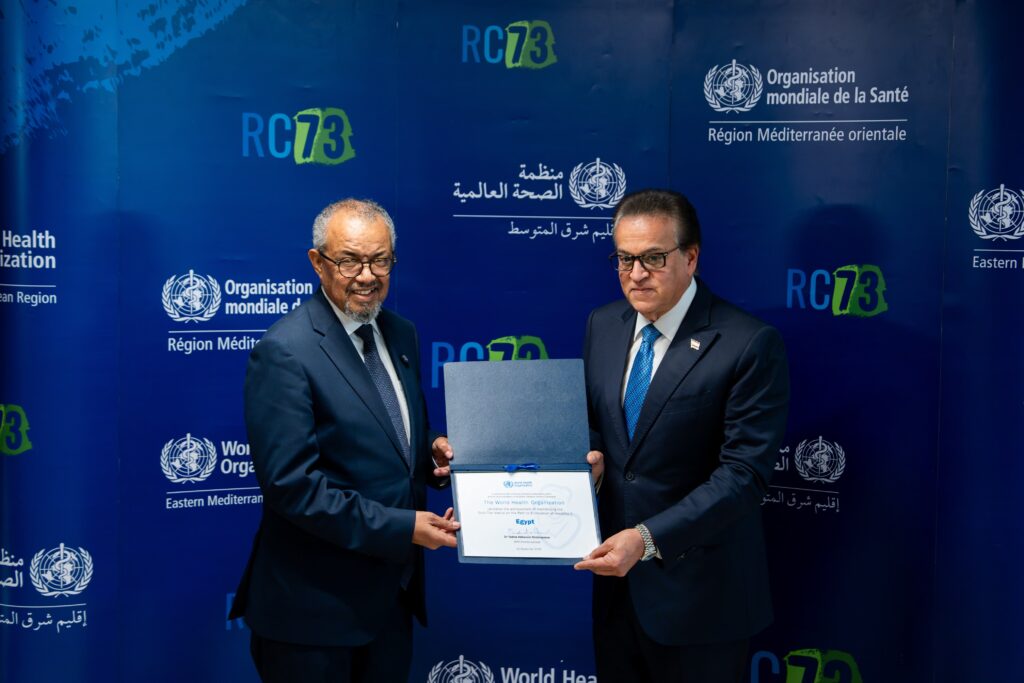
Egypt has become the first country in the world to retain the World Health Organization’s (WHO) gold-tier status on the path to eliminating hepatitis C, following a comprehensive assessment covering 2023 to 2025, the UN health agency announced on Wednesday.
The recognition was approved by the WHO Regional Validation Committee for HIV, Viral Hepatitis and Sexually Transmitted Infections in July 2026, marking a milestone in Egypt’s efforts to sustain progress against the disease.
Egypt first achieved the WHO gold-tier status in 2023 after reducing hepatitis C prevalence from around 10% to less than 0.38% in just over a decade, according to the WHO.
The latest recognition reflects the country’s continued efforts to maintain access to prevention, testing, treatment and follow-up services, while strengthening surveillance systems to prevent the disease from re-emerging.
Egypt’s progress has been driven in large part by its “100 Million Health” campaign, which screened more than 60 million people and provided treatment to over 4.5 million patients with hepatitis C.
The campaign combined high-level political commitment and a government-wide approach to nationwide screening with access to locally produced direct-acting antiviral medicines, which are used to treat the infection.
During the period covered by the latest assessment, Egypt shifted from large-scale screening campaigns towards a more sustainable, health-system-based approach, integrating routine case detection, diagnosis, treatment, prevention and surveillance into healthcare services.
Key measures include expanding hepatitis C screening, diagnosis and treatment, strengthening governance for 2025-2030, and implementing a national plan to sustain the elimination of viral hepatitis.
The country has also continued integrating hepatitis services into primary healthcare and the universal health insurance system, while strengthening laboratory quality assurance, disease surveillance, and safety standards for blood supplies and injections.
The WHO said it had worked with Egypt throughout its response to hepatitis C, providing technical guidance and support to strengthen prevention, testing, treatment and surveillance, and to translate global evidence and recommendations into national action.
The achievement highlights the importance of sustained public health investment and integrated healthcare systems in maintaining progress towards the elimination of viral hepatitis.


