
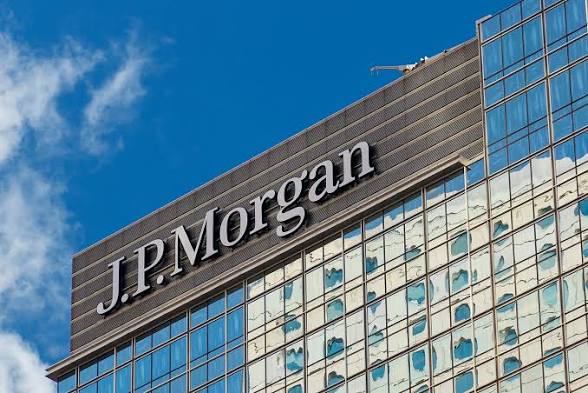

J.P. Morgan plans to establish a merchant bank in Nigeria before the end of 2026, subject to regulatory approval, in a step that could deepen the US financial services giant’s presence in Africa’s largest economy and strengthen its access to the country’s financial markets.
Dapo Olagunji, managing director of J.P. Morgan West Africa, announced the plan at the Nigeria–Asia Financial Connectivity Dialogue in Singapore on October 8, according to Nigerian news outlet TheCable. The event was organised by the Central Bank of Nigeria (CBN) in collaboration with J.P. Morgan, Nigerian Exchange Group and FMDQ Group.
The proposed bank would mark a new phase in J.P. Morgan’s Nigerian operations as the country seeks to attract foreign capital, strengthen its domestic debt market and expand links with international investors.
The announcement follows Nigeria’s return to a J.P. Morgan emerging-markets government bond index, a development that could increase the visibility of its local-currency debt among global fixed-income investors.
In September, J.P. Morgan assigned Nigeria a 7.4% weighting in its Government Bond Index–Emerging Markets Edge (GBI-EM Edge), which tracks local-currency government bonds. The index was launched at the end of September, according to TheCable.
Nigeria’s inclusion comes nearly 11 years after the country was removed from J.P. Morgan’s earlier emerging-markets government bond index in 2015.
The renewed engagement comes as Nigerian authorities seek to improve investor confidence and broaden access to international capital. Central Bank Governor Olayemi Cardoso held meetings with financial institutions and market participants in Singapore ahead of the IMF-World Bank annual meetings in Bangkok, TheCable reported.
The planned launch remains contingent on regulatory approval, and further details about the merchant bank’s proposed services, capital structure and operating arrangements have not yet been disclosed.
J.P. Morgan has maintained a presence in Nigeria for decades. Establishing a merchant bank would expand its local footprint as the country pursues reforms aimed at improving financial-market access and attracting investment.


