
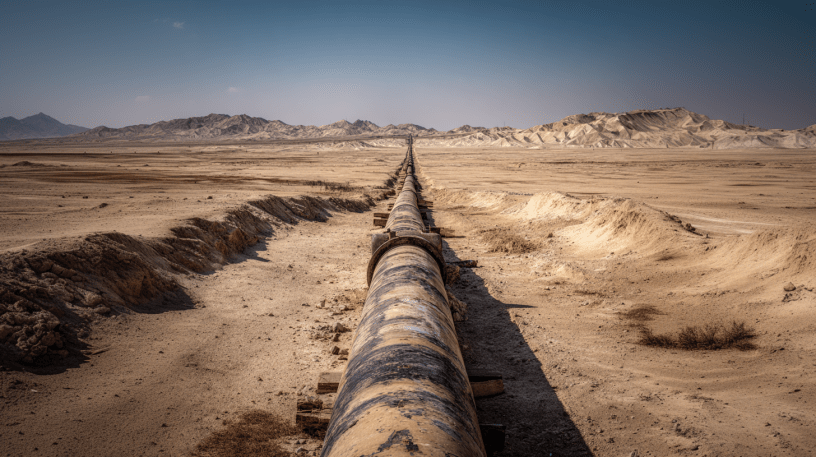

Egypt and Libya are moving closer to launching a proposed 800-kilometre oil pipeline linking the Libyan city of Tobruk with Alexandria, a project estimated to cost more than $1 billion that could deepen energy cooperation between the two neighbours, Asharq Bloomberg reported.
The pipeline would transport Libyan crude to Egyptian refineries, mainly in Alexandria, under plans still being discussed by officials from both countries, including financing, technical arrangements, capacity and expected volumes.
The project could provide Egypt with an additional source of crude and allow Libya to make greater use of Egypt’s refining capacity. However, its implementation could be complicated by Libya’s continuing political and institutional divisions, according to Mohamed Mansour Abouda, a Libyan independent journalist and researcher.
“If confirmed, the project would be economically and strategically important and could open new avenues for cooperation between the two countries, particularly in the energy sector,” Abouda told DNE Africa.
However, he cautioned that projects of such scale could not be separated from Libya’s political reality.
“It would be difficult to move forward with a strategic project of this size without a unified Libyan government with the authority and mandate to take decisions affecting the entire country,” he argued.
Libya remains divided between rival political and institutional centres, a situation that Abouda warned could complicate efforts to secure agreement on the project and raise concerns over its implementation, protection and long-term sustainability.
The proposed pipeline comes as Cairo and Tripoli seek to expand cooperation in energy, including natural gas, petroleum refining and electricity interconnection.
The North African nation’s oil production has recently reached about 1.43 million barrels per day, in addition to around 49,000 barrels per day of condensates, bringing total output close to 1.48 million barrels per day. The country is seeking to raise production to 1.5 million barrels per day.
For Egypt, the proposed pipeline could bolster energy security by diversifying its sources of crude oil while making greater use of its existing refining capacity. Libya, meanwhile, could gain an additional outlet for its crude, supporting efforts to increase production and expand exports.
Abouda acknowledged the potential economic benefits for both countries but stressed that political stability should precede major long-term investments.
“Egypt is more than a neighbouring country to Libya. The two countries share deep historical, social and economic ties,” he noted.
He urged Egypt and other regional partners to place greater emphasis on supporting Libya’s political stability and institutional reunification.
“The priority at this stage should be investment in Libya’s stability and unity,” Abouda said. “Once there is a unified government, institutions and a collective national decision, it will be easier to move forward with major strategic investments.”
He also highlighted the potential for Egypt to play a broader role in Libya’s reconstruction, pointing to the growing presence of Egyptian companies in infrastructure and construction projects across the country.
“Egypt could become an important partner in Libya’s reconstruction and future development, not only in energy but also in infrastructure and other sectors,” he added.
Political stability and institutional unity, he concluded, would provide the foundation needed to ensure that strategic projects are implemented without disruption and serve the interests of both countries.


