
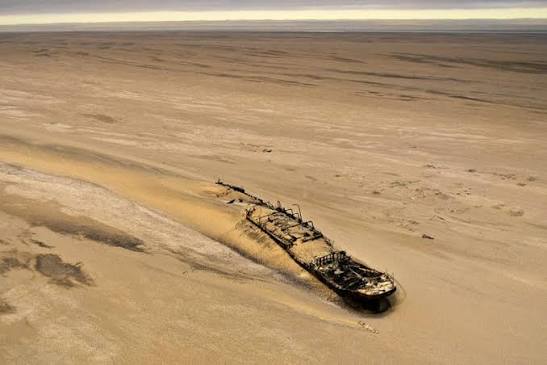

A 16th-century Portuguese shipwreck discovered off Namibia’s coast is offering new insight into Africa’s historic trade networks after scientific analysis of its cargo traced more than 100 elephant tusks to multiple elephant populations in West Africa.
The Bom Jesus, a Portuguese trading vessel bound for India, sank in 1533 after leaving Lisbon. More than four centuries later, diamond miners discovered the wreck along Namibia’s coast in 2008, uncovering a remarkably preserved cargo that included gold and silver coins, copper ingots and ivory.
The discovery has since provided archaeologists and scientists with rare evidence of the trade routes linking Africa, Europe and Asia during the early expansion of global maritime commerce.
Among the most significant findings were 102 elephant tusks recovered from the wreck. Scientific analysis found that the ivory came from African forest elephants and was sourced from at least 17 distinct elephant herds in West Africa.
The research also revealed that only four of the genetic lineages identified in the centuries-old ivory are known to survive today, highlighting the long-term decline of some elephant populations.
Researchers said the findings demonstrate the scale and diversity of Africa’s ivory trade in the 16th century, with tusks collected from different regions before entering commercial networks that connected West Africa with Portuguese traders and markets in Europe and Asia.
The Bom Jesus was travelling as part of Portugal’s maritime trade with India, following a route around the southern tip of Africa decades before the opening of the Suez Canal.
The vessel is believed to have been caught in a storm and pushed off course before sinking along the Namibian coast.
The shipwreck, one of the most significant maritime archaeological discoveries in sub-Saharan Africa, continues to provide evidence of Africa’s central role in early global trade.
Beyond its commercial history, the cargo has also offered scientists a rare record of the continent’s environmental past, preserving genetic evidence from elephant populations that may have disappeared over the centuries as a result of hunting and habitat loss.
The discovery underscores the growing importance of underwater archaeology in reconstructing Africa’s history and understanding the continent’s role in shaping global economic and cultural exchanges.


